Tensor
A tensor is a fundamental data structure in machine learning and deep learning, representing a multidimensional array of numbers. Tensors are crucial for numerical computations and are used extensively in libraries like PyTorch for data manipulation and computation. They generalize the concepts of scalars, vectors, and matrices to higher dimensions, making them versatile tools for handling complex data structures.
Overview
Tensors are generalized n-dimensional arrays that can represent various data types and structures. They are essential in the representation of inputs and outputs in neural networks. In PyTorch, tensors are optimized for efficient computation and memory usage, making them indispensable for deep learning models and other numerical tasks. Tensors are homogenous, meaning all elements are of the same data type, and they support various operations for data manipulation. They can be moved between devices (CPU and GPU) to optimize computation, allowing for seamless execution on different hardware without code changes.
Dimensionality of Tensors
- Scalars: Zero-dimensional tensors representing a single value.
- Vectors: One-dimensional tensors representing a sequence of values.
- Matrices: Two-dimensional tensors representing a grid of values.
- RGB Images: Three-dimensional tensors where each pixel is represented by three values corresponding to the Red, Green, and Blue color channels.
- Batch of Images: Four-dimensional tensors where the additional dimension accounts for the number of images in the batch.
Tensor Element Types
Tensor element types refer to the numeric types that can be stored in a PyTorch tensor, such as torch.float32, torch.int64, and torch.bool. The choice of element type can affect both the performance and the precision of computations.
Tensor Metadata
Tensors have metadata such as size, offset, and stride, which define their structure and how they map to the underlying storage. This metadata allows for efficient operations like slicing and transposing without reallocating memory.
 Figure 3.5 Relationship between a tensor’s offset, size, and stride.
Contiguous Tensors
A tensor is contiguous if its elements are stored in a sequential, unbroken order in memory. This layout allows for efficient memory access and is required by some PyTorch operations. Non-contiguous tensors can be converted to contiguous ones using the contiguous method.
Device Attributes
A PyTorch tensor has a 'device' attribute that specifies where the tensor's data is stored, such as on the CPU or GPU. This attribute is crucial for optimizing computations by utilizing the appropriate hardware resources.
points_gpu = torch.tensor([[4.0, 1.0], [5.0, 3.0], [2.0, 1.0]], device='cuda')
Working with Tensors
Tensors can be created and manipulated using PyTorch's comprehensive standard library. Here is an example of creating and manipulating a tensor:
import torch
a = torch.ones(3)
a[2] = 2.0
Tensors in Tabular Data
In the context of tabular data, a tensor is used to represent the data in a format suitable for machine learning models. The data is encoded into a PyTorch tensor, which is a floating-point array where each row represents a sample and each column represents a feature.
Example: Tensors in Image Representation
A color image is a practical example of a tensor. Each pixel in the image is represented by three values corresponding to the Red, Green, and Blue (RGB) color channels. This can be visualized as a combination of three 2D arrays or matrices, each representing one color channel.
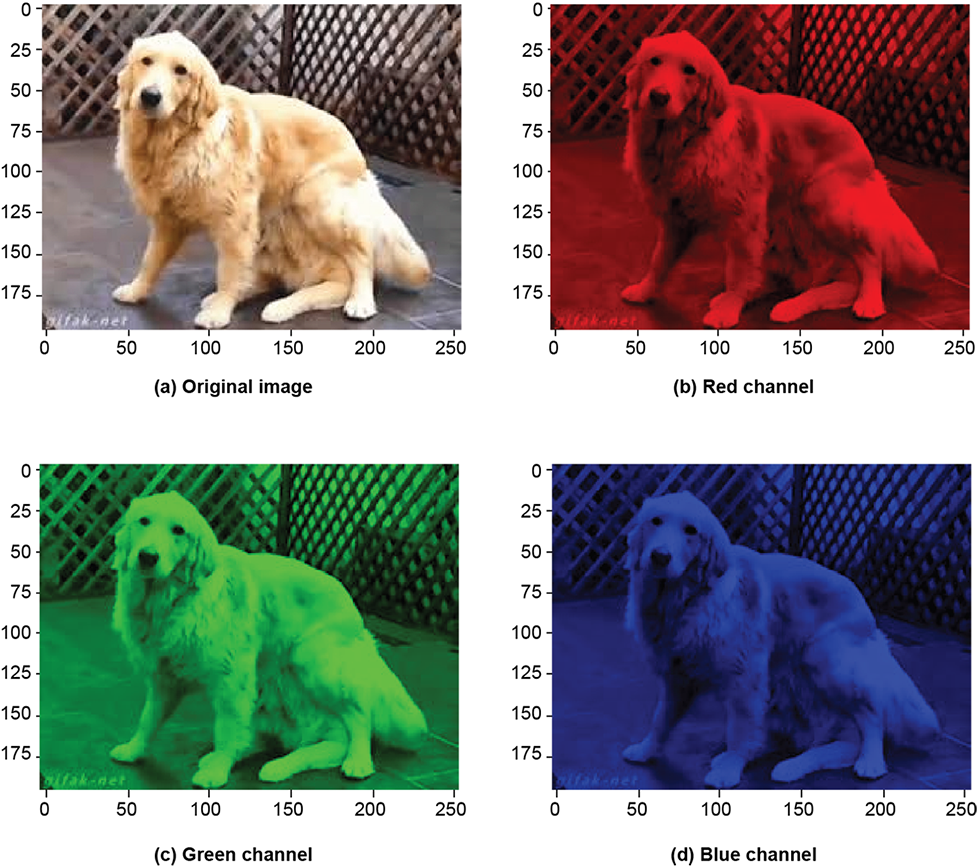 Figure 2.4 Tensors and images in PyTorch
Mathematical Definition
A tensor is a mathematical concept that generalizes the notions of vectors and matrices. It can be thought of as a multidimensional array that operates within its own algebraic system. Tensors are fundamental in various fields, including physics, engineering, and computer science, due to their ability to represent data in multiple dimensions. This makes them particularly useful in areas such as machine learning and computer graphics, where complex data structures are common.
| Book Title | Usage of Tensor | Technical Depth | Connections to Other Concepts | Examples Used | Practical Application |
|------------|-----------------|-----------------|-------------------------------|---------------|-----------------------|
| [Deep Learning with PyTorch, Second Edition](https://www.manning.com/books/deep-learning-with-pytorch-second-edition) | Tensors are described as fundamental data structures in PyTorch, optimized for efficient computation and memory usage. [more](https://livebook.manning.com/book/deep-learning-with-pytorch-second-edition/chapter-4/1) | Discusses tensor metadata, element types, and device attributes, providing a deep dive into their structure and operations. [more](https://livebook.manning.com/book/deep-learning-with-pytorch-second-edition/chapter-3/168) | Connects tensors to numerical computations, deep learning models, and hardware optimization. [more](https://livebook.manning.com/book/deep-learning-with-pytorch-second-edition/chapter-3/217) | Provides examples of tensor creation, manipulation, and usage in tabular data. [more](https://livebook.manning.com/book/deep-learning-with-pytorch-second-edition/chapter-3/23) | Highlights practical applications in deep learning and numerical tasks, emphasizing seamless execution on different hardware. [more](https://livebook.manning.com/book/deep-learning-with-pytorch-second-edition/chapter-4/57) |
| [Math and Architectures of Deep Learning](https://www.manning.com/books/math-and-architectures-of-deep-learning) | Tensors are described as n-dimensional arrays crucial for representing inputs and outputs in neural networks. [more](https://livebook.manning.com/book/math-and-architectures-of-deep-learning/chapter-2/1) | Explores the dimensionality of tensors, from scalars to batches of images, with a focus on their role in deep learning. [more](https://livebook.manning.com/book/math-and-architectures-of-deep-learning/chapter-2/1) | Connects tensors to image representation and manipulation in machine learning. [more](https://livebook.manning.com/book/math-and-architectures-of-deep-learning/chapter-2/289) | Includes examples of tensor creation, image representation, and manipulation. [more](https://livebook.manning.com/book/math-and-architectures-of-deep-learning/chapter-2/47) | Demonstrates practical applications in image processing and neural network training. [more](https://livebook.manning.com/book/math-and-architectures-of-deep-learning/chapter-2/289) |
| [Geometry for Programmers](https://www.manning.com/books/geometry-for-programmers) | Tensors are introduced as mathematical concepts generalizing vectors and matrices, useful in representing multidimensional data. [more](https://livebook.manning.com/book/geometry-for-programmers/chapter-2/289) | Provides a foundational understanding of tensors as multidimensional arrays within their own algebraic system. [more](https://livebook.manning.com/book/geometry-for-programmers/chapter-2/289) | Discusses the role of tensors in physics, engineering, and computer science. [more](https://livebook.manning.com/book/geometry-for-programmers/chapter-2/289) | No specific examples provided. | Highlights the utility of tensors in machine learning and computer graphics. [more](https://livebook.manning.com/book/geometry-for-programmers/chapter-2/289) |
FAQ (Frequently asked questions)
What are tensors in machine learning?
How are tensors used in deep learning?
What does Figure 2.4 in the book illustrate?
How can tensors be represented in PyTorch?
What is an example of creating a random tensor in PyTorch?
How are images represented as tensors in PyTorch?
How can you extract color channels from an image tensor in PyTorch?
How can you crop an image tensor in PyTorch?
What is a tensor in the context of machine learning?
How can a color image be represented as a tensor?
What is a tensor in the context of matrix algebra?
How does a tensor relate to vectors and matrices?
What are tensors in mathematical terms?
Are matrices and vectors considered tensors?
What is a tensor in PyTorch?
Why are tensors efficient for numerical computations?
How do you create a tensor filled with ones in PyTorch?
How can you index an element from a tensor in PyTorch?
How do you assign a new value to an element in a PyTorch tensor?
What is a tensor in PyTorch used for?
Are tensors in PyTorch homogeneous?
How are tensors optimized in PyTorch?
What is the difference between tensors and Python lists in PyTorch?
What types of numeric types can be stored in a PyTorch tensor?
What metadata do tensors in PyTorch have?
What is tensor metadata in PyTorch?
Why is tensor metadata important in PyTorch?
What is a contiguous tensor in PyTorch?
How can non-contiguous tensors be converted to contiguous ones in PyTorch?
Can tensors in PyTorch be moved between devices?
How can tensors be moved to the GPU in PyTorch?
Why would you move a tensor to the GPU in PyTorch?
What is the 'device' attribute of a PyTorch tensor?
Why is the 'device' attribute important for PyTorch tensors?
What are tensors in PyTorch used for?
Can PyTorch tensors execute on both CPU and GPU?
What is the role of tensors in machine learning models in PyTorch?