Awaitable
Overview
In Python's asyncio library, an awaitable is an object that can be used in an await expression. This capability is crucial for writing asynchronous code, allowing the program to pause and resume execution as needed. Awaitables are central to the functionality of asyncio, enabling the cooperative multitasking that is a hallmark of asynchronous programming.
Characteristics of Awaitables
Awaitables implement the __await__ method, which is a key feature that allows them to be used with the await keyword. This method is what makes an object awaitable, as it returns an iterator that the await expression can iterate over to perform the asynchronous operation.
The main types of awaitables in Python include:
- Coroutines: These are functions defined with
async defand are the most common type of awaitable. When called, they return a coroutine object, which is awaitable. - Futures: These represent a result that may not be available yet. They are used to bridge low-level callback-based code with high-level async/await code.
- Tasks: These are a subclass of futures and are used to schedule coroutines for execution. They manage the execution of a coroutine and can be awaited to get the result of the coroutine.
All these types share a common interface defined by the Awaitable abstract base class, which ensures that they can be used interchangeably in await expressions.
Class Inheritance Hierarchy
The class inheritance hierarchy of awaitables is depicted in the following figure:
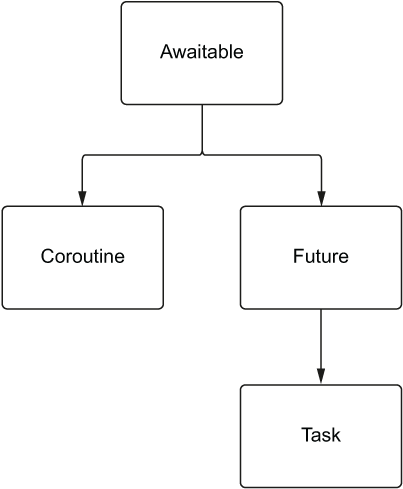 Figure 2.5 The class inheritance hierarchy of Awaitable
This hierarchy illustrates how coroutines, futures, and tasks are related through the Awaitable abstract base class. Understanding this hierarchy is essential for grasping how different awaitable objects interact and can be utilized within the asyncio framework.
FAQ (Frequently asked questions)
What are awaitables in Python?
What is the common thread between coroutines, futures, and tasks?
What does Figure 2.5 illustrate in the context of awaitables?