Content in Flask Applications
In a Flask application, "content" refers to the data or information that is served to the browser. This content can be static, such as a simple string, or dynamic, generated by Python functions and rendered using templates like Jinja2. Dynamic content is crucial for creating interactive and personalized web applications, allowing developers to tailor the user experience based on various factors such as user input or data retrieved from a database.
Content Management in MyBlog Application
In the MyBlog application, content management is handled through a dedicated 'Content' Blueprint. This Blueprint is designed to manage blog content, isolating the functionality related to content management into a separate module. This modular approach is similar to the 'Auth' Blueprint and helps in organizing the code, maintaining a clear separation of concerns within the application, and making the codebase more maintainable and scalable.
Storage and Structure of Content
Content in the MyBlog application is stored in the Post table within the database. This table is designed to handle not only the main content posts but also the associated comments, forming a hierarchical structure. The application uses a self-referential table to manage this hierarchy efficiently. This means that each content post can have associated comments, and these comments can further have their own sub-comments, creating a multi-level comment structure.
Hierarchical Structure
The hierarchical structure of content and comments is illustrated in Figure 11.5. This figure shows two content posts, with each post having multiple levels of comments associated with it. For instance, content post 0 has two level 1 comments, with the first comment having two level 2 comments and the second comment having one level 2 comment. Similarly, content post 1 has three level 1 comments, with one of them having a level 2 comment.
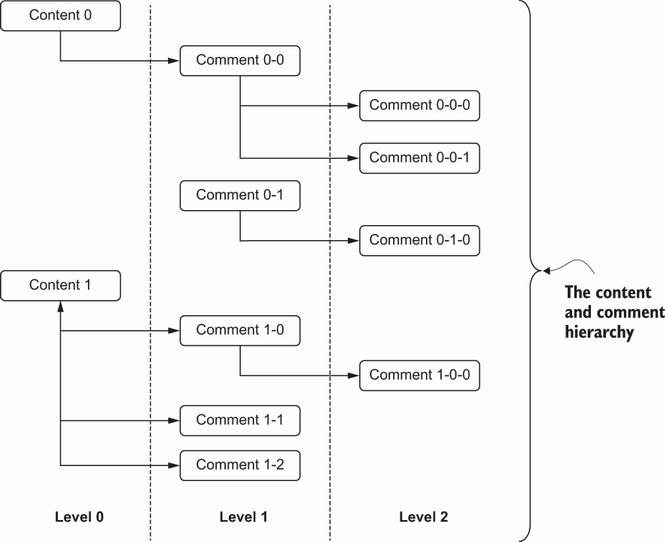 Figure 11.5 The content and comment relationship structure forms a hierarchy.
Self-Referential Post Table
To efficiently manage the hierarchical structure of content and comments, the Post table is designed to be self-referential. This is achieved by adding a parent_uid field to the table, as shown in Figure 11.6. The parent_uid acts as a foreign key to the post_uid of the same table, allowing a row to be both a parent and a child within the hierarchy. A row with a parent_uid equal to NULL is considered the root of a hierarchy and represents a content post. Conversely, a row with a non-NULL parent_uid references another row in the table and is considered a child comment. This design allows for a flexible and scalable way to manage content and comments within the application.
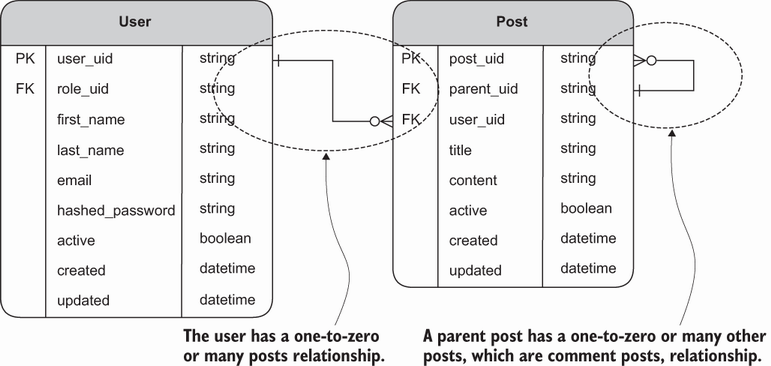 Figure 11.6 The self-referential Post table creates a hierarchal content/comment structure.
Markdown Syntax in Content
The content stored in the Post table can include markdown syntax, which is used during display rendering to format the text. This allows for rich text formatting within the content posts, enhancing the visual presentation of the blog posts. However, comments on content do not support markdown when displayed, although they are also stored as text in the database. This distinction ensures that while the main content can be richly formatted, comments remain simple and straightforward.
FAQ (Frequently asked questions)
What does content refer to in a Flask application?
What types of content can be served in a Flask application?
What is the benefit of dynamic content in Flask applications?
What is the purpose of the 'Content' Blueprint in the MyBlog application?
How does the 'Content' Blueprint help in organizing the MyBlog application?
How is content stored in the MyBlog application?
What structure is used to manage comments in relation to content in the MyBlog application?