Except Clause in Python
The except clause is a fundamental component of exception handling in Python, forming part of the try...except statement. It is designed to manage exceptions that may arise during the execution of a program, allowing developers to gracefully handle errors and maintain the flow of the application.
Overview
In Python, the except clause is used within a try...except statement to catch and handle exceptions that occur in the try block. When a specified exception is raised in the try block, the except clause is executed. This mechanism is crucial for managing errors and ensuring that a program can continue running or terminate gracefully when unexpected conditions occur.
Definition
The except clause specifies the type of exception to catch and provides the code to execute when that exception is raised. It is important to be explicit about the exceptions being handled to avoid catching unintended exceptions, which can lead to debugging challenges and obscure error handling.
Example
Here is an example of an except clause in action:
try:
   urgency = int(urgency_str)
except ValueError as ex:
   print(f"Couldn't cast the number. Description: {ex}")
   return None
In this example, the try block attempts to convert a string urgency_str into an integer. If the conversion fails and raises a ValueError, the except clause catches the exception and executes the code within it, printing an error message and returning None.
Visual Representation
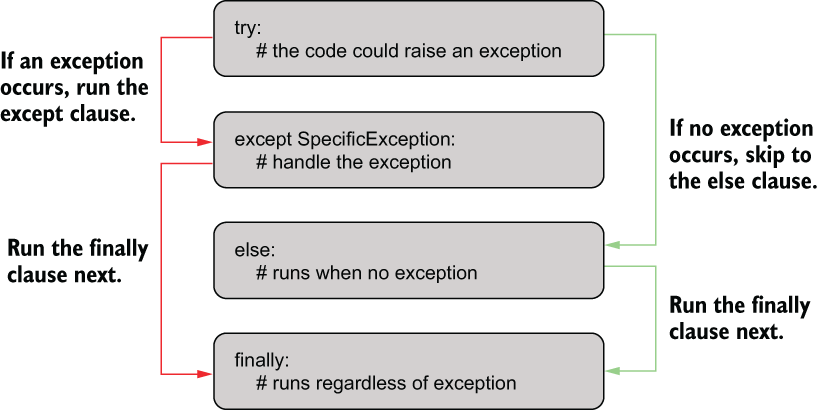 Figure 12.5 The four clauses in a complete try...except...else...finally... statement. The try clause includes the code that could raise an exception. The except clause includes the code that handles the possible exception. The else clause runs only if no exceptions are raised. The finally clause runs after the except clause or the else clause.
This figure illustrates the structure of a complete try...except...else...finally statement. The try clause contains the code that might raise an exception, the except clause handles the exception, the else clause executes if no exceptions are raised, and the finally clause runs after the except or else clause, regardless of whether an exception was raised.
FAQ (Frequently asked questions)
What is the purpose of the except clause in Python?
When does the except clause execute?
How is the except clause used in a try...except statement?
What does the except clause specify?
What are the four clauses in a complete try...except...else...finally statement?
What does the except clause do in a try...except...else...finally statement?
When does the else clause run in a try...except...else...finally statement?
When does the finally clause run in a try...except...else...finally statement?
Can you provide an example of an except clause?
What is the role of the except clause in Python?
How should the except clause be written?