Function in Python
A function in Python is a block of organized, reusable code that performs a specific task. Functions are fundamental building blocks in programming, allowing for code modularity, reusability, and maintainability. They can accept parameters, return values, and are essential for creating modular and maintainable code. Functions in Python are first-class objects, meaning they can be passed around and used as arguments, stored in data structures, and returned from other functions. This allows for the creation of higher-order functions and supports functional programming paradigms.
Overview
Functions in Python are defined using the def keyword, followed by the function name and parentheses containing any parameters. The body of the function contains the code that performs a specific task, and it can return a value using the return statement. Functions can return zero, one, or multiple values, and a function that doesn't explicitly return a value will return None. Functions should ideally serve a single purpose, and returning one value is preferred to avoid confusion.
Functions can be enhanced with decorators to add additional behavior, such as logging or performance monitoring, without altering their core functionality. They are also essential in creating APIs (Application Programming Interfaces) and should adhere to the single responsibility principle, meaning each function should perform one specific task.
Defining and Calling Functions
Functions are defined using the def keyword, followed by the function name and parentheses containing any parameters. They can be called with arguments to execute their code. Functions can have default values for arguments, which allows for calling functions with fewer arguments, using preset values instead. This reduces the number of arguments needed and enhances convenience.
Example of a Function with Default Arguments
def complete_task(task, note=""):
   task.status = "completed"
   task.note = note
   print(f"{task.title}'s status: completed; note: {note}")
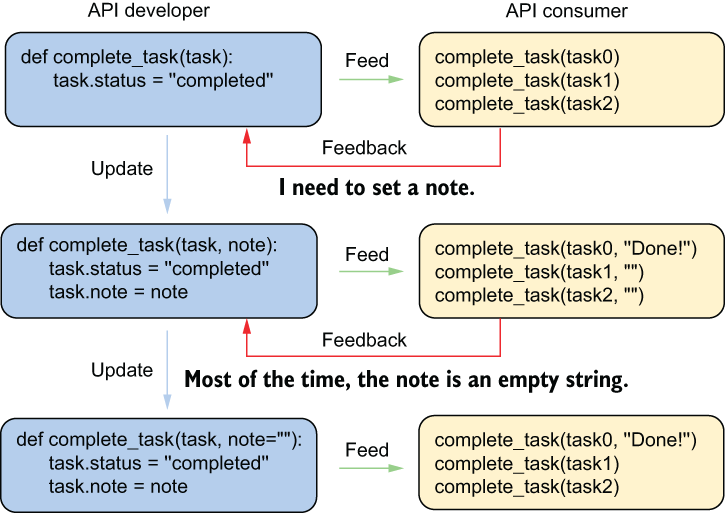 Figure 6.1 An example of the general process of creating a function with default arguments.
Custom Functions and Sorting
Custom functions can be used in sorting to define specific orders by extracting values from each item in a list. This function is set to the key parameter in the sort method. For example, a custom function using_urgency_level can be defined to extract the 'urgency' value from a dictionary for sorting purposes.
Lambda Functions
A lambda function is an anonymous function defined using the lambda keyword. It can be used as a concise way to define a function for the key parameter in sorting. For example:
tasks.sort(key=lambda x: x['urgency'], reverse=True)
This sorts tasks by urgency using a lambda function.
Type Hinting
Type hinting in functions specifies the expected data types for parameters and return values, enhancing code readability and reducing errors. This is particularly useful in larger codebases where understanding the expected input and output types can prevent bugs.
Example of Using Type Hints
from statistics import mean, stdev

def generate_stats(measures: list) -> tuple:
   measure_mean = mean(measures)
   measure_std = stdev(measures)
   return measure_mean, measure_std
 Figure 6.4 Pop-up menus are shown for functions with type hints in the Python editor PyCharm.
Positional and Keyword Arguments
Functions in Python can be defined to accept a fixed number of arguments or a variable number of arguments using *args and **kwargs. Positional arguments are matched by position, while keyword arguments are matched by name.
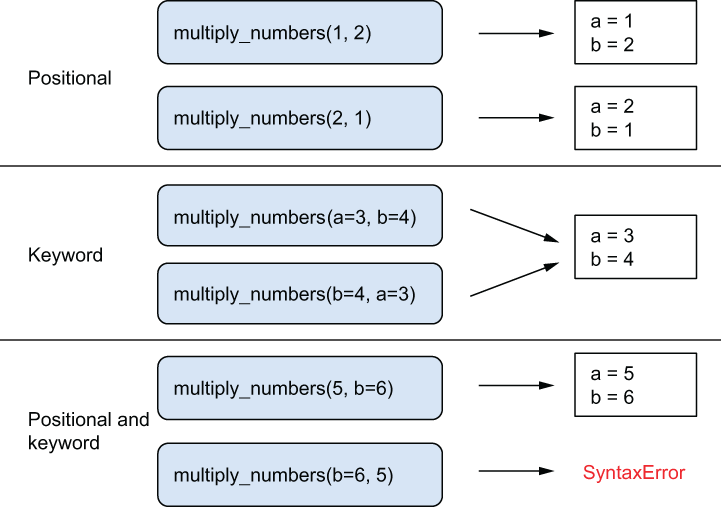 Figure 6.6 Using positional and keyword arguments in function calls.
Docstrings
Functions can be documented using docstrings to provide information on their usage. When writing docstrings, include a summary of the function's purpose, document each parameter with its name, type, and description, specify the return value, and list any exceptions that the function might raise.
Example of a Docstring
def quotient(dividend, divisor, taking_int=False):
    """
    Calculate the product of two numbers with a base factor.

    :param dividend: int | float, the dividend in the division
    :param divisor: int | float, the divisor in the division
    :param taking_int: bool, whether only taking the integer part of
    ➥  the quotient; default: False, which calculates the
    ➥  precise quotient of the two numbers

    :return: float | int, the quotient of the dividend and divisor
    """
    result = dividend / divisor
    if taking_int:
        result = int(result)
    return result
Functions as Objects
In Python, functions are treated as objects, which means they can be stored in data containers, passed as arguments to other functions, and returned as values from functions. This allows for flexible and dynamic programming patterns.
Example of Functions in a Dictionary
actions = {"mean": get_mean, "min": get_min, "max": get_max}

def fallback_action(data):         #1
    return "error in action"

def process_data(data, action):
    calculation = actions.get(action, fallback_action)
    processed = calculation(data)
    return processed
#1 The fallback function is called when none of the defined actions are used.
Testing Functions
Testing functions involves providing specific input and verifying that the output matches the expected result. This process can be automated using tools like the unittest module in Python. Creating a TestCase subclass involves inheriting from the unittest.TestCase class and defining test methods within it. These methods should start with the test_ prefix to be recognized as tests.
Example of a Function to be Tested
class Task:                               #1
    def __init__(self, title, urgency):
        self.title = title
        self.urgency = urgency

def create_task(text):
    title, urgency_text = text.split(",")
    urgency = int(urgency_text)
    task = Task(title, urgency)
    return task
#1 Creates a custom class
Functions are a fundamental part of Python programming, providing a way to encapsulate code for reuse, testing, and organization. Understanding their capabilities and how to effectively use them is crucial for any Python developer.
| Book Title | Usage of function | Technical Depth | Connections to Other Concepts | Examples Used | Practical Application |
|------------|-------------------|-----------------|-------------------------------|---------------|-----------------------|
| [Python How-To](https://www.manning.com/books/python-how-to) | Functions are described as reusable code blocks that can accept parameters and return values. They are first-class objects and can be enhanced with decorators. | Discusses first-class functions, decorators, and type hinting. | Connects to functional programming paradigms and modular code design. | Includes examples of functions with default arguments, lambda functions, and type hints. | Practical applications include sorting with custom functions and testing functions. [more](https://livebook.manning.com/book/python-how-to/chapter-6/1) |
| [Tiny Python Projects: Learn coding and testing with puzzles and games](https://www.manning.com/books/tiny-python-projects) | Functions are used for modularity and reusability, defined with `def` and can return values. | Focuses on writing and testing functions. | Emphasizes testing with frameworks like `pytest`. | Provides examples like the `greet` and `verse()` functions. | Demonstrates testing functions and generating song verses. [more](https://livebook.manning.com/book/tiny-python-projects/chapter-11/1) |
| [A Pythonic Adventure: From Python basics to a working web app](https://www.manning.com/books/a-pythonic-adventure) | Functions are reusable code blocks for specific tasks, defined with `def`. | Covers basic to advanced function usage, including file reading and database interaction. | Links to file handling, database operations, and web applications. | Examples include menu creation and reading from files. | Practical use in creating menus and interacting with databases. [more](https://livebook.manning.com/book/a-pythonic-adventure/chapter-7/1) |
| [Practices of the Python Pro](https://www.manning.com/books/practices-of-the-python-pro) | Functions are used for modularity, breaking down complex problems. | Discusses function size, responsibility, and extracting functions. | Connects to concepts like cyclomatic complexity and separation of concerns. | Examples include JSON/XML formatting and rock-paper-scissors game. | Practical applications in service endpoints and game logic. [more](https://livebook.manning.com/book/practices-of-the-python-pro/chapter-2/79) |
| [The Well-Grounded Python Developer: How the pros use Python and Flask](https://www.manning.com/books/the-well-grounded-python-developer) | Functions create a namespace for variable scope and are essential for APIs. | Emphasizes single responsibility and idempotency. | Relates to API design and scope management. | Example of `full_name_and_print` function demonstrating single responsibility. | Focus on API design and function testing. [more](https://livebook.manning.com/book/the-well-grounded-python-developer/chapter-2/138) |
| [Python Concurrency with asyncio](https://www.manning.com/books/python-concurrency-with-asyncio) | Functions can be regular or coroutines, crucial for asynchronous programming. | Explores the `TaskRunner` class for managing functions and coroutines. | Connects to asynchronous programming and `asyncio` library. | Example of `TaskRunner` class handling both functions and coroutines. | Practical use in managing concurrency with `asyncio`. [more](https://livebook.manning.com/book/python-concurrency-with-asyncio/chapter-14/15) |
| [Classic Computer Science Problems in Python](https://www.manning.com/books/classic-computer-science-problems-in-python) | Functions are used to implement algorithms and solve computational tasks. | Discusses recursive and iterative approaches. | Connects to algorithm design and computational efficiency. | Examples include recursive and iterative Fibonacci functions. | Practical application in solving classic computer science problems. [more](https://www.manning.com/books/classic-computer-science-problems-in-python) |
FAQ (Frequently asked questions)
What is a function in programming?
Why are functions important in programming?
How can you create a menu using a function in Python?
What is an example of a menu function in Python?
How do you add menus using a function in Python?
What is a function in Python?
How do functions return values in Python?
How can you read a menu from a file using a function in Python?
What does the 'read_menu' function do in Python?
What is the purpose of a function in Python?
How does the 'main_menu' function work in Python?
What is the purpose of the 'menu' function in the main menu program?
How does the order confirmation function work in the main menu?
What does the 'get_orders' function do in Python?
How does the 'list' function work in a Flask application?
What is a function's scope in Python?
Where do functions exist in Python?
What are the characteristics of a good function for an API?
Why should functions adhere to the single responsibility principle?
Can you provide an example of a function that follows the single responsibility principle?
What does the function full_name_and_print do?
What are the parameters of the full_name_and_print function?
What is a function in Python?
How are functions used in sorting lists in Python?
What is an example of a function used in sorting?
How do custom functions help in sorting lists?
What does the using_urgency_level function do?
What is a lambda function in Python?
How can lambda functions be used in sorting?
What are the characteristics of functions in Python?
What is the purpose of default arguments in functions?
How can default arguments be used in a function?
What is the benefit of calling functions with default arguments?
Why define functions with default arguments?
What does the id function do in Python?
What is the purpose of a function in Python?
How does a function return values in Python?
What is type hinting in Python functions?
How does type hinting improve function definitions?
How can type hints be used in a function?
How can functions accept a variable number of arguments?
What is the difference between positional and keyword arguments?
What is a docstring in Python functions?
How do you write a proper docstring for a function?
What should be included in a function's docstring?
What features can Python functions have?
What does it mean for functions to be first-class objects in Python?
How can functions be stored in data structures?
What are the implications of treating functions as objects in Python?
How can decorators enhance Python functions?
How can you check a function's performance using decorators?
What is the benefit of using decorators in Python?
What is a decorator function in Python?
Where should the return statement be placed in a decorator function?
How can you preserve a function's metadata when using decorators?
What are higher-order functions in Python?
How do functions differ from classes in Python?
What is the output of printing a function in Python?
What is the difference between functions and classes in Python?
Is the map function actually a function in Python?
Why is testing functions important?
How can you define a function to be tested?
How can functions be tested automatically?
What is a TestCase subclass in Python testing?
What is a function in the context of Python concurrency?
How does the TaskRunner class handle functions?
Can the API be used in both synchronous and asynchronous applications?
What is the purpose of the TaskRunner class in Python?
How does the TaskRunner class add tasks?
How does the TaskRunner class execute tasks?
What happens when a coroutine is added to the TaskRunner?
How are regular functions executed in the TaskRunner?
What is the output of the provided TaskRunner example?
How do you define a function in Python?
What does a function in Python do?
What are the steps to write a function in Python?
How do you test a function in Python?
Why is it important to write tests for a function?
What is the purpose of the verse() function?
How is the verse() function used in a loop?
What is a function in Python?
How do functions help in programming?
What do functions do with inputs and outputs?
What is an example of using functions in Python?
How are functions used in a rock-paper-scissors game?
What is the role of a function in programming?
How can conditionals and loops be used in a function?
What does the function 'has_long_words' do?
How should the size of a function be determined?
What is the benefit of extracting functions?
How can functions be used to format responses?
What does the 'random_food' function do?
What is the purpose of extracting functions?
How do you define a function in Python?
What does a Python function return if no return statement is specified?
What is the purpose of a docstring in a Python function?
How can you define a basic function to calculate factorial in Python?
What is the purpose of the fact function in Python?
What is the syntax for defining a function in Python?
How do you return a value from a Python function?
How can you compute x to the power of y in Python?
What are positional parameters in Python functions?
Do the number of arguments need to match the number of parameters in Python functions?
Can Python function parameters have default values?
Where must default values be specified in a Python function?
How can arguments be passed by parameter name in Python?
How can Python functions handle variable numbers of arguments?
What does *args do in a Python function?
What does **kwargs do in a Python function?
How can you find the maximum in a list of numbers using a Python function?
How can a Python function handle an indefinite number of keyword arguments?
What does the example_fun function do with keyword arguments?
Can you mix different argument-passing techniques in Python functions?
What is the order of argument-passing techniques in Python functions?
What is the purpose of using functions in Python?
How are functions used in data processing in Python?
How can you clean a line of text in Python?
What does the clean_line function do?
How can AI tools assist in refactoring Python code?
What are some potential drawbacks of using AI tools for Python code refactoring?
What is a function in Python?
How can arguments be passed to a Python function?
What are first-class objects in Python?
How can a Python function access external variables?
What is an anonymous function in Python?