HTTP Server in Rust
Overview
An HTTP server in Rust is constructed using several key components: a server, router, handler, and an HTTP library. These components work together to listen for TCP connections, parse HTTP requests, route them to the appropriate handlers, and construct HTTP responses. The design of the web server adheres to the single responsibility principle (SRP), ensuring that each component has a specific purpose.
Components of the HTTP Server
-
Server: The server is responsible for listening to incoming TCP byte streams. It acts as the entry point for all client requests.
-
HTTP Library: This component interprets the incoming byte stream and converts it into an HTTP request message. It also handles the conversion of HTTP response messages back into byte streams for transmission to the client.
-
Router: The router's role is to accept an HTTP request and determine which handler should be invoked to process the request. It acts as a traffic director, ensuring that requests are routed to the correct destination.
-
Handler: The handler processes the HTTP request and constructs an appropriate HTTP response. It is the component that contains the logic for generating the content that will be sent back to the client.
Building an HTTP Server in Rust
The chapter provides a detailed example of building an HTTP server in Rust from scratch. This example demonstrates how to handle HTTP requests and responses without relying on external libraries. The server is capable of serving both HTML content and JSON data, functioning as both a web server and a web service.
Visualizing the Web Server
The communication flow between the client and the various modules of the web server is depicted in Figure 2.3. This figure illustrates how the server, HTTP library, router, and handler interact to process requests and generate responses.
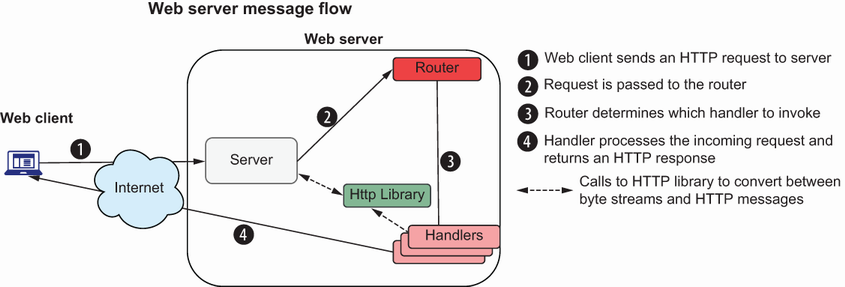 Figure 2.3 Web server message flow
Design Overview
The design overview of the web server is shown in Figure 2.5. This figure provides a high-level view of how the components are organized and how they collaborate to form a functional HTTP server.
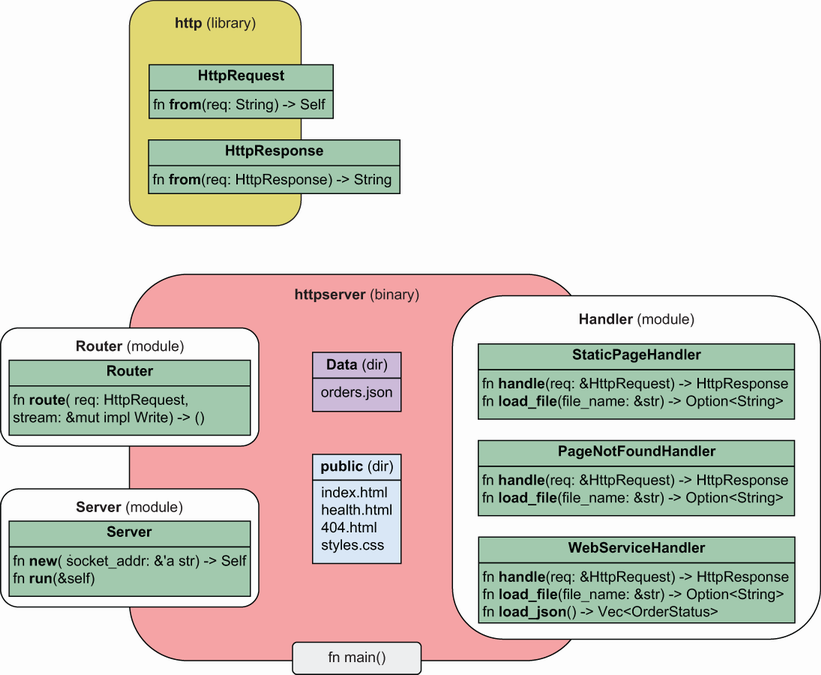 Figure 2.5 Design overview of the web server
By following the principles and structure outlined in these figures, developers can create a robust and efficient HTTP server in Rust, capable of handling a variety of web service tasks.
FAQ (Frequently asked questions)
How can you build an HTTP server in Rust from scratch?
What components are involved in writing an HTTP server in Rust?
Can you handle HTTP requests and responses in Rust without external libraries?
What does an HTTP server in Rust do?
What components are used to build an HTTP server in Rust?
What does Figure 2.5 in the book 'Rust Servers, Services, and Apps' show?