Meta in Rust Macros
In the context of Rust macros, "meta" refers to metadata associated with attributes in Rust code. Attributes in Rust are used to provide additional information about code elements, such as functions, structs, or modules. These attributes can be simple identifiers, key-value pairs, or lists of items, and they are often used to control aspects of code generation, compilation, or behavior.
Understanding Meta
The concept of "meta" in Rust is closely tied to how attributes are structured and interpreted. Attributes can be categorized into different forms, such as:
- Simple Attributes: These are basic identifiers that provide straightforward metadata.
- Meta: This refers to a more complex form of attribute that can include key-value pairs or lists, providing richer metadata.
- MetaList: This is a list of meta items, allowing for multiple pieces of metadata to be associated with a single attribute.
Visual Representation
To better understand the structure and categorization of attributes, meta, and metalists, refer to the following figure:
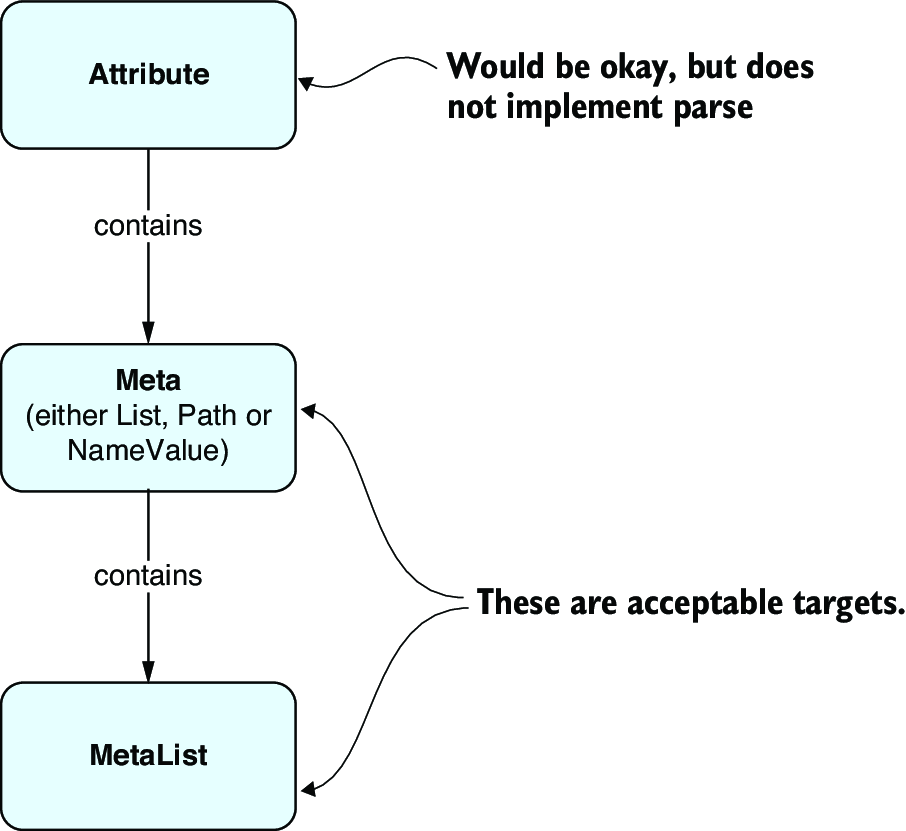 Figure 8.7 Attribute, Meta, or MetaList
This figure illustrates the different forms that attributes can take, highlighting the distinction between simple attributes, meta, and metalists. Understanding these forms is crucial for effectively using and writing macros in Rust, as they dictate how metadata is parsed and applied within the code.
FAQ (Frequently asked questions)
What is depicted in Figure 8.7 of 'Write Powerful Rust Macros'?
What is the title of Figure 8.7 in the book 'Write Powerful Rust Macros'?