concept view in category big data
This is an excerpt from Manning's book Introducing Data Science: Big data, machine learning, and more, using Python tools.
When you combine data, you have the option to create a new physical table or a virtual table by creating a view. The advantage of a view is that it doesn’t consume more disk space. Let’s elaborate a bit on these methods.
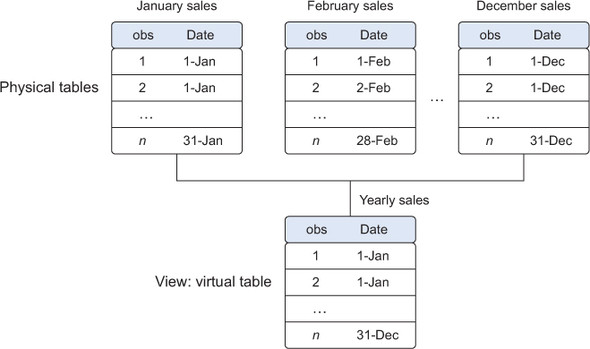
To avoid duplication of data, you virtually combine data with views. In the previous example we took the monthly data and combined it in a new physical table. The problem is that we duplicated the data and therefore needed more storage space. In the example we’re working with, that may not cause problems, but imagine that every table consists of terabytes of data; then it becomes problematic to duplicate the data. For this reason, the concept of a view was invented. A view behaves as if you’re working on a table, but this table is nothing but a virtual layer that combines the tables for you. Figure 2.9 shows how the sales data from the different months is combined virtually into a yearly sales table instead of duplicating the data. Views do come with a drawback, however. While a table join is only performed once, the join that creates the view is recreated every time it’s queried, using more processing power than a pre-calculated table would have.