concept module in category coffeescript

This is an excerpt from Manning's book CoffeeScript in Action.
The following listing provides the program to serve a web page with the total number of guests at Scruffy and Agtron’s party using the techniques and concepts from this chapter. Note that this listing requires the compiler to be available as a module, so to run it you first need to run npm install coffee-script from the command line in the folder you want to run it from. Exactly what modules are and what npm install does are covered in chapter 12. For now, on to the listing.
What you’re not yet familiar with is creating your own modules. That’s what you’ll learn in this chapter: how to create and use server-side modules for Node.js, how to build those modules into a complete application using Cake, how to run your tests against that built application, and how to use the same approach to modules in a web browser. Finally, you’ll learn how to deploy your program for the world to see. First up, modules.
When an application is divided into multiple parts, or modules, there must be a way to join the modules together. That’s done using a module system. At a high level, the module system provides a way for one part of the system to use parts of the program from another module, like in figure 12.2.
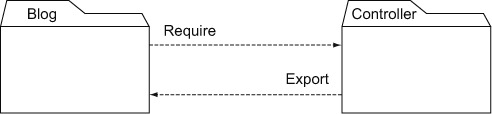
3 There are no modules in the fifth edition of the ECMAScript specification. See chapter 13 for a discussion of modules in upcoming editions of ECMAScript.
# -- main.coffee --
{Comments} = require 'comments'

# <rest of module omitted>

# -- comments.coffee --
class Comments

# <rest of module omitted>

exports.Comments = Comments