concept race condition in category go

This is an excerpt from Manning's book Go in Practice.
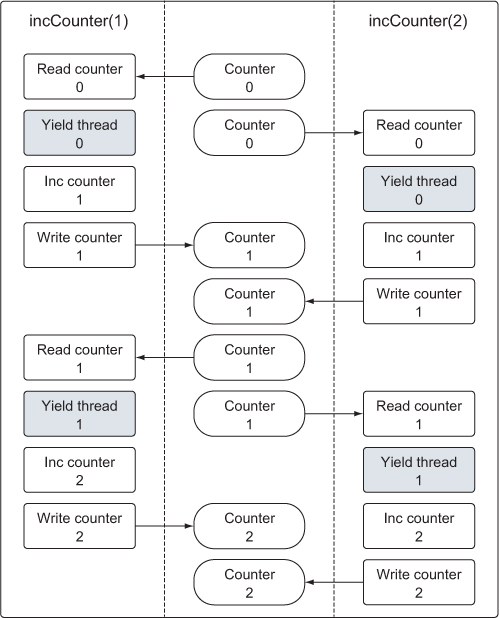
Anytime two or more goroutines are working with the same piece of data, and that data may change, you have the potential for a race condition. In a race condition, two things are “racing” to use the same piece of information. Problems arise when both are working with the same data at around the same time. One goroutine may be only partway through modifying a value when another goroutine tries to use it. And that situation can have unintended consequences.
When attempting to parallelize processing with multiple goroutines and multiple CPUs, you run the possibility of accidentally accessing things in the wrong order. A race condition occurs when two or more goroutines attempt to modify the same piece of information at about the same time. If the execution order differs from what you intend, the result may be surprising. And these conditions are often hard to diagnose. But Go includes a race detection tool, and the preceding parallel benchmark technique provides an opportunity to try it.

This is an excerpt from Manning's book Go in Action.
When two or more goroutines have unsynchronized access to a shared resource and attempt to read and write to that resource at the same time, you have what’s called a race condition. Race conditions are the reason concurrent programming is complicated and has a greater potential for bugs. Read and write operations against a shared resource must always be atomic, or in other words, done by only one goroutine at a time.
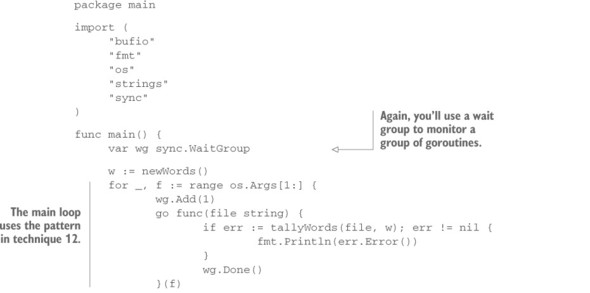
Here’s an example program that contains a race condition.