concept css in category liferay

This is an excerpt from Manning's book Liferay in Action: The Official Guide to Liferay Portal Development.
AlloyUI is an interface metaframework. Okay, that probably sounded like gobbledegook, but bear with me for a second. Web site front ends are created using a combination of three technologies: HTML, CSS, and JavaScript (see figure 4.4), right? These three technologies together form the user experience for any site. HTML provides the overall structure of the document served up by the site, including its content. CSS provides the visual layer: how the document is presented visually to the user. It depends on a well-defined structure from the HTML in order to do this. JavaScript provides the interactive elements of any web page. If something moves, changes, or can be dragged, dropped, resized, or removed, JavaScript is enabling that for the end user.
Figure 4.4. AlloyUI unifies three components, HTML, CSS, and JavaScript, in one easy-to-use metaframework.
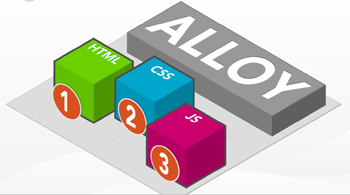
AlloyUI was designed because user interface developers tend to have to solve the same kinds of problems over and over. Rather than continuing that cycle, you can use AlloyUI to solve common problems across the spectrum of HTML, CSS, and JavaScript. It combines the best of existing solutions under one consistent API, which makes it easier to use than trolling the internet to find a cookbook recipe for a common problem you know someone has already solved. Been there, done that, don’t want to do it anymore.
Liferay makes writing themes as straightforward as possible. If you have experience in coding HTML, CSS, and JavaScript, you should be right at home with Liferay themes. Here’s a warning up front about this chapter: as in the previous chapters, which assumed knowledge of Java web applications, here I’m assuming knowledge of HTML, CSS, and JavaScript. If you don’t have familiarity with these technologies, there are many great books on the subject, including John Resig’s Secrets of the JavaScript Ninja (Manning, 2011) and David Flanagan’s JavaScript: The Definitive Guide (O’Reilly, 2011).