For someone navigating with assistive technology, visual appearance alone cannot convey a page’s structure or controls. Browsers derive an accessibility tree from the DOM, preserving information important for understanding and interaction while leaving out purely decorative details. section 2.5.3
The tree can expose an element’s role, current state, accessible name, and relationships, as well as headings and landmarks. This information reaches assistive technologies; semantic HTML helps browsers represent the page meaningfully. ARIA can add semantics to custom components, but does not replace correct structure or keyboard behavior. section 2.5.3 section 2.6
Figure 2.7 After receiving a response from a server, the browser builds several internal representations of any web page, including a Document Object Model (DOM) tree, a layout and rendering structure, and an accessibility tree. The accessibility tree exists specifically for assistive technologies. It is derived from the DOM, but consists only of essential elements that matter for understanding and interaction, stripping away decorative elements and purely visual details that don’t convey meaningful content, structure, or functionality.
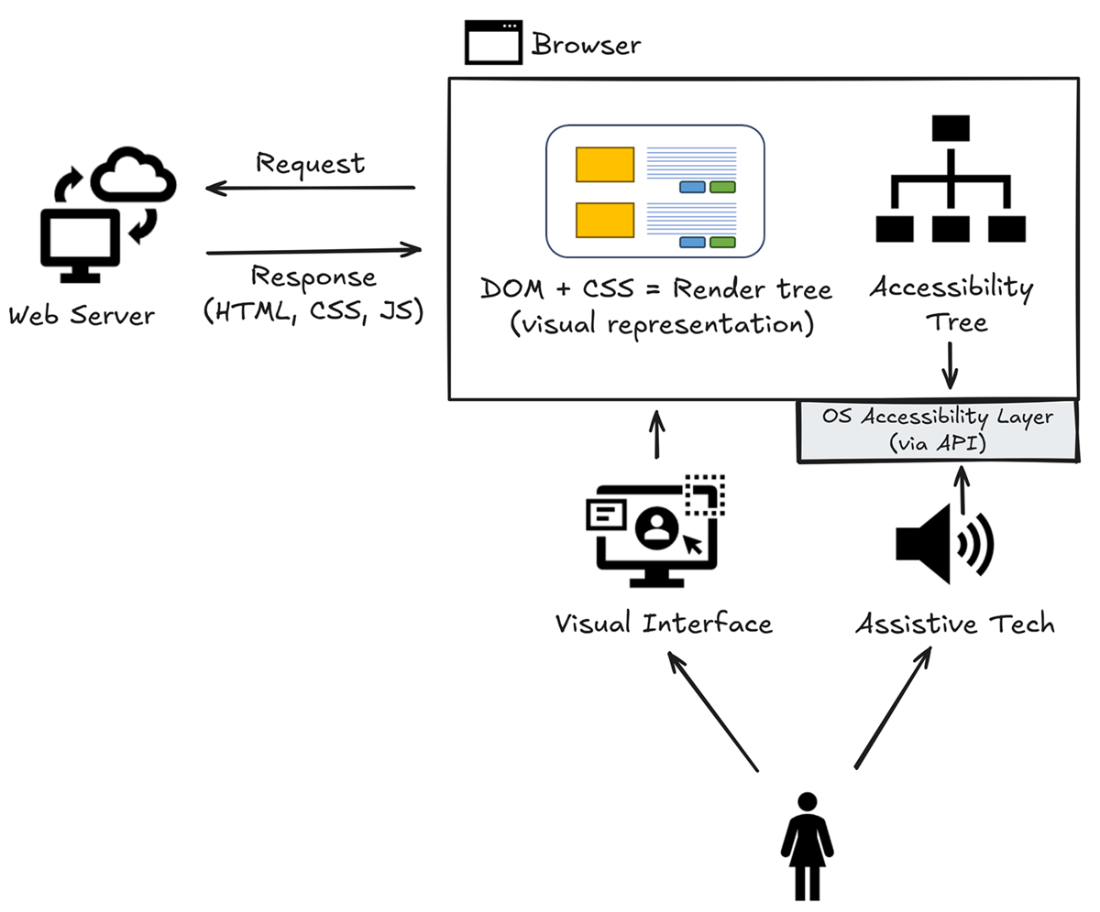
See how the browser’s accessibility tree keeps meaningful interface information while omitting decorative presentation. section 2.5.3