An administrative API turns Kafka cluster management into repeatable programmatic operations instead of ad hoc scripts or manual console changes. It supports the governance needed when multiple teams share topics, schemas, access policies, and infrastructure across environments. section 10.0 section 10.2.3
Use the Kafka Admin Client API to manage:
- Topics: create, modify, and delete them; adjust partitions, replication factors, and retention settings. section 10.2.3
- Broker configuration: update settings dynamically as operational requirements change. section 10.2.3
- Access control: manage ACLs that enforce security policies. section 10.2.3
- Consumer groups: inspect offsets and reset them when recovery or operational intervention requires it. section 10.2.3
A GitOps-managed Kafka environment
A platform team can represent topics, partitions, retention, replication, and ACLs as approved environment configuration, then use the administrative API to apply consistent changes across environments. The API does not replace governance: it makes approved infrastructure changes repeatable and auditable rather than dependent on quick setup scripts. section 10.0 section 10.2.3
Figure 9.1 Controllers operate as a quorum, responsible for storing metadata and monitoring cluster health.
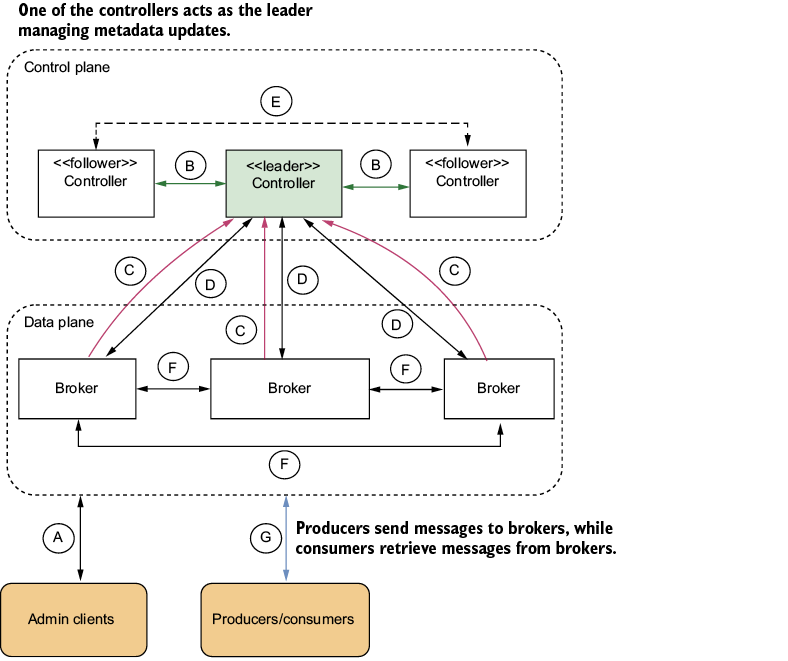
Trace how an admin client request reaches brokers and the leader controller, which updates replicated cluster metadata and maintains cluster state. section 9.1

