An aggregate groups related data and treats it as one unit. In a NoSQL document database, a customer’s profile, addresses, and recent orders can live together in one document, ready to retrieve in a single operation. section 8.2.2
Bundling data makes some operations easier, but introduces a tradeoff:
- Reading a complete entity can be faster because its related data arrives together, without joins. section 8.2.2
- Updating a specific piece across many aggregates can be harder because each document may need to be opened and changed. section 8.2.2
Figure 8.3 Showing how NoSQL Document databases store data. Instead of splitting a customer and their orders across separate tables linked by Foreign Keys, all related information is nested into a single, self-contained document. When the application asks for Alice's profile, the database returns her orders at the exact same time; no expensive "Joins" required!
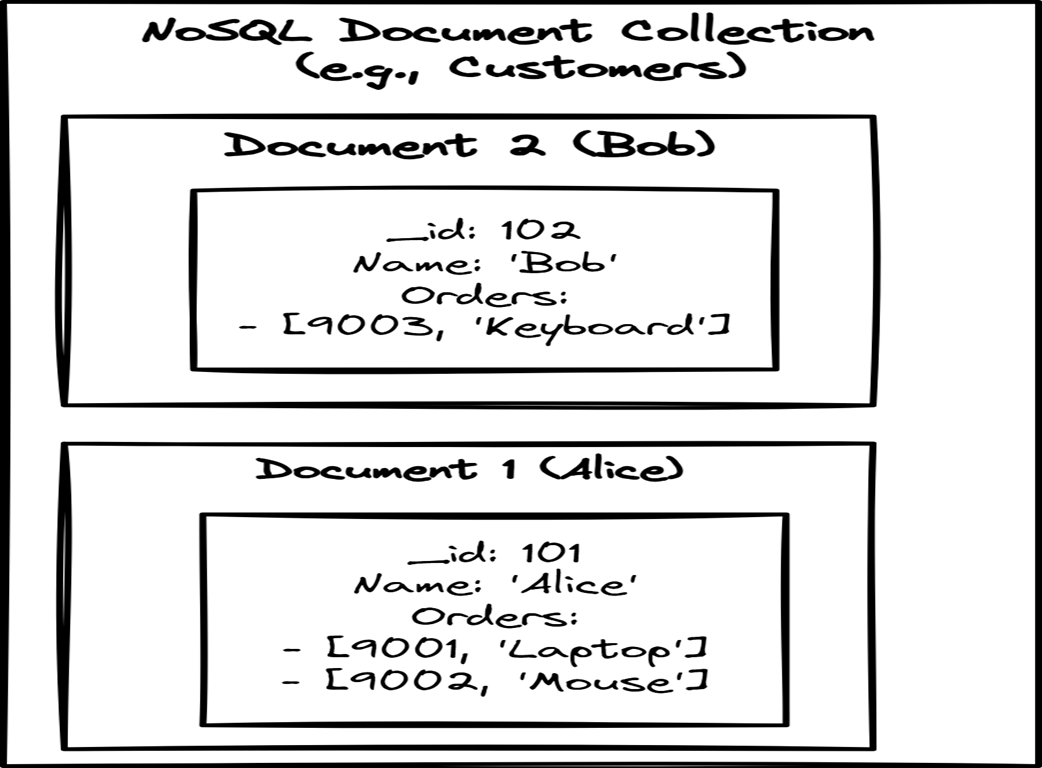
See how a customer and their orders can be nested in one document rather than split across related tables. section 8.2.2