A digital companion is an artificial-intelligence system designed for ongoing companionship or emotionally oriented interaction. Unlike a one-time question-answering tool, it aims to sustain a relationship through conversation, attention, memory, and personalized responses. section 9.2 section 10.4
People may turn to these systems amid loneliness, emotional strain, grief, isolation, or limited access to mental-health care. Constant availability, perceived emotional safety, patience, and customization can make disclosure feel easier, while some users seek coaching, mentorship, emotional exchange, or romantic role-play. section 9.2 section 9.3
Digital companions can create a sense of relationship through several mechanisms:
- Personalization lets users adjust appearance, personality, and conversational style. section 9.3
- Memory, praise, emotional mirroring, and consistent attentiveness simulate aspects of caring relationships. section 9.3
- Persistent assistants may eventually track exchanges, goals, moods, and habits across devices and contexts. section 10.4
A customizable relationship
A person who feels isolated might configure a chatbot as a supportive coach or romantic partner, use it for frequent emotional conversations, and value its predictable, nonjudgmental responses. The same convenience can raise questions about dependency, authenticity, and whether simulated support should replace human relationships or professional care. section 9.3
Figure 10.1 Structured memory graph for personalized AI
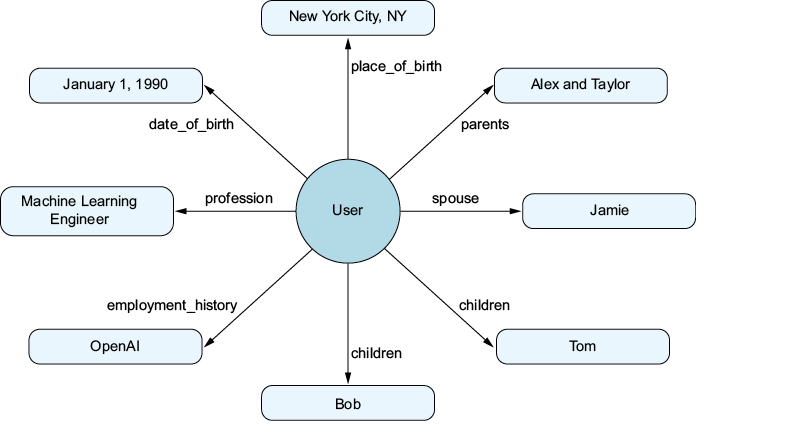
A structured memory graph helps visualize how a personalized companion could retain and connect information across interactions. section 10.4
