Conversational ai
Conversational AI is artificial intelligence that enables software systems to interpret user input and interact with users through natural-language dialogue.
AI for Everyday IT
Conversational AI is artificial intelligence that supports ongoing dialogue by interpreting user messages and generating context-aware responses.
- How it is used
- Supports IT work through dialogue, including troubleshooting, documentation, and workplace communication.
- How deep it goes
- Explains chatbot use through task examples, tool comparisons, and token limits rather than model internals.
- Examples
- Uses VPN ticket analysis, email summaries, and clarification questions for a fuzzy laptop screen.
- What you can do after
- Apply it via ChatGPT or another assistant to investigate IT problems and draft workplace communications, while checking results.

Natural Language Processing in Action, Second Edition
A dialog engine is a software system that manages conversational interaction and generates responses to user statements.
- How it is used
- Uses dialog engines to support natural-language interaction across customer service, virtual assistants, and other applications.
- How deep it goes
- Develops a keyword recognizer and a multistage chatbot architecture, then addresses conversation design and monitoring; largely leaves speech processing to external tools.
- Examples
- Uses a Python greeting recognizer and examples ranging from virtual assistants to customer service and healthcare chatbots.
- What you can do after
- Builds a chatbot from scratch by combining NLP pipeline components and selecting approaches for a conversational application.
Read how Natural Language Processing in Action, Second Edition explains conversational ai →
Grokking AI Applications
Conversational AI is artificial intelligence that interacts with users through natural-language dialogue.
- How it is used
- Uses conversational AI as a practical entry point for designing generative AI applications around a language model.
- How deep it goes
- Explains conversational AI through model limitations and supporting components, then develops a basic chatbot without requiring model-architecture internals.
- Examples
- Uses a name-recall exchange, a pirate-speaking chatbot, and a PDF question-answering assistant to illustrate conversational AI.
- What you can do after
- Apply conversational AI via Langflow to assemble and test a simple chatbot.
Read how Grokking AI Applications explains conversational ai →
Introduction to Generative AI, Second Edition
A conversational agent is an AI software system that interacts with users through natural-language dialogue to answer questions or perform tasks.
- How it is used
- Uses conversational AI to explore dialogue-based assistance across work, daily life, customer service, and social interaction.
- How deep it goes
- Explains chatbot evolution, applications, and risks at an overview level, contrasting command-based assistants with more flexible systems.
- Examples
- Illustrates dialogue through ELIZA, bank customer-service bots, a contract-revision prompt, and personal assistants planning trips.
- What you can do after
- Evaluate conversational AI uses and risks, including inaccurate responses, confidential-data exposure, and emotional over-reliance.
Read how Introduction to Generative AI, Second Edition explains conversational ai →
Coding with AI
Software that performs tasks or provides information through conversational interaction, often using natural-language processing.
- How it is used
- Uses conversational assistants to support software planning, coding, troubleshooting, and iterative design.
- How deep it goes
- Demonstrates task-specific prompting, response refinement, implementation, and review rather than developing conversational systems from scratch.
- Examples
- Uses a practice-test session reset and a Flask frontend strategy to illustrate assistant conversations.
- What you can do after
- Apply it via ChatGPT, Gemini, or Blackbox AI to solicit development guidance, refine responses, and validate suggestions.
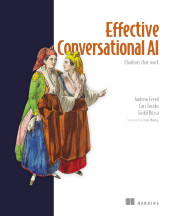
Effective Conversational AI
A virtual assistant is software that conducts natural-language interactions to answer questions or perform tasks for a user.
- How it is used
- Automates customer service, answers questions, guides transactions, or routes users to specialist bots and human agents.
- How deep it goes
- Explains the request-to-fulfillment flow, its main components, user-centered design, and improvement criteria; defers a fuller build-process treatment.
- Examples
- Contrasts burdensome and context-aware claim-status conversations and uses password resets to illustrate intent recognition and fulfillment.
- What you can do after
- Build it from scratch with IBM watsonx Assistant, then evaluate user friction and improve the assistant against business outcomes.
Read how Effective Conversational AI explains conversational ai →
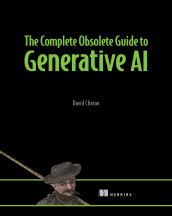
The Complete Obsolete Guide to Generative AI
Software that interacts with users conversationally and performs information, control, or task-oriented operations.
- How it is used
- Positions assistants as round-the-clock service and customer-support automation for faster responses and leaner operations.
- How deep it goes
- Mentions assistant applications and benefits but does not detail their implementation, prompting, or configuration.
- Examples
- Uses round-the-clock virtual assistance and startup customer-support chatbots as practical examples.
- What you can do after
- Evaluate/understand assistants as tools for improving service speed, automating work, and supporting business decisions while allowing for output errors.
Read how The Complete Obsolete Guide to Generative AI explains conversational ai →

Generative AI in Action
A chatbot is software that conducts conversational interactions with users through text or speech.
- How it is used
- Uses conversational assistants for enterprise questions, data access, and developer support.
- How deep it goes
- Explains a staged chat-with-data workflow and application layers without deep model internals.
- Examples
- Uses a blog-post question-answering application and Copilot Chat explanations of selected and legacy code.
- What you can do after
- Apply it using Redis and an LLM to design a chat application over stored data.
Read how Generative AI in Action explains conversational ai →
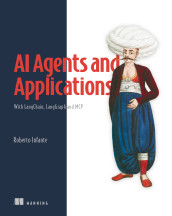
AI Agents and Applications
A chatbot is a conversational software interface that maintains context across multiple exchanges for dialogue and interactive question answering.
- How it is used
- Uses chatbots for conversational Q&A that combines dialogue with knowledge retrieval.
- How deep it goes
- Builds retrieval and generation step by step, then integrates conversation history into a LangChain workflow.
- Examples
- Uses Paestum temple questions and an ambiguous follow-up about the Romans to test document Q&A and conversational memory.
- What you can do after
- Builds a basic retrieval-based chatbot and applies conversational memory using LangChain.
Read how AI Agents and Applications explains conversational ai →
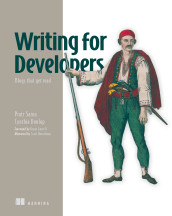
Writing for Developers: Blogs that get read
A software system that communicates with users through conversational messages, typically in response to prompts or events.
- How it is used
- Uses conversational AI as a final writing-review assistant for surfacing possible language errors.
- How deep it goes
- Explains prompting, iterative review, and skeptical validation, but stops short of describing chatbot implementation internals.
- Examples
- Demonstrates article-usage questions and prompts checking grammar, spelling, punctuation, verb tense, and terminology.
- What you can do after
- Apply via AI chatbots to surface candidate language errors, then verify each suggestion and revise selectively.
Read how Writing for Developers: Blogs that get read explains conversational ai →
AI Agents in Action
A chatbot is a software system that conducts conversational interactions with users, typically without autonomous multi-step task execution.
- How it is used
- Introduces conversational interfaces as a starting point for distinguishing simple chatbots from tool-using and autonomous agents.
- How deep it goes
- Explains interaction types and walks through assistant configuration, while treating planning and evaluation at an application level.
- Examples
- Uses a calculus teaching assistant and a customer service bot to illustrate knowledge-based conversation and response evaluation.
- What you can do after
- Apply it via ChatGPT by configuring and testing a knowledge-based assistant with instructions and an uploaded document.
Machines that Think
An AI-powered system that interacts with users to provide information, generate content, or help carry out tasks.
- How it is used
- Frames conversational AI as an accessible interface that moves from experimentation into work, learning, and everyday interaction.
- How deep it goes
- Surveys interaction patterns, adoption, and social consequences, with limited attention to underlying technical mechanisms.
- Examples
- Uses essay-writing studies and doing, asking, and expressing interactions to illustrate assistance and conversational intent.
- What you can do after
- Evaluate conversational AI uses by weighing convenience and guidance against reliability, learning, and dependency risks.
Build AI-Enhanced Web Apps
AI technology that supports interactive, dialogue-based communication with users.
- How it is used
- Uses natural-language dialogue as an interface for web support and document-based knowledge access.
- How deep it goes
- Progresses from a basic text chat to a full-stack retrieval project, including state synchronization and production considerations.
- Examples
- Uses a support-style message interface, a voice interview assistant, and chat over uploaded knowledge-base documents.
- What you can do after
- Apply it via the Vercel AI SDK and LangChain.js to build a document-grounded conversational application.
Read how Build AI-Enhanced Web Apps explains conversational ai →

WordPress Power Toolkit: Harness AI to build next-level websites
An AI system is a software system that uses artificial-intelligence methods to perform tasks such as interpreting queries and generating or ranking answers.
- How it is used
- Supports website planning and blog promotion through conversational requests, while also shaping how potential visitors discover sites.
- How deep it goes
- Explains specific prompts and follow-up requests through examples, without detailing how AI systems generate answers.
- Examples
- Uses a bakery-owner writing prompt, a catering-site color request, and a blog-promotion query.
- What you can do after
- Apply it via GPT to request website color ideas and refine the response with follow-up questions.
Designing AI Systems
A personal AI assistant is an AI application that helps an individual by understanding requests, providing information, and performing actions on the user's behalf.
- How it is used
- Uses conversational assistants to show how platform services turn model-driven prototypes into applications with memory, knowledge, actions, and safety.
- How deep it goes
- Develops an assistant incrementally through service coordination, context engineering, an agent loop, safety checks, deployment, and observability.
- Examples
- Traces a retail return-policy question and illustrates a healthcare assistant searching organizational documents and returning source identifiers.
- What you can do after
- Builds a personal assistant by coordinating platform services for memory, retrieval, actions, safety, and measurement.

Lead Developer Career Guide
Artificial intelligence that communicates with people through natural-language dialogue.
- How it is used
- Places AI assistance in software development and tool-adoption decisions, without establishing a natural-language dialogue use case.
- How deep it goes
- Explains coding-assistant capabilities and adoption criteria, but does not explain conversational AI or its internals.
- Examples
- Uses GitHub Copilot’s code suggestions and function generation as concrete examples of AI assistance.
- What you can do after
- Evaluate/understand AI coding tools for team adoption, rather than build a conversational system.
Read how Lead Developer Career Guide explains conversational ai →
AI Agents in Action, Second Edition
A software system that performs tasks with user approval, typically through a conversational interface.
- How it is used
- Distinguishes tool-using assistants from direct language-model chat and autonomous agents.
- How deep it goes
- Defines interaction patterns and approval boundaries, stopping short of an assistant implementation.
- Examples
- Illustrates request reformulation for image generation and identifies Claude Desktop as an assistant.
- What you can do after
- Evaluate interaction patterns by comparing tool use, autonomy, and approval boundaries.
Read how AI Agents in Action, Second Edition explains conversational ai →

The Quick Python Book, Fourth Edition
A chatbot is software that conducts conversational interactions with users through natural-language input and output.
- How it is used
- Uses conversational AI to generate and refactor Python solutions from natural-language prompts.
- How deep it goes
- Demonstrates prompt construction and generated-code evaluation without explaining chatbot internals.
- Examples
- Uses a Unix wc-style program and a weather-data CSV extraction to illustrate prompting and generated-code defects.
- What you can do after
- Evaluate generated Python code and refine prompts using knowledge of the problem and language.
Read how The Quick Python Book, Fourth Edition explains conversational ai →

LLMs in Production
An AI assistant is software that interacts with users and performs tasks through artificial-intelligence capabilities.
- How it is used
- Uses language interaction to improve communication and automate tasks such as customer support, shopping recommendations, and coding assistance.
- How deep it goes
- Links chatbot dataset preparation to a VS Code copilot built around an existing model and RAG, without detailing assistant internals.
- Examples
- Uses an HR FAQ chatbot and a Python-focused VS Code copilot to illustrate practical applications.
- What you can do after
- Build a Python-focused VS Code copilot around an existing coding model and RAG, or prepare Slack data for chatbot training.

The Art of AI Product Development
A virtual assistant is software that interacts with users conversationally to provide information or perform requested tasks.
- How it is used
- Supports user interaction through conversation, alongside graphical or hybrid interface options.
- How deep it goes
- Places conversational interfaces within the AI solution space and links interface design to automation and user control.
- Examples
- Uses an investment-professional chatbot that turns questions into SQL and raises reliability, training-data, and compliance concerns.
- What you can do after
- Evaluate interface choices by balancing automation with user control and allocating work between people and AI.
Read how The Art of AI Product Development explains conversational ai →

Authorization in Action
An AI system is software that applies artificial-intelligence capabilities to perform or assist with tasks such as interpreting information, generating content, analyzing artifacts, or making recommendations.
- How it is used
- Positions AI as an assistant for policy design and analysis, not as an authority for runtime access decisions.
- How deep it goes
- Contrasts inconsistent prompt-based decisions with deterministic enforcement and shows authorization before prompt construction.
- Examples
- Uses a support chatbot prompted to decide access to internal documents and a flow that supplies authorized context.
- What you can do after
- Configure workflows to authorize data and actions before constructing prompts, while keeping the policy engine authoritative.
Read how Authorization in Action explains conversational ai →
How Large Language Models Work
A software system that conducts conversational interactions with users through natural-language messages.
- How it is used
- Deploys conversational interaction as a possible customer-support interface, while weighing usefulness against accuracy, reliability, and liability.
- How deep it goes
- Explains the support use case and deployment risks, but stops short of specifying implementation details or a reliability procedure.
- Examples
- Uses technical support, FAQs, email tickets, automated phone systems, and decision-tree expert systems as comparison points.
- What you can do after
- Evaluate whether a chatbot is appropriate by comparing its benefits with the cost and liability of incorrect responses.
Read how How Large Language Models Work explains conversational ai →
Inside AI
A virtual assistant is a software system that performs tasks or provides information through interaction with users, often using natural-language requests.
- How it is used
- Supports human–machine interaction by responding to natural-language requests with information or conversational support.
- How deep it goes
- Explains ELIZA’s keyword-and-rule replies and contrasts them with LLM-powered responses, without detailing modern model internals.
- Examples
- Uses ELIZA’s therapy-style exchange and names ChatGPT, Siri, Alexa, Google Assistant, and Gemini.
- What you can do after
- Evaluate conversational systems by distinguishing sustained dialogue from demonstrated understanding and recognizing error and harm risks.
Effective Platform Engineering
An intelligent assistant is a software application that interprets user requests and automates tasks or provides information through conversational or other interactive interfaces.
- How it is used
- Supports engineering platforms by automating routine work and connecting teams with tools and information.
- How deep it goes
- Specifies implementation steps through testing and AI-feature planning, while leaving detailed AI application outside scope.
- Examples
- Uses deployment assistance, FAQ answers, monitoring alerts, deployment status, and documentation links as candidate functions.
- What you can do after
- Build it from scratch by prioritizing use cases, implementing an MVP, integrating a secure channel, and testing workflows.
Read how Effective Platform Engineering explains conversational ai →

Build Python Web Apps with Streamlit
A chatbot is a software application that conducts conversational interactions with users through natural-language input and output.
- How it is used
- Builds practical chat interfaces for LLM apps, from simple conversations to customer-service support.
- How deep it goes
- Demonstrates a short chatbot implementation and outlines retrieval and tool workflows, leaving their backend details for later.
- Examples
- Uses a short Streamlit chatbot and a customer-service bot for order tracking, cancellations, and human escalation.
- What you can do after
- Build from scratch a Streamlit chat interface, then extend it to answer company-specific questions and perform customer-service actions.
Read how Build Python Web Apps with Streamlit explains conversational ai →

Vibe Engineering
An AI assistant is a software system that uses artificial intelligence to help a user perform tasks or generate information.
- How it is used
- Supports developer workflows by automating tedious context work and assisting coding tasks.
- How deep it goes
- Explains context handling and workflow-based tool choice, while deferring broader agentic capabilities.
- Examples
- Contrasts a failed AI-assisted package rename with IDE refactoring and compares tools across five workflows.
- What you can do after
- Evaluate whether an AI assistant, IDE refactoring, or a workflow-specific tool best fits a development task.
Also covered in
- Learn AI-Assisted Python Programming, Second Edition
- Data Storytelling with Altair and AI
- Learn AI Data EngineeringIn early access (MEAP)
- Troubleshooting Java, Second Edition
- AI-Powered Developer: Build software with ChatGPT and Copilot
- A Pythonic Adventure: From Python basics to a working web app
- The Well-Grounded Data Analyst
- Grokking Relational Database Design
- Enterprise RAGIn early access (MEAP)
- Elasticsearch in Action, Second Edition
- Build an Advanced RAG Application (From Scratch)In early access (MEAP)
- Understanding AIIn early access (MEAP)
What to know first
- language modelA language model is a computational model that represents patterns in linguistic sequences to assign probabilities, predict, generate, or evaluate language.
- ChatGPTChatGPT is OpenAI’s conversational AI service, which lets users interact with generative AI models and related tools through natural-language prompts.
- PythonPython is a high-level, general-purpose, dynamically typed programming language with readable syntax and support for multiple programming paradigms.
- promptA prompt is text or other input supplied to an AI model to provide instructions, context, or other information that guides its response or generated output.
Related concepts
- ChatGPTincludes · ChatGPT is OpenAI’s conversational AI service, which lets users interact with generative AI models and related tools through natural-language prompts.
- language modeluses · A language model is a computational model that represents patterns in linguistic sequences to assign probabilities, predict, generate, or evaluate language.
- AI agentkind of · An AI agent is a computational system that uses artificial intelligence to interpret information and select or perform actions toward goals while interacting with an environment.
- GitHub Copilotincludes · GitHub Copilot is an AI-powered programming assistant that provides code suggestions, generation, and conversational assistance for software development.
- ELIZAincludes · ELIZA is an early conversational computer program that generated responses by matching patterns in user input and applying predefined rules.
- promptuses · A prompt is text or other input supplied to an AI model to provide instructions, context, or other information that guides its response or generated output.
Questions about conversational ai
What is conversational ai?
Conversational AI is artificial intelligence that enables software systems to interpret user input and interact with users through natural-language dialogue.
Which Manning books explain conversational ai?
AI for Everyday IT, Natural Language Processing in Action, Second Edition, Grokking AI Applications, Introduction to Generative AI, Second Edition, Coding with AI, Effective Conversational AI, The Complete Obsolete Guide to Generative AI, Generative AI in Action and 18 more.
What should I know before learning conversational ai?
Manning books that teach conversational ai usually introduce language model, ChatGPT, Python and prompt first.
What kinds of conversational ai are there?
Kinds of conversational ai include ChatGPT, GitHub Copilot and ELIZA.
What is conversational ai a kind of?
Conversational ai is a kind of AI agent. An AI agent is a computational system that uses artificial intelligence to interpret information and select or perform actions toward goals while interacting with an environment.
What is conversational ai also called?
Conversational ai is also called conversational agents or conversational assistant.
These guides are generated from the text of Manning books by Manning's knowledge graph and link to the sections they draw on. The full books are available on liveBook and at manning.com.