liveBook · Manning

Conversational ai

As explained in The Art of AI Product Development

A virtual assistant is software that interacts with users conversationally to provide information or perform requested tasks.

Conversational AI lets users interact with an AI system through conversation. It can stand alongside a graphical interface or be combined with one in a hybrid interface. section 3.4

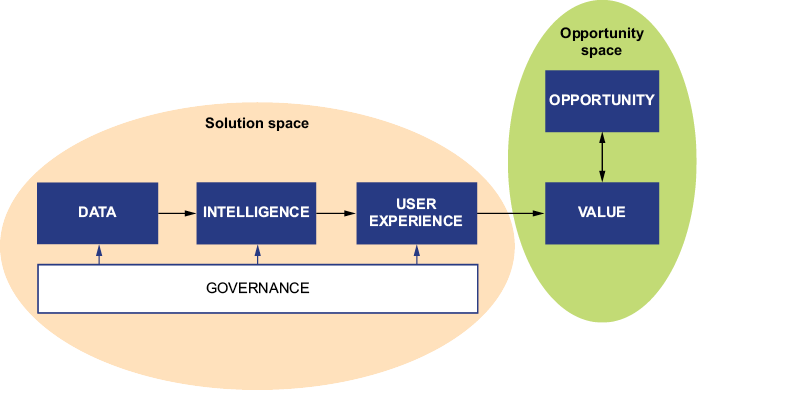
Conversation is only one part of the product experience: data, system capabilities, reliability, user trust, and compliance also shape a chatbot’s design. section 1.3 section 3.4

Investment research chatbot

An investment-professional chatbot could turn user questions into SQL queries. Its team must also consider reliable answers, missing conversation logs, and guardrails against giving investment advice. section 1.3

Figure 1.2 Mental model of an AI system
A diagram of a solution

AI-generated content may be incorrect.

Use this mental model to consider the different technical, user-experience, data, and compliance perspectives involved in a chatbot project. section 1.3


How The Art of AI Product Development covers it

How deep it goes
Places conversational interfaces within the AI solution space and links interface design to automation and user control.
Examples
Uses an investment-professional chatbot that turns questions into SQL and raises reliability, training-data, and compliance concerns.
What you can do after
Evaluate interface choices by balancing automation with user control and allocating work between people and AI.
How it connects
Connects conversational interfaces with AI systems, hybrid interfaces, generative AI, predictive AI, and agentic AI.

Also explained in

Compare how 20 books explain conversational ai →

Related concepts

This explainer was generated by Manning's knowledge graph from the text of The Art of AI Product Development. The section links point to the parts of the book it draws on.

















