AI agent
An AI agent is a computational system that uses artificial intelligence to interpret information and select or perform actions toward goals while interacting with an environment.

Introduction to Generative AI, Second Edition
An autonomous agent is a software system that independently perceives an environment, selects actions, and executes tasks with limited direct human intervention.
- How it is used
- Frames agents as action-oriented systems for delegating multistep personal and professional workflows.
- How deep it goes
- Explains perception, action mapping, chained tool calls, memory needs, and oversight at an intuitive architectural level.
- Examples
- Uses a thermostat, an outfit-planning assistant, and a restaurant sales spreadsheet with a web search.
- What you can do after
- Evaluate and understand agent capabilities and risks, including when action access and autonomy call for oversight.
Read how Introduction to Generative AI, Second Edition explains AI agent →
Grokking AI Applications
Artificial intelligence whose systems can operate autonomously, make decisions, and perform tasks with limited human intervention.
- How it is used
- Extends LLM applications from text responses to external actions and adaptive, multistep decisions.
- How deep it goes
- Explains the reasoning and tool-execution loop and walks through agent construction, without dwelling on model internals.
- Examples
- Uses a room-comfort scenario, calculator and travel agents, and a cookbook-retrieval chef.
- What you can do after
- Apply it via Langflow to configure an agent, connect tools, and test a calculator or travel workflow.

The Art of AI Product Development
An AI agent is an artificial intelligence system that perceives relevant conditions and takes actions toward goals.
- How it is used
- Automates multistep workflows by selecting tools and actions toward a goal.
- How deep it goes
- Explains the observation–action loop and language-model agent components, then outlines incremental testing and risk controls rather than deep implementation.
- Examples
- Uses a product roadmap workflow involving user interviews, sales calls, usage data, research, and stakeholder feedback.
- What you can do after
- Evaluate and understand agent designs, including tool choices, automation scope, testing, and human oversight.
Read how The Art of AI Product Development explains AI agent →
Architecting for Autonomy
Artificial intelligence that can reason about goals, perceive an environment, and take actions rather than only produce isolated decisions or predictions.
- How it is used
- Frames agents as delegated decision-makers in enterprise workflows requiring runtime authority and supervision.
- How deep it goes
- Defines agent behavior and develops architectural boundaries and controls, while deferring detailed generative AI concerns.
- Examples
- Illustrates autonomous fraud containment and clinical pathway escalation, including an illustrative coordination-cost calculation.
- What you can do after
- Evaluate agent deployments by defining authority boundaries, runtime controls, escalation paths, and coordination costs.
AI Agents in Action, Second Edition
Software that perceives an environment, selects actions, and acts toward a goal using resources provided by a large language model.
- How it is used
- Uses agents to turn LLM responses into goal-directed, multistep action.
- How deep it goes
- Develops agents from functional layers and tool loops through multi-agent and deployment patterns, while deferring comprehensive production operations.
- Examples
- Uses travel booking and computer purchasing scenarios, plus a research-planner exercise with typed output and tool tracing.
- What you can do after
- Apply agent-building patterns using the OpenAI Agents SDK, including instructions, structured output, and tools.
Read how AI Agents in Action, Second Edition explains AI agent →
Applied Reinforcement Learning
An entity in reinforcement learning that observes an environment, selects actions, and improves its behavior from feedback.
- How it is used
- Frames agents as adaptive decision-makers for sequential business optimization under uncertainty.
- How deep it goes
- Explains the interaction loop and implements several bandit agents, while emphasizing environment design over extensive agent tuning.
- Examples
- Uses dynamic pricing, warehouse navigation, and a simulated five-ad campaign to illustrate agent decisions.
- What you can do after
- Builds a bandit agent from scratch to select ads and update estimates from click feedback.
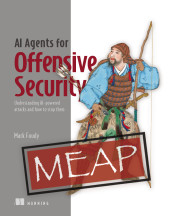
AI Agents for Offensive Security
A software system that applies artificial intelligence to interpret inputs, reason, and take actions, potentially using external tools or data.
- How it is used
- Supports reconnaissance and triage by interpreting tool-produced artifacts and prioritizing security-testing effort.
- How deep it goes
- Defines agent architecture and loops, then builds a minimal two-tool implementation before adding governance and triage workflows.
- Examples
- Demonstrates URL extraction and summarization, Nmap-result routing, and saved reconnaissance-output triage.
- What you can do after
- Build it from scratch as a minimal, artifact-logging agent and apply it to bounded reconnaissance triage.
Read how AI Agents for Offensive Security explains AI agent →
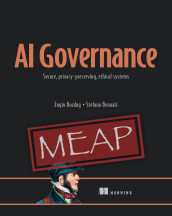
AI Governance
An AI agent is a software system that can plan and perform tasks, including using tools and taking actions on a user's behalf.
- How it is used
- Frames agents as an adoption capability whose autonomy changes security, privacy, ethical, and governance requirements across deployment models.
- How deep it goes
- Defines the control loop and bounded autonomy, then develops attack paths, privacy safeguards, and operational monitoring rather than agent implementation code.
- Examples
- Uses a claims agent’s mistaken repair request and data transfer, alongside the EchoLeak email-based attack, to illustrate action-driven harm.
- What you can do after
- Evaluate and understand agent deployment risks, select operational safeguards, and identify when capability changes warrant reassessment.

Vibe Engineering
An AI agent is a software system that uses artificial intelligence to autonomously or semi-autonomously perform tasks on behalf of a user or application.
- How it is used
- Uses coding agents to explore projects, make changes, and automate development workflows beyond inline completion.
- How deep it goes
- Explains interactive and headless workflows with approval, review, observability, and debugging practices, including their operational tradeoffs.
- Examples
- Uses a payment-validation migration, an advisory pre-commit reviewer, and an overnight job producing silently incorrect output.
- What you can do after
- Diagnose/debug agent failures by isolating prompts, context, models, and environmental assumptions.

Inside AI
An autonomous system is a system that performs functions and makes operational decisions with limited direct human control.
- How it is used
- Uses smart agents for distributed, adaptive problem-solving where simple algorithmic approaches may struggle.
- How deep it goes
- Defines agent characteristics and communication, illustrates collaboration, and introduces platform-specific language features without a full technical treatment.
- Examples
- Illustrates collaborative financial security monitoring, adaptive fraud prevention, and a military autonomous-targeting failure.
- What you can do after
- Enables readers to evaluate smart agents as a collaborative approach while considering adaptability and the consequences of autonomous action.
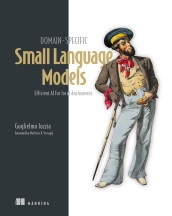
Domain-Specific Small Language Models
An autonomous software entity that can invoke models or tools as part of a larger system.
- How it is used
- Positions agents as a way to complete multistep tasks when a single model response is insufficient.
- How deep it goes
- Defines agent capabilities and works through local tool-chaining examples, while deferring advanced agent concepts.
- Examples
- Uses a flight-search and seat-selection workflow, a mock booking tool, and local-document versus web-search choices.
- What you can do after
- Apply it via smolagents CodeAgent to chain Python tools and configure an agent with local-document and web-search options.
Read how Domain-Specific Small Language Models explains AI agent →
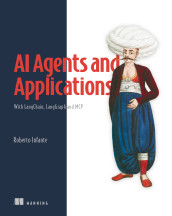
AI Agents and Applications
An AI agent is a software system that works with a large language model to perform multi-step tasks by selecting actions, invoking tools, and adapting to intermediate results.
- How it is used
- Uses agents to coordinate adaptive, multi-step tasks across tools and data sources.
- How deep it goes
- Builds tool-calling mechanics from scratch, then simplifies them with prebuilt LangGraph components and traces execution.
- Examples
- Builds travel assistants that retrieve Cornwall destination information and check weather, alongside a holiday-package planning scenario.
- What you can do after
- Apply it via LangGraph to build and debug a multi-tool travel agent.
AI Agents in Action
An agent system is a software system in which one or more AI agents perform tasks through reasoning, interaction, and access to tools or data.
- How it is used
- Introduces agents as software that acts on users’ behalf, from LLM proxies to autonomous and multi-agent systems.
- How deep it goes
- Defines interaction types and components, then develops agent configuration, planning, evaluation, and feedback through examples and exercises.
- Examples
- Uses a coder-and-tester team, a joke-writing crew, and a planning exercise that retrieves Wikipedia information and saves it.
- What you can do after
- Apply agents via CrewAI by configuring roles and tasks, assembling a sequential crew, and running it.
Agent Design Patterns
A software system that uses an AI model, together with prompts, data, and programmatic control, to perform tasks.
- How it is used
- Uses AI models within structured software workflows to perform tasks that often require substantial human input without such systems.
- How deep it goes
- Defines agents operationally and identifies interface, model, tool, and process choices, without specifying a complete implementation.
- Examples
- Illustrates agents with personal assistants, coding agents, deep-research agents, specialized assistants, and entry-by-entry processing after a prompt fails.
- What you can do after
- Evaluate/understand when a structured agent workflow may improve utility, reliability, interpretability, or cost over direct model use.
Build an AI Agent (From Scratch)
An AI agent is a software system that uses artificial intelligence to perceive information, perform tasks, and make or execute decisions on a user's or organization's behalf.
- How it is used
- Introduces LLM agents as a way to handle tasks whose action sequences cannot be reliably predetermined.
- How deep it goes
- Builds a ReAct agent from its loop and communication components, with tool integration, error handling, structured output, and evaluation.
- Examples
- Uses a Nobel Prize research task, a calculator question, and GAIA benchmark problems to demonstrate agent behavior and evaluation.
- What you can do after
- Builds an agent from scratch that uses tools, handles errors, returns structured output, and can be tested against GAIA.
Read how Build an AI Agent (From Scratch) explains AI agent →

Knowledge Graphs and LLMs in Action
An agent is a computational system that can use information and perform actions to accomplish tasks.
- How it is used
- Deploys LLMs with prompts, memory, retrieval, and tools to answer complex questions and perform adaptive enterprise workflows.
- How deep it goes
- Explains agent components, grounding patterns, shared-state pipelines, routing, retries, and implementation examples, while deferring exhaustive production engineering.
- Examples
- Uses conversational chat, knowledge-graph question answering, vector and graph retrieval, text-to-Cypher generation, query retries, and result summarization.
- What you can do after
- Build it from scratch as a conversational Python agent or implement modular retrieval and graph-query workflows with LangGraph.
Read how Knowledge Graphs and LLMs in Action explains AI agent →
Data Analysis with LLMs
An agent is a software pattern in which a language model dynamically decomposes a task, selects actions or tools, and plans subsequent steps from their results.
- How it is used
- Uses agents for data-analysis questions whose required data sources and sequence of steps cannot be fixed beforehand.
- How deep it goes
- Explains the tool-selection loop and walks through LangChain setup and tool traces, without examining model internals.
- Examples
- Traces a video-game sales query followed by web search, and a revenue query followed by currency conversion.
- What you can do after
- Apply it via LangChain to configure and invoke a database-and-web agent for a user question.
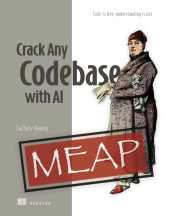
Crack Any Codebase with AI
An AI agent is a software system that uses artificial intelligence to pursue tasks through autonomous or semi-autonomous actions.
- How it is used
- Deploys autonomous repository exploration for narrow, deep questions, cross-file tracing, editing, and build or test execution.
- How deep it goes
- Explains the shared-context decide-act-observe loop and demonstrates tracing and recovery, but warns against broad shallow mapping.
- Examples
- Demonstrates VS Code file-opening traces, CODEBASE.md generation, skill files, and Node-version recovery during a full source build.
- What you can do after
- Diagnose/debug with an agent by tracing behavior, running code, interpreting failures, and producing verified repository understanding.

Authorization in Action
A software agent is a software system that acts autonomously or semi-autonomously on behalf of a person, organization, or another system.
- How it is used
- Frames agents as enterprise principals whose adaptive actions require authorization on behalf of people and organizations.
- How deep it goes
- Explains runtime action checks, tool integration, policy feedback, and constraint-aware planning rather than the internals of model training.
- Examples
- Illustrates agents through customer-support workflows and a credential-directory restriction that informs planning.
- What you can do after
- Evaluate agent architectures for per-action enforcement, policy-aware planning, and explicit authority boundaries.

LLMs in Production
A software system that uses artificial intelligence to perceive information, make decisions, and perform actions toward goals.
- How it is used
- Uses LLM agents to accomplish multistep tasks rather than merely answer multistep questions.
- How deep it goes
- Explains model, memory, and tool components with implementation examples, memory trade-offs, and production security considerations.
- Examples
- Illustrates coding agents, Python and CSV agents, search tools, and email response suggestions.
- What you can do after
- Apply it via LangChain to assemble agents with a local model, memory, and tools.
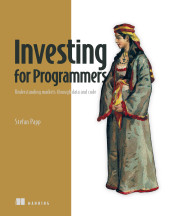
Investing for Programmers
An AI agent is an artificial intelligence system that independently plans and performs multiple steps toward a specified task.
- How it is used
- Automates structured financial research by coordinating data collection, analysis, evaluation, and reporting.
- How deep it goes
- Explains planning, tool use, reflection, frameworks, and implementation choices, but defers production reliability and comprehensive validation.
- Examples
- Demonstrates asset research, stock-price retrieval, sentiment analysis, Microsoft news analysis, n8n workflows, and Notion exports.
- What you can do after
- Build structured research workflows with prompts, external tools, n8n, or LangChain, then validate their outputs cautiously.

Build AI-Enhanced Web Apps
An AI agent is a software agent that uses artificial intelligence to perceive inputs, make decisions, and produce actions toward a task.
- How it is used
- Supports autonomous and multistep tasks in web applications and background services by using AI to select actions.
- How deep it goes
- Explains agent components and works through a LangChain.js tool-using integration with a system prompt and model.
- Examples
- Uses database sales queries, web search, mock interviews, and a Wikipedia-enabled technical assistant as agent examples.
- What you can do after
- Apply it via LangChain.js by configuring a model, system prompt, and tools for an agent.
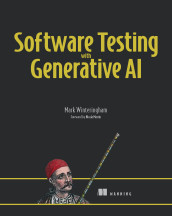
Software Testing with Generative AI
An AI agent is a software system that uses artificial intelligence to pursue goals by interpreting information and taking actions.
- How it is used
- Supports focused testing activities when prompts become complex or require interaction with third-party systems.
- How deep it goes
- Defines four behavioral traits and demonstrates function-calling construction, while deferring advanced agent design.
- Examples
- Uses a test data assistant, multi-source analysis assistant, automation assistant, and exploratory testing assistant.
- What you can do after
- Build it from scratch as a focused LLM assistant that invokes tools, exchanges data, and supports a defined testing task.
Read how Software Testing with Generative AI explains AI agent →

Digital Twins in Action
An AI agent is a software system that uses an artificial-intelligence model to plan and execute sequences of actions toward a goal while interacting with tools and external state.
- How it is used
- Uses agents to turn digital twins from passive observers into systems that plan and act on operational goals.
- How deep it goes
- Develops a tool-based agent loop and examines supervisory control, autonomy boundaries, multi-agent coordination, and costs.
- Examples
- Uses a solar-aware home climate agent with inverter, weather, and indoor-environment tools to illustrate energy and comfort decisions.
- What you can do after
- Apply it via the Strands SDK to build a tool-using home climate agent and evaluate its autonomy and operating costs.
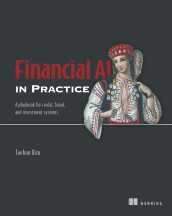
Financial AI in Practice
A software system that perceives context, makes decisions, and takes actions to pursue specified goals.
- How it is used
- Automates proactive financial workflows by monitoring context and proposing or taking bounded actions.
- How deep it goes
- Develops an agent architecture from tool-accessible data and model filtering through an execution loop, governance, and impact measurement.
- Examples
- Uses a churn-retention copilot and a stock-research workflow that retrieves trending posts and prices before drafting a summary.
- What you can do after
- Build a tool-enabled retention copilot with human review and assess its impact using experiments and ROI.

WordPress Power Toolkit: Harness AI to build next-level websites
An AI agent is an artificial system that perceives information, selects actions, and executes them to achieve programmed objectives.
- How it is used
- Frames goal-directed website critique as a step beyond answering a single prompt.
- How deep it goes
- Defines autonomous planning and action through examples, without explaining how to implement an agent.
- Examples
- Uses an automobile insurance claim and a website improvement request to illustrate multistep decisions.
- What you can do after
- Evaluate/understand whether an AI system merely responds to prompts or plans and acts toward a goal.
Read how WordPress Power Toolkit: Harness AI to build next-level websites explains AI agent →
Building Reliable AI Systems
A software system that interprets information, makes decisions, and takes actions to pursue goals.
- How it is used
- Makes LLMs actionable by connecting them to external systems and coordinating real-world workflows.
- How deep it goes
- Explains agent components and reliability controls, including decision cycles, memory, tool use, harnesses, and isolated execution.
- Examples
- Uses flight booking, calendar scheduling, live stock prices, and customer-database deletion to illustrate capabilities and risks.
- What you can do after
- Evaluate agent designs for tool access, workflow coordination, and action-related reliability risks.

Build Python Web Apps with Streamlit
An AI agent is a software system that uses artificial intelligence to interpret context, choose actions, and carry out tasks toward a goal.
- How it is used
- Deploys AI in customer support to answer domain-specific questions and perform personalized actions through business systems.
- How deep it goes
- Explains reasoning and tool orchestration through ReAct and implements them with LangGraph nodes, conditional edges, and tool calls.
- Examples
- Demonstrates order tracking, order cancellation, tool calls, and a graph containing assistant and tools nodes.
- What you can do after
- Build it from scratch as a LangGraph support agent that calls tools and handles tracking or cancellation requests.
Read how Build Python Web Apps with Streamlit explains AI agent →
AI for Everyday IT
An AI agent is software that can pursue tasks toward objectives by interpreting information and taking actions with limited direct human intervention.
- How it is used
- Places agents alongside service desk staff to assist with support workflows and route complex issues to people.
- How deep it goes
- Describes independent capabilities and enterprise use cases without providing agent-building instructions.
- Examples
- Illustrates ticket sorting, suggested resolutions from past cases, and automated answers to common support questions.
- What you can do after
- Evaluate and understand where agents could assist support teams and where human oversight remains important.
Designing AI Systems
An agent is an AI system composed of a model and execution harness that can select and perform actions toward a goal.
- How it is used
- Uses agents to move assistants from conversation to managed actions through an execution loop.
- How deep it goes
- Works through a complete agent loop and service interactions, including validation, tool feedback, output filtering, and an iteration limit.
- Examples
- Builds a personal assistant and considers a healthcare assistant that schedules appointments and verifies insurance.
- What you can do after
- Apply it via GenAIPlatform to coordinate model calls, sessions, tools, guardrails, and deployment in an assistant workflow.

Grokking AI Algorithms, Second Edition
An AI agent is a computational system that perceives context, makes decisions, and takes actions to pursue objectives.
- How it is used
- Uses agents to learn action sequences for goals in dynamic environments when the best plan is initially unknown.
- How deep it goes
- Defines agents, states, actions, environments, and rewards, then works through a simulator without developing learning algorithms in detail.
- Examples
- Uses a dog-learning analogy, a self-driving car in a parking lot, and reinforcement-learning game players.
- What you can do after
- Evaluate agent problems by identifying goals, states, actions, environments, rewards, and long-term consequences.
Read how Grokking AI Algorithms, Second Edition explains AI agent →
Claude at Work
An AI agent is a software system that uses AI to pursue tasks through autonomous or semi-autonomous actions.
- How it is used
- Uses agents to execute workstreams while a human owner sets direction and reviews results.
- How deep it goes
- Describes prompting, tool use, iteration and supervision without detailing agent implementation.
- Examples
- Illustrates parallel sessions generating code, writing tests, drafting documentation and planning another project.
- What you can do after
- Practice managing parallel Claude sessions while retaining responsibility for direction and review.

The Art of Code
An AI agent is a software system that performs tasks with some autonomy, typically by reasoning over inputs and invoking available tools or actions.
- How it is used
- Frames AI agents as developer tools for accelerating implementation while requiring direction and human supervision.
- How deep it goes
- Explains quality mirroring, correction loops, comprehension debt, and purity-oriented prompting without detailing agent internals.
- Examples
- Uses tangled or expressive codebases, repeated correction attempts, and a purity-focused code-review prompt as concrete examples.
- What you can do after
- Evaluate/understand generated code for design quality, hidden side effects, maintainability, and comprehension before accepting it.
LLM Evaluation and Alignment, The Foundational Ideas
A decision-maker that interacts with an environment by taking actions and receiving feedback to achieve a goal.
- How it is used
- Frames agents as targets for objective evaluation in goal-directed, tool-using workflows.
- How deep it goes
- Defines actions, environments, goals, feedback, and rewards, then stops short of describing agent architecture.
- Examples
- Uses coding agents, documentation browsing, file editing, API calls, and executable tests as examples.
- What you can do after
- Evaluate agent behavior by verifying tool choices, tool use, and resulting task outcomes.
Read how LLM Evaluation and Alignment, The Foundational Ideas explains AI agent →

Hugging Face in Action
An agent is a specialized AI system that autonomously performs tasks by understanding language, reasoning and planning, selecting tools, and delivering results.
- How it is used
- Deploys language models, planning, tools, and memory to handle ambiguous or multistep tasks through dynamic workflows.
- How deep it goes
- Explains agent roles, demonstrates a search agent, and extends implementation across smolagents, LangChain, and LangGraph.
- Examples
- Uses a weather agent, a DuckDuckGo search agent, hosted and local models, Python execution, and custom tools.
- What you can do after
- Build agents with smolagents, LangChain, or LangGraph and equip them with tools, execution logic, state, and memory.
Context Engineering
An AI agent is a system that pursues goals by interpreting tasks, planning actions, using resources, and adapting its behavior with limited human intervention.
- How it is used
- Positions AI agents as autonomous execution units within goal-directed agentic systems.
- How deep it goes
- Explains model-and-harness architecture, execution loops, agent capabilities, coordination, and tool-use controls.
- Examples
- Illustrates specialized software-development agents and compares context-engineering patterns using a backlog-scoring feature.
- What you can do after
- Enables evaluation of agent architectures, multi-agent trade-offs, and tool-use controls.
Enterprise RAG
An agent is a software component that can perform delegated tasks or coordinate actions as part of an AI workflow.
- How it is used
- Orchestrates RAG retrieval by selecting search strategies, refining requests, coordinating queries, and grounding answers in retrieved data.
- How deep it goes
- Defines identities, goals, tools, iteration, and coordination, but stops short of detailed agent implementation code.
- Examples
- Demonstrates product comparison, headphone battery-life retrieval, multiple indexes, and concurrent database searches.
- What you can do after
- Apply AutoGen agents to build more flexible, grounded retrieval workflows that search, refine, and combine evidence.
First-Party Data Activation
A software system that uses artificial intelligence to perceive context, make decisions, and execute tasks toward goals with limited direct supervision.
- How it is used
- Deploys role-specific AI models to make decisions and execute coordinated marketing actions across integrated products.
- How deep it goes
- Defines roles, contexts, decisions, actions, integrations, and controls, then illustrates them through specialized marketing agents.
- Examples
- Uses Data, Audience, Journey, and Insights Agents to demonstrate data interpretation, segmentation, journey design, and performance recommendations.
- What you can do after
- Evaluate/understand where delegated AI actions can coordinate marketing workflows and where governance and human controls remain necessary.
AI Model Evaluation
An agentic system is an AI system that performs tasks through multi-step actions, often by deciding when and how to invoke tools.
- How it is used
- Evaluates whether an agent’s multi-step actions achieve user and product goals in recommendation and internal support settings.
- How deep it goes
- Traces chained decisions and evaluation challenges, but does not specify an agent implementation or full evaluation procedure.
- Examples
- Uses conversational movie search and internal support agents drafting replies or summarizing ticket threads as evaluation settings.
- What you can do after
- Evaluate agents with task completion, constraint adherence, and tool-call accuracy while checking whether measured success matches user outcomes.

Delivering Machine Learning Projects: From design to deployment
An AI system is a computational system that performs tasks associated with artificial intelligence, potentially incorporating machine learning models.
- How it is used
- Frames AI agents as deployed systems requiring user-facing controls, disclosure, validation, and failure governance.
- How deep it goes
- Defines design requirements and failure risks but stops short of model algorithms, training, or implementation internals.
- Examples
- Uses aircraft automation failure and smart-building signage as concrete design and governance examples.
- What you can do after
- Evaluate/understand an AI agent’s user-facing risks and translate them into disclosure, correction, and shutdown controls.
Read how Delivering Machine Learning Projects: From design to deployment explains AI agent →

Optimization Algorithms: AI techniques for design, planning, and control problems
An agent is an autonomous computational entity that senses information, interacts with other entities or its environment, and adapts its behavior.
- How it is used
- Frames autonomous interaction, adaptation, collective coordination, and goal-directed decision-making.
- How deep it goes
- Defines agent behavior through interaction and feedback, then distinguishes swarm, MDP, and bandit settings without detailing implementation internals.
- Examples
- Uses foraging, labor division, flocking, schooling, and reward-driven action selection as concrete agent examples.
- What you can do after
- Evaluate agent settings by comparing decentralized swarm behavior with reward-driven sequential or stateless decision-making.
The Complete Obsolete Guide to Generative AI
An AI agent is a software system that uses artificial-intelligence models to pursue goals by selecting and carrying out actions.
- How it is used
- Automates multilayer research by letting an LLM use search and other tools to answer a prompt.
- How deep it goes
- Demonstrates tool configuration and an execution trace, while defining reinforcement-learning agents separately through rewards and policies.
- Examples
- Uses a web-search question about an author’s titles and a two-model code generation and critique loop.
- What you can do after
- Apply it via LangChain by configuring search and math tools, initializing an agent, and inspecting its execution trace.
Read how The Complete Obsolete Guide to Generative AI explains AI agent →

Deep Learning with R, Third Edition
An intelligent agent is a system capable of adapting its behavior and selecting actions beyond merely executing hardcoded behavioral programs.
- How it is used
- Distinguishes adaptive intelligence from automation by focusing on behavior in novel situations.
- How deep it goes
- Explains adaptation, abstraction, reasoning, anticipation, and planning, but does not specify an agent implementation.
- Examples
- Uses thermostats, sorting programs, deep networks, organisms, and students facing new exam problems as comparisons.
- What you can do after
- Evaluate whether behavior reflects fixed automation or adaptation to unfamiliar situations.
Read how Deep Learning with R, Third Edition explains AI agent →
Automating API Delivery
A software agent is an automated software component that observes system state and performs actions to create, configure, or manage deployed applications.
- How it is used
- Continuously reconciles version-controlled API gateway configuration with deployed state to automate application management and recovery.
- How deep it goes
- Explains drift detection, redeployment, feedback loops, and rollback, but does not detail agent implementation.
- Examples
- Uses Kubernetes controllers, manual gateway changes, Git pull requests, automated redeployment, and git revert as concrete examples.
- What you can do after
- Operate/configure automated reconciliation, enforce repository-based deployment, and roll back API configuration with git revert.
Build Applications with Local AI Models on a Mac
An AI agent is a software system that perceives information, reasons about tasks, and takes actions to accomplish goals, including software-development tasks.
- How it is used
- Extends a chatbot with tool-using actions and repeated decisions for tasks.
- How deep it goes
- Explains tool selection and the evaluate-and-act loop, but the illustrated tool layer does not implement a complete agent.
- Examples
- Uses multiplication and current-date tools to illustrate descriptions an agent could consult.
- What you can do after
- Apply it via LangChain examples and compare agent quality with a more capable model.
Read how Build Applications with Local AI Models on a Mac explains AI agent →
Building Distributed Applications that Work
An AI agent uses artificial intelligence to perceive context, make decisions, or perform tasks.
- How it is used
- Uses coding agents to inspect a .NET solution and incrementally adapt it for Aspire; also builds .NET agents with Semantic Kernel and large language models.
- How deep it goes
- Works through codebase analysis, AppHost proposals, implementation plans, and verification, but does not define agent internals.
- Examples
- Demonstrates Claude Code inspecting an online-shop solution, sketching its AppHost, and proposing a staged implementation plan.
- What you can do after
- Apply a coding agent to analyze a solution, propose Aspire changes, implement them incrementally, and verify the result before shipping.
Read how Building Distributed Applications that Work explains AI agent →
Also covered in
- Outlier Detection in Python
- Evolutionary Deep Learning: Genetic algorithms and neural networks
- Learn AI Data EngineeringIn early access (MEAP)
- The AI Pocket Book
- Acing the CCNA Exam: Volume 2 Advanced Networking and Security
- Spring AI in Action
- Evaluating AI SystemsIn early access (MEAP)
- Build a Robo-Advisor with Python (From Scratch)
- Effective Behavior-Driven DevelopmentIn early access (MEAP)
- Deep Learning with Python, Third Edition
- Practical Automation with PowerShell: Effective scripting from the console to the cloud
- Self-Improving AgentsIn early access (MEAP)
What to know first
- language modelA language model is a computational model that represents patterns in linguistic sequences to assign probabilities, predict, generate, or evaluate language.
- promptA prompt is text or other input supplied to an AI model to provide instructions, context, or other information that guides its response or generated output.
- contractA contract is an agreed specification of the conditions, expectations, rights, or obligations that govern behavior or interactions between parties or software components.
- toolA software tool is a capability or utility that enables a person or system to perform a defined task or operation.
Related concepts
- language modeluses · A language model is a computational model that represents patterns in linguistic sequences to assign probabilities, predict, generate, or evaluate language.
- tooluses · A software tool is a capability or utility that enables a person or system to perform a defined task or operation.
- reinforcement learningused by · Reinforcement learning is a machine-learning paradigm in which an agent learns behavior or a decision policy through interaction with an environment and evaluative feedback, such as rewards.
- conversational aiincludes · Conversational AI is artificial intelligence that enables software systems to interpret user input and interact with users through natural-language dialogue.
- agentic RAGused by · Agentic RAG is a retrieval-augmented generation approach in which an agent dynamically decides how and when to retrieve information, often iterating or using tools before generating a response.
- continuous improvementuses · Continuous improvement is a recurring process in which outcomes or feedback guide successive changes intended to improve a system, process, or result.
Questions about AI agent
What is AI agent?
An AI agent is a computational system that uses artificial intelligence to interpret information and select or perform actions toward goals while interacting with an environment.
Which Manning books explain AI agent?
Introduction to Generative AI, Second Edition, Grokking AI Applications, The Art of AI Product Development, Architecting for Autonomy, AI Agents in Action, Second Edition, Applied Reinforcement Learning, AI Agents for Offensive Security, AI Governance and 38 more.
What should I know before learning AI agent?
Manning books that teach AI agent usually introduce language model, prompt, contract and tool first.
What kinds of AI agent are there?
Kinds of AI agent include conversational ai.
What is AI agent also called?
AI agent is also called intelligent agents or agentic system.
These guides are generated from the text of Manning books by Manning's knowledge graph and link to the sections they draw on. The full books are available on liveBook and at manning.com.