An AI agent is software that uses AI to carry out a task, sometimes without continuous supervision. An agent can work from a prompt and supplied files or guidelines, use tools such as web search or scripts, and iterate before producing a response or requested artifacts. section 1.1
Agents can divide work across parallel sessions, but the human owner remains responsible for direction and review. Managing several streams takes practice, particularly without a universal overview of sessions. AI output is fallible, so review remains essential. section 1.2 section 1.3
Parallel software work
Run one Claude session to generate code, another to write tests, and a third to draft documentation. Use a fourth conversation to plan a different project. Steer the sessions and review their results rather than treating parallel output as automatically correct. section 1.3 section 1.2
Figure 1.1 How you work with Claude — a conversation where you take turns to work together on a problem. The inputs are your prompt and any additional files or guidelines you want Claude to read. The outputs are Claude’s response and any files you asked it to generate. In between Claude uses tools to expand on its own knowledge bank.
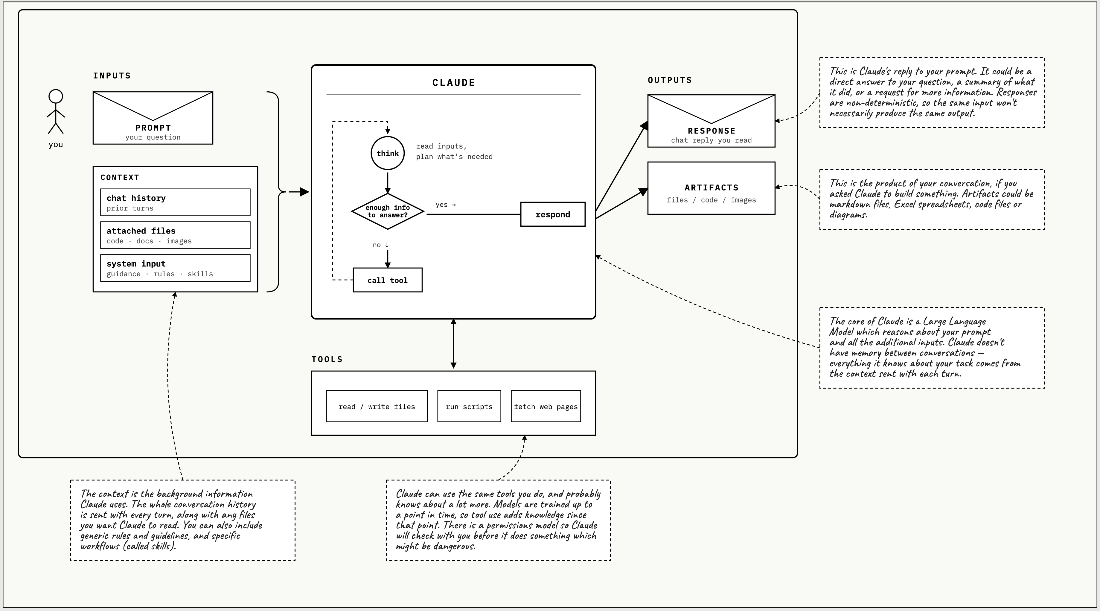
The figure maps a collaborative agent workflow from prompts and supporting inputs through tool use to responses and generated files. section 1.1