An AI agent is a computational system that performs tasks associated with artificial intelligence and may incorporate machine-learning models. Treat deployment as a system-design problem, not merely a model choice: users need to understand capabilities, limitations, performance, and failure behavior. section 9.4.3
Design and delivery priorities include:
- Make the system’s capabilities and limits visible before use. section 9.4.3
- Communicate validated performance and relevant context during interaction. section 9.4.3
- Provide correction, editing, and an accessible way to turn the system off after failure. section 9.4.3
Operational failure
An undisclosed aircraft system activated unexpectedly after sensor damage, causing pilots to encounter behavior they did not understand or know how to handle. A smart-building system illustrates the alternative: signage and public performance information establish awareness and expectations. section 9.4.3
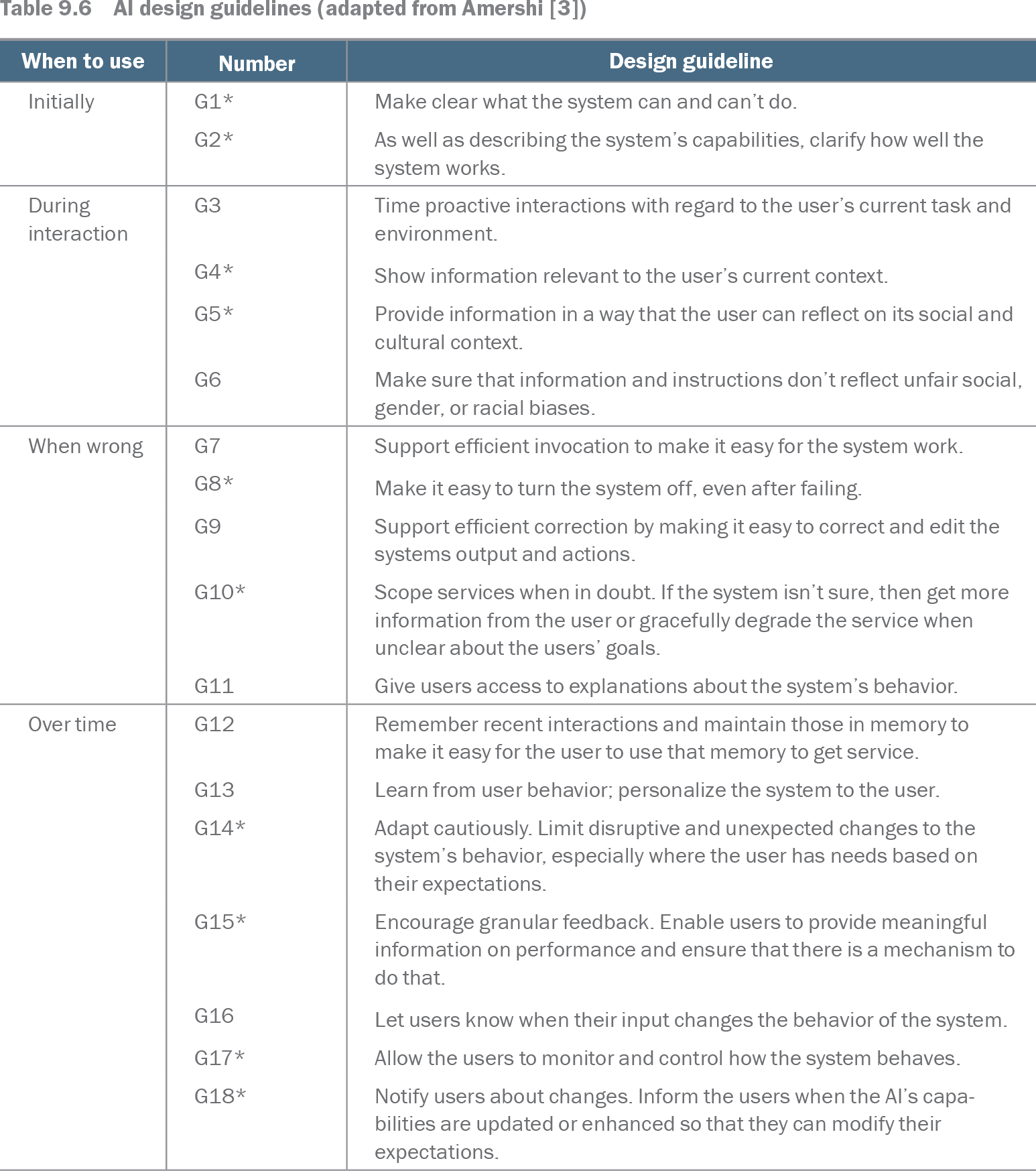
Table 9.6 AI design guidelines (adapted from Amershi [3]) (view table figure)
| Number |
Design guideline |
|
|---|---|---|
| Initially |
G1* |
Make clear what the system can and can’t do. |
| G2* |
As well as describing the system’s capabilities, clarify how well the system works. |
|
| During interaction |
G3 |
Time proactive interactions with regard to the user’s current task and environment. |
| G4* |
Show information relevant to the user’s current context. |
|
| G5* |
Provide information in a way that the user can reflect on its social and cultural context. |
|
| G6 |
Make sure that information and instructions don’t reflect unfair social, gender, or racial biases. |
|
| When wrong |
G7 |
Support efficient invocation to make it easy for the system work. |
| G8* |
Make it easy to turn the system off, even after failing. |
|
| G9 |
Support efficient correction by making it easy to correct and edit the systems output and actions. |
|
| G10* |
Scope services when in doubt. If the system isn’t sure, then get more information from the user or gracefully degrade the service when unclear about the users’ goals. |
|
| G11 |
Give users access to explanations about the system’s behavior. |
|
| Over time |
G12 |
Remember recent interactions and maintain those in memory to make it easy for the user to use that memory to get service. |
| G13 |
Learn from user behavior; personalize the system to the user. |
|
| G14* |
Adapt cautiously. Limit disruptive and unexpected changes to the system’s behavior, especially where the user has needs based on their expectations. |
|
| G15* |
Encourage granular feedback. Enable users to provide meaningful information on performance and ensure that there is a mechanism to do that. |
|
| G16 |
Let users know when their input changes the behavior of the system. |
|
| G17* |
Allow the users to monitor and control how the system behaves. |
|
| G18* |
Notify users about changes. Inform the users when the AI’s capabilities are updated or enhanced so that they can modify their expectations. |
Use the guideline table as a design checklist spanning initial disclosure, interaction, contextual fairness, correction, and shutdown. section 9.4.3