Updating a product roadmap can mean reviewing interviews, checking usage data, weighing priorities, and asking colleagues for feedback. An AI agent aims to carry out connected steps like these, rather than merely produce an answer for someone else to act on. The attraction is less manual coordination; the risk is letting an unpredictable system make consequential choices. section 9.0 section 9.1.1 section 10.0
An intelligent agent observes its environment, chooses actions toward a goal, acts, and observes the result so it can adapt. Its goal might be completion of a task or an application-specific measure such as safety. Agency—the capacity to decide what to do and act in the external world—distinguishes agentic AI from systems that only predict from data or generate content. section 9.2.1 section 9.1 section 3.4
A language-model-driven agent is a compound system, not a language model acting alone. The model interprets instructions and helps choose a course of action; external tools let it retrieve information or perform operations. Planning and memory can support longer tasks and learning over time, but need not be separate modules at first. A detailed prompt, a small tool set, and relevant context can be a useful starting point. Language models bring broad knowledge, not reliable, unlimited planning. section 9.2 section 9.2.1 section 9.5
Design the agent around the work it must do:
- Define a bounded task and what a satisfactory result would be before choosing tools. section 9.2.1 section 9.3.2
- Connect only the sources and actions the task needs. Unstructured interviews, structured usage data, and stakeholder communication call for different access methods; more sources also make selection harder. section 9.1.1
- Decide where a person should remain involved. Assisted and augmented systems leave more judgment with humans; autonomous systems make decisions and take actions with less intervention. section 3.3.2 section 9.5
- Test quality, feasibility, and latency on a small scope. Add tools, planning, memory, or autonomy only as evidence warrants; keep a way to handle low confidence and serious errors. section 9.3.2 section 9.5
A product-roadmap agent
An agent helping update a roadmap might gather signals from sales calls, user interviews, reviews, and product usage; analyze them; then request feedback from engineers and designers before revising its plan. Its value depends on choosing appropriate sources and integrating that feedback, not simply producing a polished roadmap. Start with a few connections rather than every available data source. section 9.1.1
Figure 9.9 An intelligent agent interacts with an external environment.
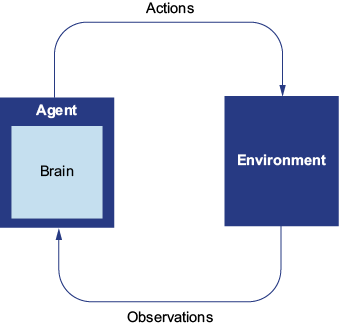
The interaction diagram makes the observe–act–observe loop visible: information enters from the environment, actions change it, and subsequent observations can guide the next action. section 9.2.1
Treat autonomy as a product decision, not a badge of sophistication. Finite context, unpredictable outputs, and difficulty decomposing tasks can undermine a workflow. Test with users, collect feedback on actual behavior, and involve the people responsible for the work when deciding which actions need review. Frameworks may speed an initial build, but their overhead and switching costs matter when the system changes. section 9.5 section 10.3 section 9.3.2
































