An incident summary is a structured, executive-level report of what happened, why it happened, detection delays, business and customer effects, response actions, and next steps. section 12.5.1
Build the summary around these fields:
- Name the incident, category, and severity. section 12.5.1
- Describe the incident overview, including the affected system, unexpected activity, exploitation, and adversary behavior. section 12.5.1
- Record the incident effect, response, timeline, and planned next steps. section 12.5.1
Patient records exposed
A major incident involved an insecure application configuration. A compromised partner system dumped more than 10,000 patient records containing personally identifiable information from a backend database. The summary highlights how the threat was uncovered, why detection took more than two months, the effect on patients and the business, and the response. section 12.5.1
Figure 12.3 Sample executive report on a major security incident that a CISO would share with the executive team (the same details added in the section)
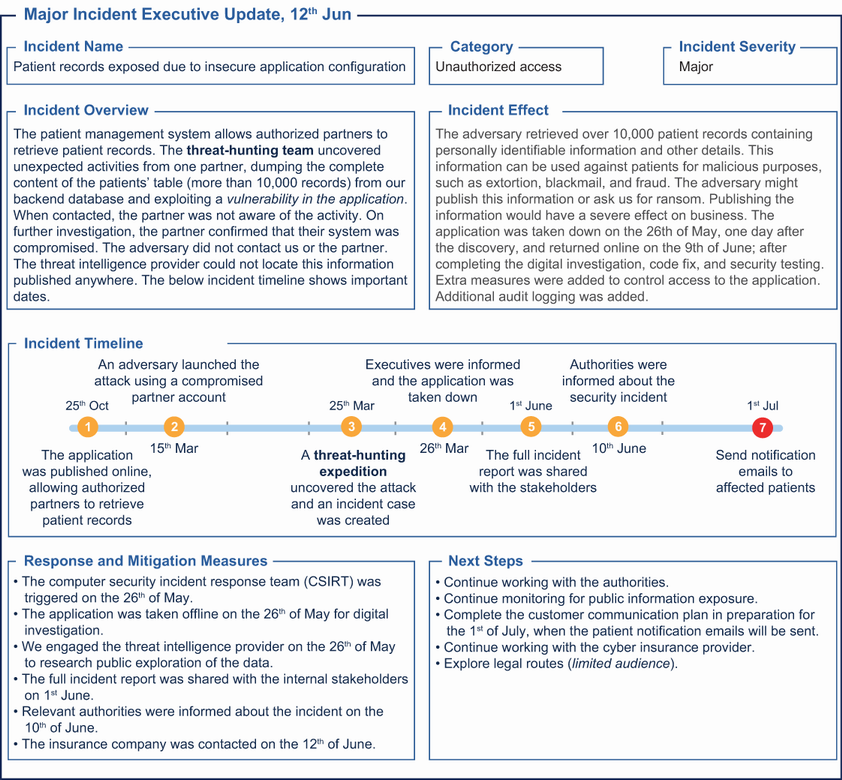
Use the sample executive report layout to organize the incident facts and communicate threat-hunting contributions. section 12.5.1
Figure 12.4 Incident timeline
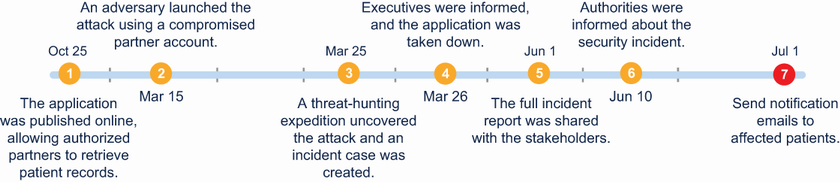
Use the incident timeline to show important dates and make delayed detection visible. section 12.5.1
