An angel syndicate lets multiple investors jointly evaluate and fund a start-up. A seasoned lead investor identifies the opportunity, negotiates terms, and coordinates the capital raise. section 12.2.2
A typical syndicate workflow is:
- The lead investor agrees with the start-up on check size, funding timing, and equity received. section 12.2.2
- The lead connects with other angels through a network and gathers their commitments. section 12.2.2
- The investors establish a special purpose vehicle, typically an LLC, to pool the investment. section 12.2.2
- The SPV invests in the start-up and appears as the single entity on its cap table rather than listing every investor. section 12.2.2
Pooling smaller checks
An angel may be prepared to invest $10,000, $50,000, or $100,000, while the start-up needs more capital. The angel can lead a syndicate, negotiate the deal, and combine commitments from other angels through an SPV. section 12.2.2
Syndicates offer an alternative to venture capital funds for investors with smaller check sizes. Angels may evaluate promising start-ups together, which can reduce their overall risk of failure, but early-stage investing can still feel like a lottery. section 12.4 section 12.2
Figure 12.2 A lead investor’s job is to represent all investors when forming an SVP that will be registered on a start-up’s cap table.
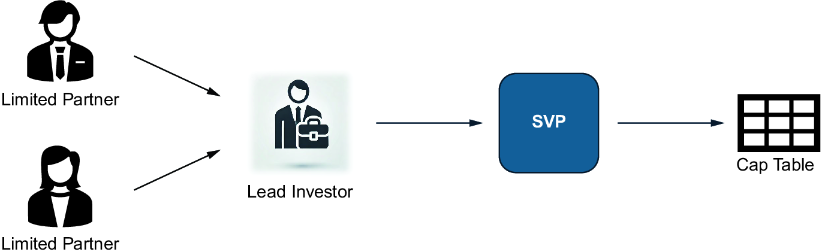
Use the figure to inspect how the lead investor represents the syndicate when forming the SPV registered on the start-up’s cap table. section 12.2.2
