Angular
Angular is an open-source, TypeScript-based web application framework and platform for building structured, component-based client-side applications.
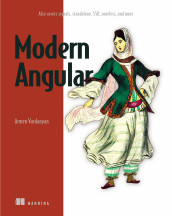
Modern Angular
Angular is an open-source web application framework for building applications with components, templates, and other application-development features.
- How it is used
- Builds and modernizes enterprise frontend applications through standalone architecture, composable APIs, reactive tools, and optional server rendering.
- How deep it goes
- Explains modernization rationale and configuration examples while deferring detailed coverage of individual newer features.
- Examples
- Uses an HRMS enterprise application and an SSR project with angular.json, server.ts, bootstrap files, and hydration providers.
- What you can do after
- Operate/configure Angular applications with standalone patterns, reactive APIs, build tooling, and SSR-specific bootstrap and provider setup.

Pro Angular 16
Angular development tools build Angular applications and provide a local server for testing them in a browser.
- How it is used
- Builds dynamic browser applications from TypeScript components and HTML templates.
- How deep it goes
- Works from project setup through bindings, development builds, and advanced features; keeps server-side programming outside the client-side focus.
- Examples
- Uses a to-do application, product-model bindings, and a product-entry form to show browser-visible behavior.
- What you can do after
- Build it from scratch with Angular’s project tools, then develop and test the application through the local server.
Related concepts
- TypeScriptuses · TypeScript is a statically typed superset of JavaScript that adds type-system features and is compiled to JavaScript.
- frameworkkind of · A software framework is a reusable structure that provides components, conventions, services, or extension points for building applications or other software systems.
- Reactalternative to · React is an open-source JavaScript library for building user interfaces from declarative, reusable components.
- Zone.jsuses · Zone.js is a JavaScript library that provides execution contexts for tracking and intercepting asynchronous tasks and their completion.
- RxJSuses · RxJS is a JavaScript library implementing ReactiveX with observables and operators for composing asynchronous and event-based programs.
These guides are generated from the text of Manning books by Manning's knowledge graph and link to the sections they draw on. The full books are available on liveBook and at manning.com.