An Angular application is software built with Angular, commonly organized as a CLI project whose components, services, modules, and shared dependencies implement an application workflow. section 1.2.2
Modern Angular development contrasts older application patterns with newer framework capabilities, then applies those capabilities to realistic projects and migration work. section 1.1.3
A representative Angular application may include:
- A modular architecture with services that gradually provide application state, rather than a dedicated state-management library. section 1.2.2
- A third-party UI library such as Angular Material and shared components or services connecting application areas. section 1.2.2
- RxJS for HTTP responses, framework events, reactive-form changes, asynchronous workflows, and sometimes shared state. section 5.2
Create an Angular application with server-side rendering
Create a promotional application with Angular CLI by ensuring Angular 17 or later is installed and running `ng new hrms-promo --ssr`. The flag generates a project configured to run on the server by default. section 9.2
Figure 1.1 The relations between different parts of the application, with arrows representing relations between different modules, like shared components or services
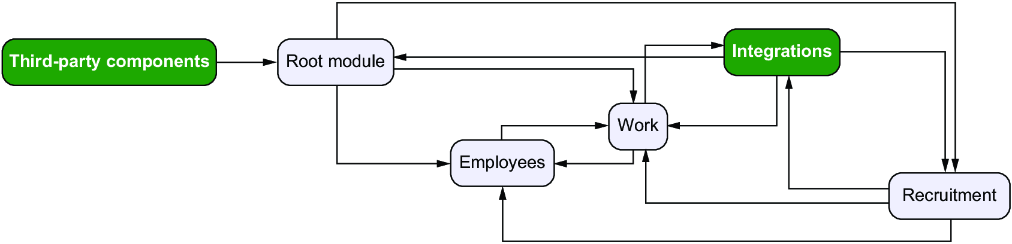
Use the application-part relationship diagram to trace how modules connect through shared components and services. section 1.2.2

