An architecture organization model defines how architectural roles, responsibilities, standards, and decisions are arranged so architecture can endure beyond a temporary modernization effort. The goal is a durable operating model that supports business flow rather than concentrating every decision in a central architecture team. section 15.3.2 section 15.8
Common ways to organize architectural responsibility include:
- Benevolent dictator(s): a central architecture team designs solutions and hands them to delivery teams; this can impede fast flow in product-led organizations. section 15.3.2
- Primus inter pares: each team has a dedicated architect who remains embedded in the team while retaining individual architectural responsibility. section 15.3.2
- Architecture without architects: several team members share architectural responsibilities without a dedicated architect. section 15.3.2
- The inmates running the asylum: architecture is effectively neglected, often because its value or required knowledge is not recognized. section 15.3.2
A model that survives modernization
An architecture modernization enabling team can provide temporary scaffolding, identify capability gaps, coach teams, and help establish architecture guilds and an architecture advice process. As capability grows, the enabling team winds down while architectural responsibilities and decision mechanisms remain. section 15.8
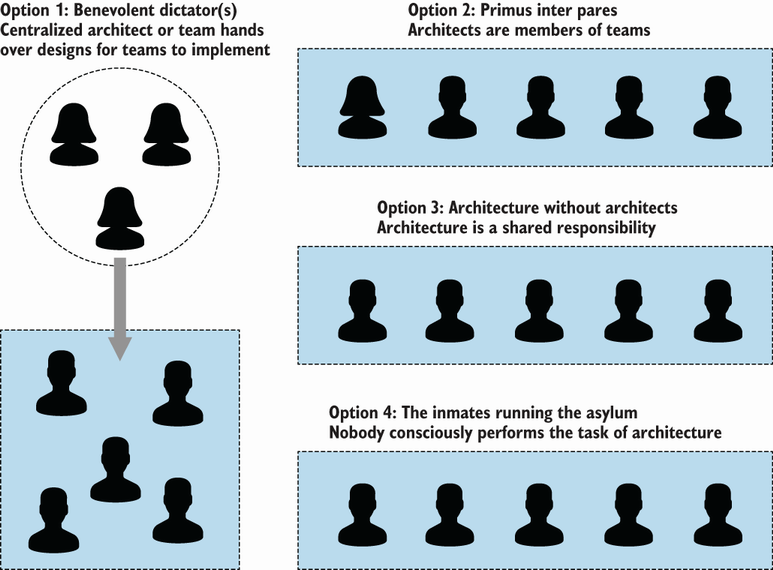
Compare the four broad options for organizing architects and consider how each distributes responsibility and dependencies. section 15.3.2
