liveBook · Manning

Artifact repository

As explained in Infrastructure as Code, Patterns and Practices: With examples in Python and Terraform

An artifact repository is a service that stores, versions, and distributes packaged software or infrastructure artifacts.

An artifact repository stores, versions, and distributes packaged software or infrastructure artifacts. For infrastructure modules, it gives teams a controlled location to retrieve approved, specific versions instead of depending on an unpinned or unavailable public endpoint. section 5.5 section 13.1.3

Use an artifact repository to:

  • Package and release reusable modules for organization-wide retrieval. section 5.5
  • Pin dependencies to approved versions and audit which versions remain active. section 13.1.3 section 5.2
  • Mirror public modules internally so teams retain access during public endpoint outages. section 13.1.3
  • Add review and governance before accepting updates that could affect architecture, security, or availability. section 5.5 section 13.1.3

Versioned database module

A team mirrors an approved database module into an internal artifact repository, pins its dependency, and reviews each newly released version before adoption. Git tags such as v1.0.0 and v2.0.0 provide consistent release identifiers. section 13.1.3 section 5.2

Figure 13.4 Decision flow for assessing usage of a module or tool based on tool or module life cycle
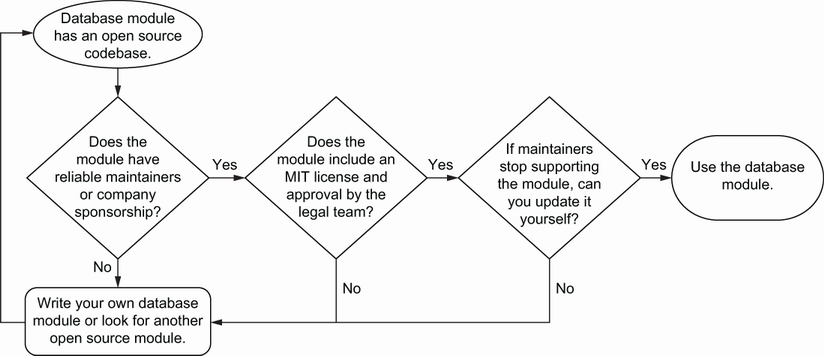
Use the decision flow to assess whether a module should be approved, mirrored, maintained, or replaced across its life cycle. section 13.1.3


How Infrastructure as Code, Patterns and Practices: With examples in Python and Terraform covers it

How deep it goes
Explains packaging, retrieval, mirroring, approval, and version pinning, but not artifact repository implementation details.
Examples
Uses packaged modules, internal mirrors, approved database versions, and Git tags such as v1.0.0 and v2.0.0.
What it assumes
Assumes familiarity with infrastructure modules, repositories, versioning, and organizational access controls.
What you can do after
Operate/configure it to publish, mirror, pin, approve, and distribute specific infrastructure module versions.
How it connects
Connects module versioning with Git tags, semantic versioning, access control, and governance.

Also explained in

Compare how 3 books explain artifact repository →

Related concepts

This explainer was generated by Manning's knowledge graph from the text of Infrastructure as Code, Patterns and Practices: With examples in Python and Terraform. The section links point to the parts of the book it draws on.
