liveBook · Manning

Artificial life

As explained in Evolutionary Deep Learning: Genetic algorithms and neural networks

Artificial life is a computational approach that simulates life-like processes and interactions among agents.

Artificial life simulates life-like processes through agents that move, flow, live, or die according to their proximity to other agents or environments. These simulations can mimic real-world behavior or optimize processes. section 1.1.1

Artificial life belongs to a broader family of evolutionary computation methods:

  • Evolutionary algorithms apply natural selection to populations of individuals. section 1.1.1
  • Differential evolution changes populations by combining vector differences with evolutionary search and can be layered with artificial life. section 1.1.1
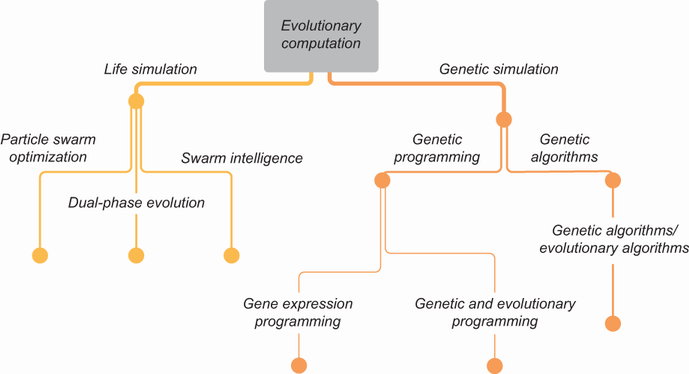
Figure 1.1 Subset of EC used to apply EDL

Use the evolutionary-computation taxonomy to place artificial life beside related evolutionary methods. section 1.1.1

How Evolutionary Deep Learning: Genetic algorithms and neural networks covers it

How deep it goes
Defines agents through movement, flow, survival, and death based on proximity, without detailing implementation mechanics.
Examples
Uses Conway’s Game of Life and the Von Neumann cellular automaton as examples of artificial-life processes.
What you can do after
Evaluate/understand agent-based simulations as tools for modeling life-like behavior and optimization.
How it connects
Connects artificial life with natural selection, fitness, evolutionary algorithms, differential evolution, and cellular automata.

Related concepts

This explainer was generated by Manning's knowledge graph from the text of Evolutionary Deep Learning: Genetic algorithms and neural networks. The section links point to the parts of the book it draws on.