A minimum viable answer is a first-draft solution that gives stakeholders immediate value and creates a basis for discussion, refinement, and future iterations. It prioritizes problem solving over mastering every relevant skill before starting. section 1.2
Build one by working backward from the decision and limiting the first pass to what is necessary:
- Clarify the problem, terminology, stakeholder expectations, and acceptable output. section 1.2 section 1.2.2
- Identify the data, people, permissions, and other resources required; check whether the data exists and is usable. section 1.2 section 2.2.1
- Do enough analysis to produce a defensible first result, inspect data quality, state assumptions, and avoid unnecessary complexity. section 1.3 section 6.3
- Present the result, limitations, and possible next iterations to stakeholders. section 1.2 section 2.3
Car dealership sales question
For “How many cars did we sell yesterday?”, define what counts as a car and which date applies before filtering sales data. A quick estimate may justify fewer complications, while a formal answer may require clearer definitions and a reliable data model. section 1.2 section 1.2.2
Figure 1.1 The results-driven process visualized
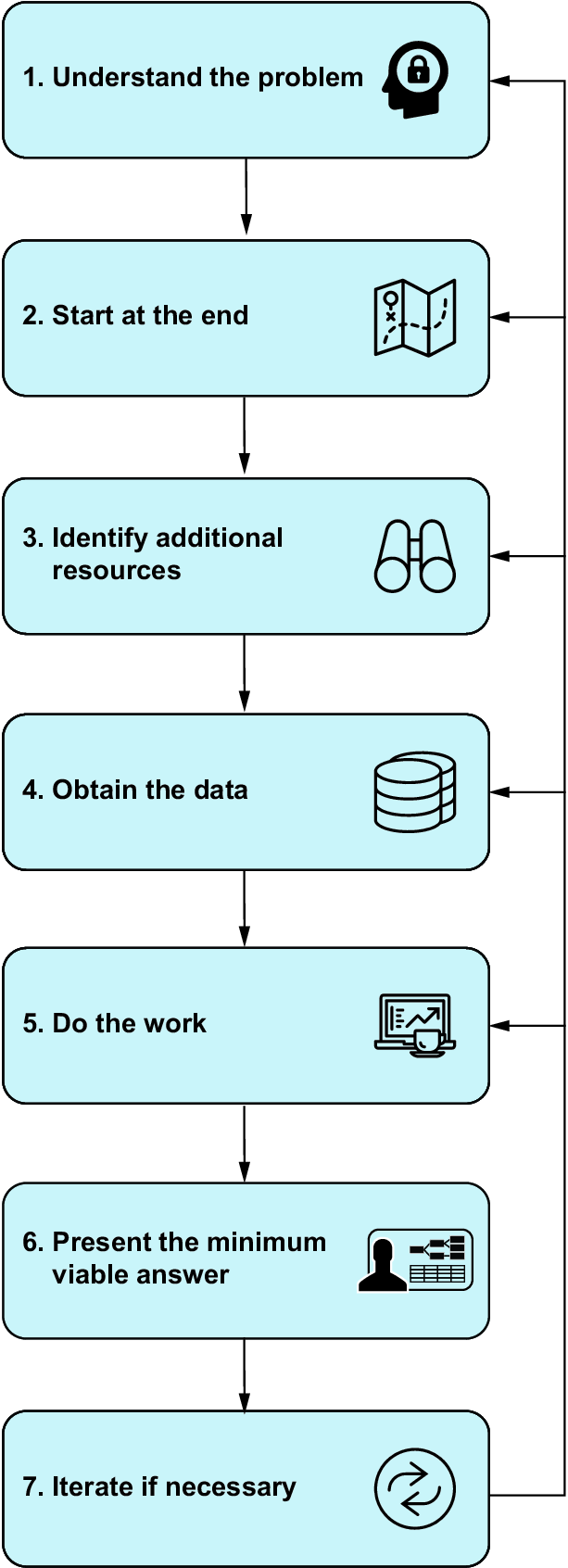
Use the process visual to navigate from problem understanding and resource gathering through analysis, presentation, and iteration. section 1.2
