Assertion
A software assertion is an executable check of an expected condition or property that signals failure when the check does not hold.

Build Python Web Apps with Streamlit
An assertion is a test check that evaluates an expected condition and reports a failure when the condition is false.
- How it is used
- Checks expected backend behavior and frontend state in automated tests.
- How deep it goes
- Defines assertions and works through conditions, mock-call checks, failure reports, and custom messages.
- Examples
- Uses addition results, movie search API responses, sidebar elements, and displayed movie results as checks.
- What you can do after
- Apply it via pytest to compare expected and actual behavior and inspect failures.
Read how Build Python Web Apps with Streamlit explains assertion →

Modern C
assert is a C standard library macro that evaluates a runtime condition and reports a diagnostic followed by abnormal termination when the condition is false.
- How it is used
- Uses assertions to make function preconditions explicit and expose false runtime assumptions during debugging.
- How deep it goes
- Explains evaluation, failure through abort, and disabling with NDEBUG, supported by a recursive function and wrapper.
- Examples
- Uses a recursive greatest-common-divisor function and its wrapper to check argument ordering and nonzero inputs.
- What you can do after
- Diagnose false runtime assumptions with assert and disable its checks for production using NDEBUG.

Unit Testing Principles, Practices, and Patterns
An assertion is a test statement that checks whether an observed result matches an expected condition.
- How it is used
- Uses assertions to verify observable outcomes instead of treating executed code or coverage as evidence of correctness.
- How deep it goes
- Explains explicit and implicit outcomes, then stops short of prescribing a complete assertion design method.
- Examples
- Uses IsStringLong, Parse, a recorded property, and an assertion-free test to contrast verification with execution.
- What you can do after
- Diagnose tests that execute code without verifying all relevant outcomes.
Read how Unit Testing Principles, Practices, and Patterns explains assertion →
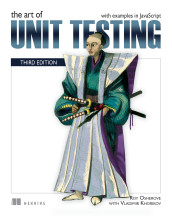
The Art of Unit Testing 3e
An assertion is a test condition that verifies whether an actual result or behavior satisfies an expected truth condition.
- How it is used
- Verifies expected results or behavior in tests, distinguishing a meaningful check from code that merely runs.
- How deep it goes
- Builds a manual equality check and reusable helpers, then examines how failed assertions stop tests and how overly broad checks become fragile.
- Examples
- Uses a sum result, a callback and return value checked separately, and verifier outputs whose order or wording need not be fixed.
- What you can do after
- Practice/perform focused assertions that reveal failures without tying tests to irrelevant output details.
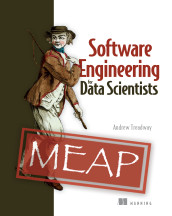
Software Engineering for Data Scientists
An assertion is a check that evaluates a condition and reports failure when the condition is false.
- How it is used
- Guards data-processing workflows and unit tests by checking conditions that must hold before work continues.
- How deep it goes
- Explains assertion failure, custom messages, and the choice between assert and raise without detailing Python internals.
- Examples
- Uses unequal numbers, an empty database-query result, and function outputs checked against expected values.
- What you can do after
- Apply it via Python assert statements to halt invalid data workflows and check function behavior.
Read how Software Engineering for Data Scientists explains assertion →
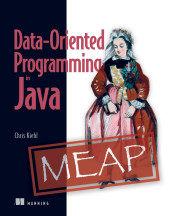
Data-Oriented Programming in Java
An assertion is an executable check that a specified condition holds for a value, state, or computation.
- How it is used
- Uses executable checks to validate invariants, broaden test assumptions, and guard code with proof-bearing data types.
- How deep it goes
- Works through exhaustive state generation, multi-state combinations, and randomized test data, but leaves randomization problems for later treatment.
- Examples
- Demonstrates integer arithmetic, RawData rows, pairwise operations, ValidCart boundaries, and randomized Account fixtures.
- What you can do after
- Diagnose/debug with it by checking invariants across explicit, exhaustive, relational, or randomized test states.
Read how Data-Oriented Programming in Java explains assertion →

Modern C, Third Edition
assert is a C standard-library assertion macro that evaluates a runtime condition and calls abort when the condition is false.
- How it is used
- Uses runtime assertions to expose violated assumptions and function preconditions during execution.
- How deep it goes
- Explains evaluation, diagnostics, abort, and NDEBUG disabling, but stops short of implementation details for the macro itself.
- Examples
- Uses gcd2 precondition checks and the diagnostic produced when an assertion fails.
- What you can do after
- Diagnose debugging-time violations of runtime assumptions and make function preconditions explicit.
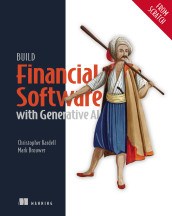
Build Financial Software with Generative AI (From Scratch)
An assert statement checks that a condition is true during program execution and signals an assertion failure when it is false.
- How it is used
- Uses assertions to validate parser results and API responses in unit, behavior-driven, and load tests.
- How deep it goes
- Shows assertions with failure messages and response-field checks, including correction of an incorrect expected status code.
- Examples
- Checks a parsed payment-file header, returned filenames and credit amounts, and HTTP status codes for file endpoints.
- What you can do after
- Apply assertions using pytest and Locust to check expected results and investigate test failures.
Read how Build Financial Software with Generative AI (From Scratch) explains assertion →
100 Java Mistakes and How to Avoid Them
An assert statement is a Java language statement that evaluates a boolean condition and raises an assertion failure when the condition is false and assertions are enabled.
- How it is used
- Uses assertions to check invariants early during testing or staging and locate unexpected program states near their causes.
- How deep it goes
- Explains syntax, JVM enablement, side effects, preconditions, and analysis limits, but stops short of broader assertion design.
- Examples
- Uses set mutation, matcher processing, prefix normalization, and collection removal to expose assertion misuse and safer alternatives.
- What you can do after
- Apply assertions safely by separating side effects, enabling them in tests, and replacing failed preconditions with explicit validation.
Read how 100 Java Mistakes and How to Avoid Them explains assertion →
Web Components in Action
- How it is used
- Uses assertions as the checking component of a testing setup, alongside test organization and browser automation.
- How deep it goes
- Defines assertions and illustrates expected-value checks, stopping short of explaining assertion-library internals.
- Examples
- Illustrates arithmetic, a number-doubling function, and slider component values and display state.
- What you can do after
- Apply Chai assertions to check function results and component state.
Secrets of the JavaScript Ninja, Third Edition
An assertion is a regular-expression condition that checks surrounding text without consuming it as part of the match.
- How it is used
- Constrains regular-expression matches using surrounding text without including that text in the match.
- How deep it goes
- Explains positive and negative lookbehind, immediate anchoring, and worked patterns; mentions lookahead but does not develop it.
- Examples
- Uses patterns for kebab-case hyphens, masking names, and distinguishing negated from direct commands.
- What you can do after
- Evaluate and write regular-expression patterns that condition matches on immediately preceding text.
Read how Secrets of the JavaScript Ninja, Third Edition explains assertion →

Effective Platform Engineering
An assertion is a declarative statement that evaluates as true or false for given data.
- How it is used
- Applies declarative assertions to policy-as-code decisions about whether supplied data is approved.
- How deep it goes
- Defines predicates, extensions, data domains, and subject variables, then connects them to true-or-false evaluation.
- Examples
- Uses book-writing predicates, employee lists, age-based Rego rules, and allow-or-deny policy results.
- What you can do after
- Evaluate policy inputs by identifying predicates, assigning subject variables, and checking whether assertions hold.
Read how Effective Platform Engineering explains assertion →

ASP.NET Core in Action, 3e
An assertion is a test operation that verifies an actual result satisfies an expected condition.
- How it is used
- Uses assertions to verify unit-test outcomes and expected exception behavior.
- How deep it goes
- Explains value and exception assertions with runnable examples, but defers broader ASP.NET Core testing.
- Examples
- Demonstrates currency conversion, mismatched expected values, multiple InlineData cases, and zero-rate exceptions.
- What you can do after
- Apply it via xUnit to verify returned values, repeated input cases, and exceptions raised by a method.

Refactoring to Rust
An assertion is a program check that verifies a condition and reports failure when the condition is false.
- How it is used
- Uses assertions to verify expected values and conditions, especially within automated Rust tests.
- How deep it goes
- Explains Boolean and equality checks, panic behavior, failure output, and debugging values without covering assertion implementation internals.
- Examples
- Demonstrates 2 + 2 assertions, a deliberately failing equality check, and Cargo test failure output.
- What you can do after
- Apply assertions in Rust tests to validate conditions and inspect reported values when checks fail.
Practices of the Python Pro
- How it is used
- Uses assertions as checkpoints for comparing expected and actual values in functional tests.
- How deep it goes
- Explains Boolean conditions, silent success, AssertionError failure, and testing-tool usage without descending into implementation internals.
- Examples
- Demonstrates calculate_mean checks, Product SKU tests, ShoppingCart outcomes, dictionary comparisons, and pytest test-run output.
- What you can do after
- Apply raw assertions in Python tests and migrate unittest comparisons to concise pytest expressions.

Learn Rust in a Month of Lunches
- How it is used
- Uses assertions to catch logic bugs and check expected values, especially in testing.
- How deep it goes
- Defines three assertion macros and demonstrates passing checks and custom failure messages.
- Examples
- Checks a name with assert!, assert_eq!, and assert_ne!, including a custom failure message.
- What you can do after
- Apply Rust assertion macros to check conditions and value equality during execution.
Read how Learn Rust in a Month of Lunches explains assertion →
Software Design for Python Programmers
An assert statement evaluates a condition and aborts execution when the condition is false.
- How it is used
- Enforces preconditions when continuing after invalid input could corrupt object state or return an invalid value.
- How deep it goes
- Defines the check and its aborting behavior, while deferring exception handling as an alternative contract.
- Examples
- Uses an empty CircularBuffer and an unchecked remove() call to demonstrate assertion failure.
- What you can do after
- Diagnose/debug with it: detect violated preconditions immediately instead of allowing invalid state to propagate.
Read how Software Design for Python Programmers explains assertion →

Python How-To
- How it is used
- Checks expected conditions in formatting examples and verifies function outputs in tests.
- How deep it goes
- Defines truth-dependent execution and demonstrates equality checks for formatted strings and function results.
- Examples
- Uses formatted-string comparisons and a task-creation function checked against an expected task.
- What you can do after
- Evaluate expected values by asserting formatted strings or comparing a function’s result with an expected object representation.
Also covered in
- Build Your Own Robot: Using Python, CRICKIT, and Raspberry Pi
- Elixir in Action, Third Edition
- Object-Oriented Software Design in C++
- Clojure: The Essential Reference
- Spec-Driven DevelopmentIn early access (MEAP)
- Learn C++ by Example
- Tiny Python Projects: Learn coding and testing with puzzles and games
- 100 C++ Mistakes and How to Avoid Them
- Spring AI in Action
- BDD in Action, Second Edition
- .NET in Action, Second Edition
- DuckDB in Action
What to know first
- exceptionAn exception is a runtime signal or value representing an abnormal condition that interrupts ordinary program flow and can be handled or propagated.
- software testingSoftware testing is the systematic evaluation of software under specified inputs or conditions to assess its behavior against expected results or requirements and identify defects.
- functionA function is a callable unit of program code that performs a computation or operation, can accept inputs, and may produce a result or side effect.
- listA list is an ordered collection of elements arranged in a sequence.
Related concepts
- dynamic bindingconfigured by · A dynamic binding is a value associated with a var for a specific thread, allowing different threads to observe different values.
- lookaheadincludes · A lookahead is a regular-expression assertion that checks whether a pattern matches after the current position without consuming the checked input.
- lookbehind assertionincludes · A lookbehind assertion is a regular-expression assertion that checks whether a pattern matches before the current position without consuming the checked input.
- exceptionproduces · An exception is a runtime signal or value representing an abnormal condition that interrupts ordinary program flow and can be handled or propagated.
- AssertionError exceptionproduces · AssertionError is the Python exception raised when an assertion condition evaluates to false.
- NDEBUGconfigured by · NDEBUG is a C and C++ preprocessor macro whose definition conventionally disables assertion checks performed by the standard assert mechanism.
Questions about assertion
What is assertion?
A software assertion is an executable check of an expected condition or property that signals failure when the check does not hold.
Which Manning books explain assertion?
Build Python Web Apps with Streamlit, Modern C, Unit Testing Principles, Practices, and Patterns, The Art of Unit Testing 3e, Software Engineering for Data Scientists, Data-Oriented Programming in Java, Modern C, Third Edition, Build Financial Software with Generative AI (From Scratch) and 10 more.
What should I know before learning assertion?
Manning books that teach assertion usually introduce exception, software testing, function and list first.
What kinds of assertion are there?
Kinds of assertion include lookahead and lookbehind assertion.
What is assertion also called?
Assertion is also called assert.
These guides are generated from the text of Manning books by Manning's knowledge graph and link to the sections they draw on. The full books are available on liveBook and at manning.com.