Audio is recorded or transmitted sound data. In search systems, it is a form of unstructured data that may encode spoken language, music, and non-language sounds. section 2.1.1
Audio resembles text when it encodes words and sentences, but it can also preserve emotion, tone of voice, and overlapping communication. This makes audio broader than speech transcription alone. section 2.1.1
Search-oriented distinctions include:
- Spoken words and sentences, which make audio comparable to text content. section 2.1.1
- Music and non-language sounds, which extend audio beyond natural-language content. section 2.1.1
- Emotion, tone of voice, and simultaneous overlapping communication, which audio can encode more effectively than text. section 2.1.1
- A modality in multimodal search alongside natural language, images, and video. section 15.3.1
Figure 2.2 Multiple types of unstructured data. In addition to the text from the last figure, we now see images, audio, and video, which are other forms of unstructured data.
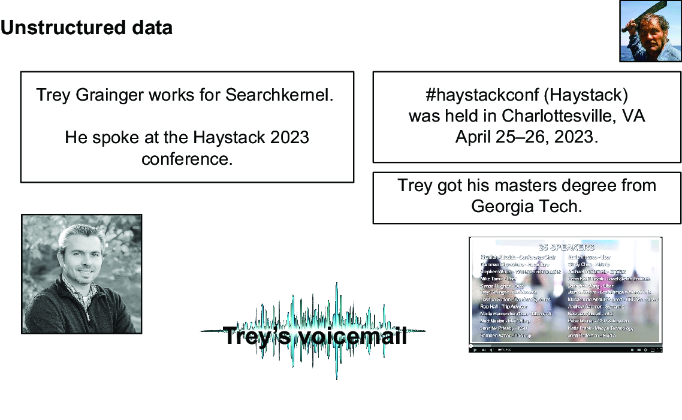
Figure 2.2 places audio beside text, images, and video as a major type of unstructured data handled by search engines. section 2.1.1


