Availability bias treats easily recalled information as more important or valuable than alternatives that are harder to retrieve. In collaborative modeling, participants may mistake “easy to come up with” for “good.” section 7.1.2 section 7.2.4
Use collaborative modeling to expose and counter the bias:
- Generate multiple designs instead of accepting the first plausible idea. section 7.2.4
- Evaluate designs for suitability rather than rewarding the one that required less effort. section 7.2.4
- Compare subgroup outputs and use sensemaking to reveal repeated assumptions and similar examples. section 7.1.2
Movie scheduling model
A first design represented a schedule through movies with a name, duration, and playtime. A later design introduced a movie showing. The first design was favored because it was easier to create, not because it better represented the concept. section 7.2.4
Figure 7.1 Sensemaking exercise to demonstrate cognitive bias during collaborative modeling
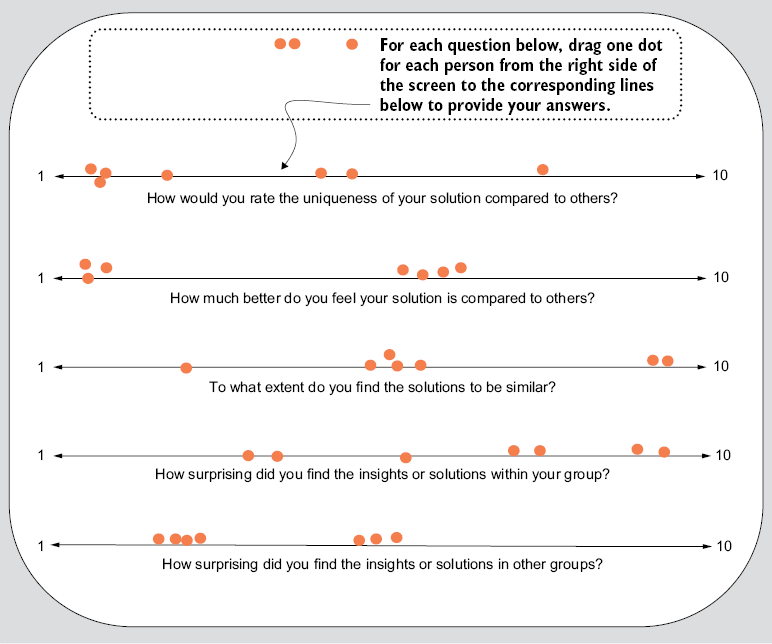
Use the sensemaking exercise to compare subgroup outputs and make availability-driven similarities visible during collaborative modeling. section 7.1.2
