Confusing communication combines contradictory statements, behavior, or signals, making a person’s position or intent difficult to interpret. During collaborative modeling, it often appears when people reach an uncomfortable edge. section 8.1.2
Look for mismatches between what people say and how they participate:
- Absence: someone is physically present, nodding and smiling, but mentally checked out and no longer participating. section 8.1.2
- Interruption: people increasingly prevent others from finishing, especially around particular topics or minority opinions. section 8.1.2
- Mixed signals: someone says, “Everything is fine,” or agrees with a decision, then does not attend the meeting. section 8.1.2
Notice the mismatch
A cat that begins grooming itself just before a fight illustrates edge behavior: an observable action contradicts the surrounding situation. In group work, observe when interruptions occur, who is interrupted, and whether minority views trigger them. section 8.1.2
Figure 8.1 Edge behavior happens when someone tries to oppress their inner shadows, but we can observe it because the unconscious behavior contradicts what we observe in the conscious behavior. As mentioned in chapter 5, when words and music don’t go together, they point to a missing element.
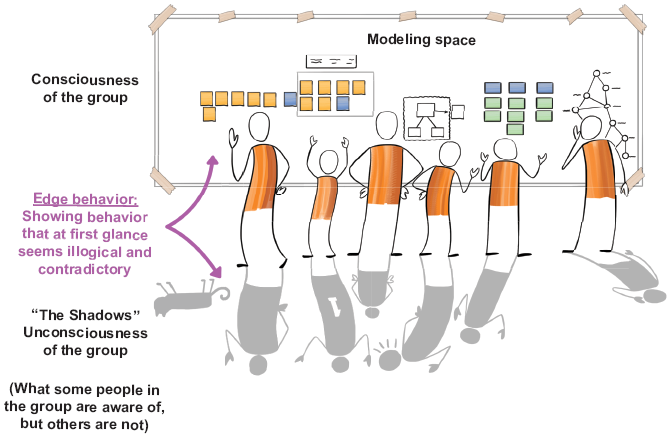
Use the figure to examine how conscious communication can conflict with less conscious behavior and reveal a missing element. section 8.1.2
