Edge behavior is seemingly illogical or contradictory behavior that appears when an individual or group avoids a conflict they are not yet comfortable addressing. It sits at the boundary of conscious and unconscious experience: someone may say that everything is fine while acting in ways that communicate the opposite. Treat it as a signal of discomfort, not a reason to judge the person. section 8.1.2 section 8.7
Mixed signals in a design discussion
A participant repeatedly interrupts a colleague, frames suggestions as questions such as “Wouldn’t it be better if…,” then later nods along but stops contributing. The sequence—interruption, indirect challenge, and checking out—can indicate edge behavior near an unaddressed conflict. Notice the observable pattern before drawing conclusions about its cause. section 8.2.1 section 8.1.2
Common signals include:
- Absence: physically present but mentally checked out and no longer participating actively. section 8.1.2
- Interruption: repeatedly preventing others from finishing their thoughts or opinions. section 8.1.2
- Confusing communication: words and behavior conflict, or questions function as indirect objections rather than genuine inquiry. section 8.1.2 section 8.7
In collaborative modeling, observe behavior neutrally and look for repeatable patterns rather than labeling a single incident. Record what was said and done in objective terms. Remote sessions require extra care because small camera windows can conceal subtle signals, while some patterns may remain highly visible. section 8.2.1
When a group reaches an emotionally charged hotspot, gently help it become aware of the edge and the underlying tension. Establish safety agreements first, maintain neutrality, and invite reflection rather than forcing confrontation. Pressuring people beyond their comfort zone can increase anxiety and damage relationships. section 8.3.2 section 8.7
Figure 8.1 Edge behavior happens when someone tries to oppress their inner shadows, but we can observe it because the unconscious behavior contradicts what we observe in the conscious behavior. As mentioned in chapter 5, when words and music don’t go together, they point to a missing element.
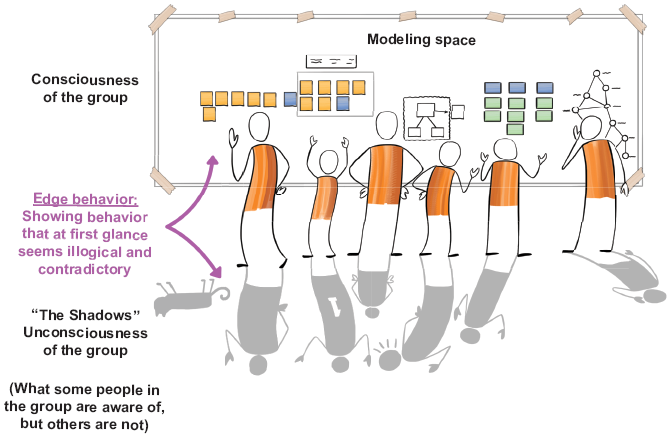
Use the diagram to distinguish outward, conscious statements from contradictory behavior that may point toward an unspoken or missing concern. section 8.1.2
