A physical server, or bare-metal server, provides computing resources directly from dedicated hardware rather than abstracting them through a hypervisor. In Anthos on bare metal, ready-to-use servers and a supported operating system must be supplied before cluster deployment. section 17.0 section 15.1.1
Bare-metal deployment increases infrastructure responsibility. Teams must provision nodes, estimate capacity, automate operating-system prerequisites, maintain security-approved golden images, and manage storage devices for durable cluster workloads. section 5.4
Choose physical servers with these deployment implications in mind:
- Plan spare capacity for upgrades when zero downtime is required, because a node failure during an upgrade can reduce available capacity. section 5.4
- Automate provisioning with a vetted operating-system image; PXE boot can install newly provisioned servers into the required configuration. section 5.4
- Compare standalone, multicluster, and hybrid layouts, recognizing that each requires a different operational model. section 5.4
- Evaluate density before standardizing: reported bare-metal utilization is typically 5%–15%, compared with up to 30% for virtual machines, while containers can raise density further. section 15.1.1
Anthos on bare metal
A team can deploy Anthos on physical servers, virtual machines, or supported virtual machines running on Hyper-V or KVM. The model therefore means supplying and preparing the node environment, not necessarily using physical hardware exclusively. section 17.0
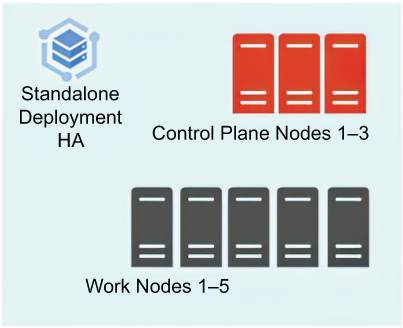
Use the standalone deployment diagram to inspect how administrative and user workloads share nodes in one bare-metal cluster. section 5.4
