liveBook · Manning

Big picture EventStorming

As explained in Architecture Modernization: Socio-technical alignment of software, strategy, and structure

Big picture EventStorming is an EventStorming format for collaboratively exploring a domain at broad business scope and identifying its domains, subdomains, and complexity.

Big picture EventStorming is a collaborative way to explore how a business works before committing to domain boundaries or modernization decisions. People across roles contribute their knowledge, exposing details that a high-level design might miss. Its simple notation starts with domain events—things that happen in the domain—arranged on a timeline. section 7.0
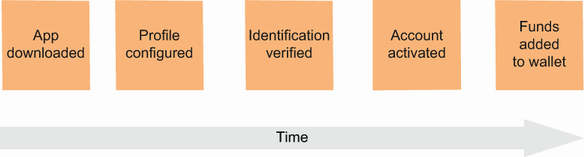
Figure 7.1 Using domain events to map out a business on a timeline from left to right

The timeline shows how domain events can give participants a shared view of the business. section 7.0

Use the broad map to discuss where domains and subdomains might lie. These are candidate boundaries, not a final architecture: big picture EventStorming favors wide-ranging exploration and group learning over detailed process or software design. section 7.1.4 section 9.4
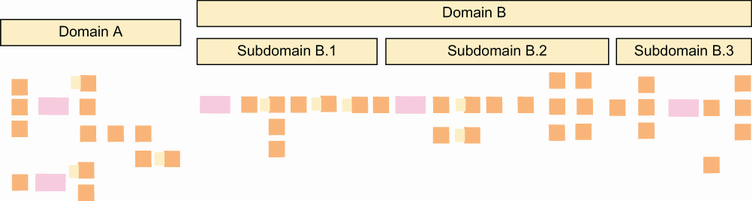
Figure 7.7 Partitioning an EventStorm in domains and subdomains

Partitioning the EventStorm makes the move from a shared timeline to candidate domains and subdomains visible. section 7.1.4

Choosing an accounting modernization starting point

Stakeholders exploring a fixed asset subdomain used big picture sessions to align their understanding, identify candidate subdomains, and decide what belonged in an MVP. They then used domain message flow modeling to test and refine the proposed boundaries against real use cases. section 12.2.3

Treat the map as the start of an investigation. For a substantial end-to-end process spanning roughly five to eight teams, allow two to three full days for an initial session, then consider narrower process-modeling workshops for candidate subdomains. Timing varies with domain complexity and participants’ comfort with collaboration; refine boundaries before committing to them. section 9.4.6

How Architecture Modernization: Socio-technical alignment of software, strategy, and structure covers it

How deep it goes
Explains a simple event timeline and broad boundary discovery, deferring finer process and software-design detail to other EventStorming formats.
Examples
Uses a cross-team company workshop and an accounting-system modernization effort to illustrate shared learning and candidate subdomains.
What it assumes
Assumes participants bring knowledge of their business while using a simple notation accessible to people across roles.
What you can do after
Practice/perform collaborative domain mapping to identify candidate boundaries and choose areas for deeper investigation, rather than finalize an architecture immediately.
How it connects
Connects domain events and domain boundaries to process modeling EventStorming, software design EventStorming, and Domain Message Flow Modeling.

Related concepts

This explainer was generated by Manning's knowledge graph from the text of Architecture Modernization: Socio-technical alignment of software, strategy, and structure. The section links point to the parts of the book it draws on.