bind applies a function that already produces an effectful result, then keeps the computation in one context instead of creating nested containers. It handles the context-specific work for options, results, tasks, and collections. section 15.4.3 section 15.4.2
Use bind when the next operation can produce another value in the same effect:
- Use Option.bind when a value may be absent and the next computation may also return an option. section 9.2.6
- Use Result.bind when each step may fail and later steps should run only after successful results. section 15.4.3
- Use List.collect, the collection form of bind, to turn many nested results into one flat collection. section 9.1.6 section 15.4.3
Chaining safe calculations
A division function can return an error rather than throw an exception: let divideBy b a = if a = 0 then Error "Divide by Zero" else Ok (a / b) let answer = 20 |> divideBy 2 |> Result.bind (divideBy 5) // answer is Ok 2 The bind call passes the successful value onward while preserving an Error result unchanged. For customers and orders, the analogous collection operation is: let allOrders = customers |> List.collect (fun customer -> customer.Orders) section 15.4.3 section 15.4.3
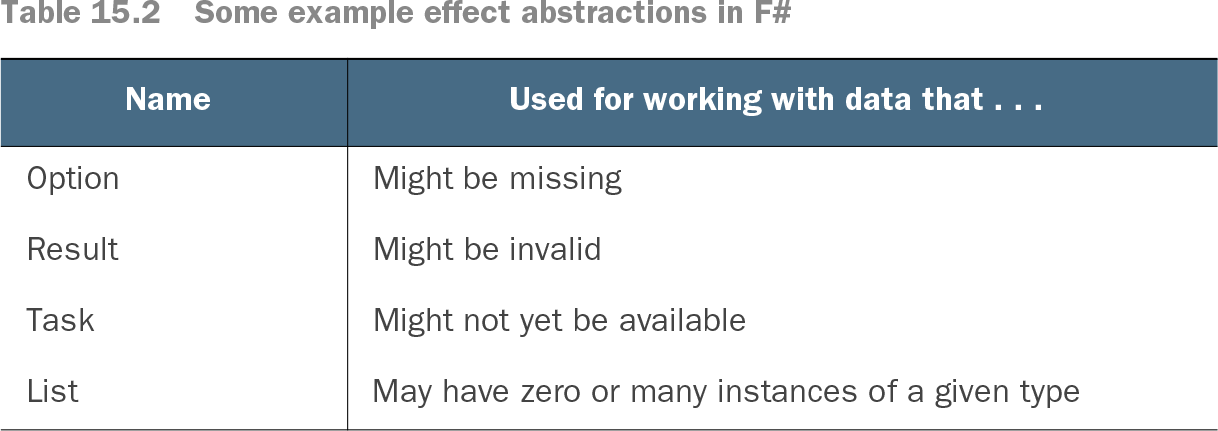
Table 15.2 Some example effect abstractions in F# (view table figure)
Compare the contexts that bind-like operations manage: missing values use Option, failures use Result, unfinished work uses Task, and multiple values use List. section 15.4.2