Blast radius measures how widely a failure or data problem has spread across records, components, or systems. A corrupted database record has a small blast radius; corruption across thousands of records or multiple systems has a large one. section 13.3.1
Use blast-radius checks to guide investigation and response:
- Spot-check hashes across systems to determine whether an inconsistency is isolated or widespread. section 13.3.1
- Choose a targeted fix for one item or broader recovery for an affected system based on the spread. section 13.3.1
Conflicting invoice records
Hash an invoice in an audit log and compare it with versions in a downstream system or support database. Matching hashes suggest consistency; mismatches identify a problem to investigate and help reveal whether it affects one record or many. section 13.3.1
Figure 13.8 The blast radius is a way to see the effect of a problem throughout the system.
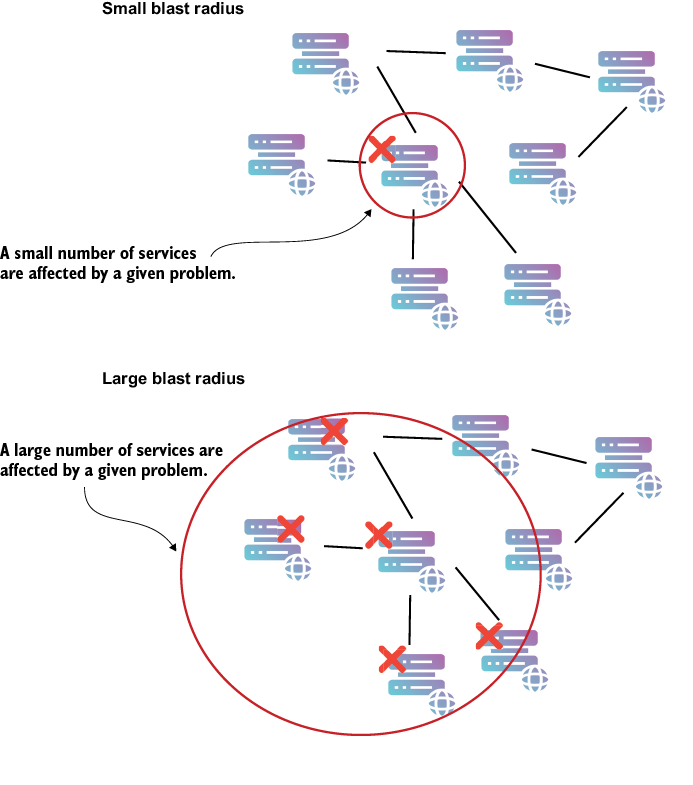
A system-wide figure helps visualize how a problem propagates beyond its original record. section 13.3.1



