liveBook · Manning

Borrower

As explained in Investing for Programmers

A borrower is the party that receives borrowed money and is obligated to repay the principal and applicable interest.

A borrower is the party that receives money in a debt arrangement and must repay the principal, usually with interest. In a bond, the borrower is the issuer on the receiving side of the IOU. section 5.2

A bond borrower can be assessed through:

  • Identity: federal governments, municipalities, and companies can borrow through bonds. section 5.2
  • Repayment: the borrower returns principal at maturity and makes scheduled coupon payments when required. section 5.2
  • Credit risk: higher default risk generally leads investors to demand higher interest rates and lower ratings. section 5.2
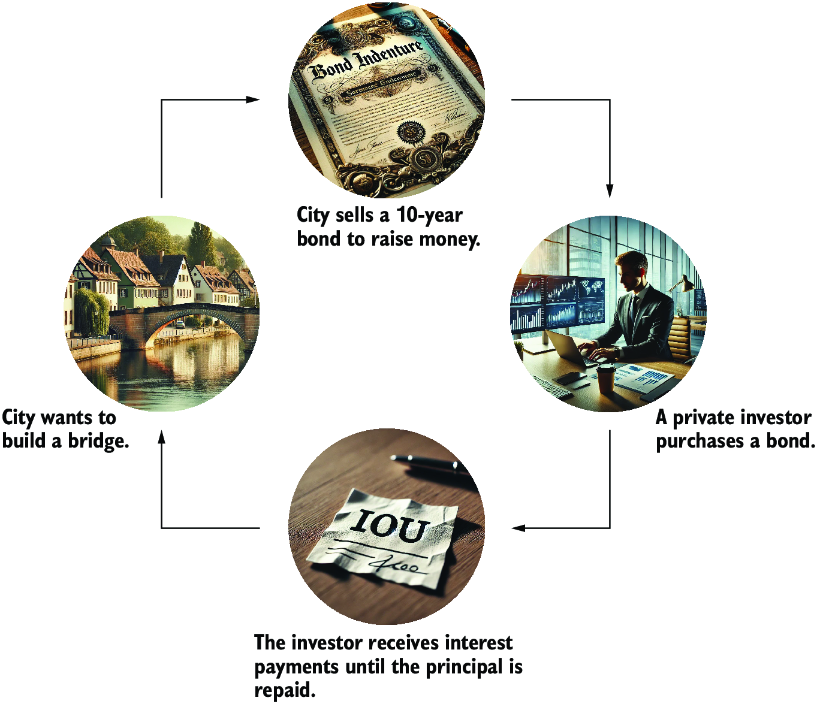
Figure 5.3 A plain vanilla bond
figure

Use the plain-vanilla bond diagram to trace the borrower’s repayment obligation against the lender’s cash flows. section 5.2

How Investing for Programmers covers it

How deep it goes
Defines borrower identity and repayment obligations, then connects them to maturity, coupons, interest rates, and default ratings.
Examples
Uses federal governments, municipalities, and companies as borrower examples within the bond IOU model.
What it assumes
Assumes only a basic distinction between borrowing, lending, principal, interest, and debt.
What you can do after
Evaluate a bond borrower by identifying repayment terms, coupon schedules, and default-risk signals.
How it connects
Links borrowers to bonds, lenders, principal, coupon payments, maturity dates, default risk, and credit ratings.

This explainer was generated by Manning's knowledge graph from the text of Investing for Programmers. The section links point to the parts of the book it draws on.