A web application is software a user accesses through a web browser. Unlike a desktop app, it requires no installation on the user’s device and can be used from devices such as computers, phones, and tablets. section 7.1
A web app has two cooperating sides:
- The client side, or frontend, is the browser interface. It sends requests to the server and displays the responses. section 7.1.1
- The server side, or backend, processes requests, runs application logic, and may store data before returning a response. It can serve many clients at once, so backend operations may run concurrently. section 7.1.1
Figure 7.2 The big picture of a web app: The user interacts with the app through its frontend. The frontend communicates with the backend to execute logic at the user’s request and get the data to display. The backend executes business logic and sometimes persists data in a database or communicates with other external services.
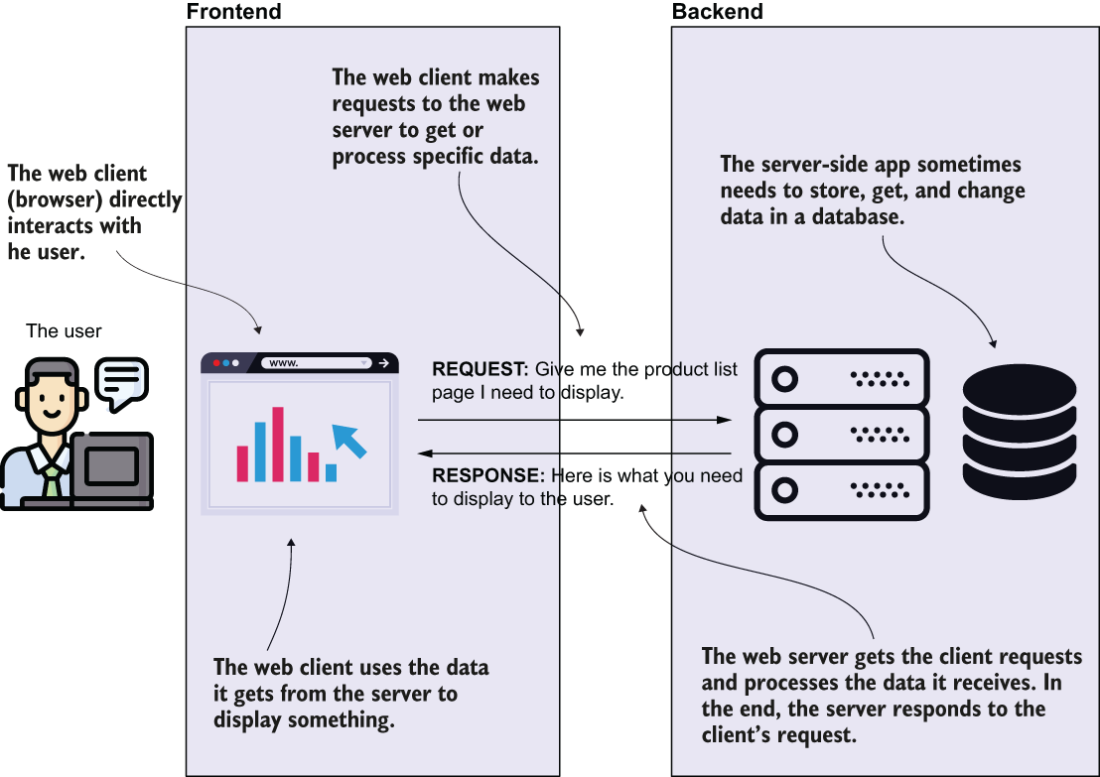
This diagram traces the user’s interaction through the frontend to backend logic, which can also persist data or contact external services. section 7.1.1
Online banking
A user can access bank transactions through a web application, while a backend manages the data and may communicate with databases or other backend systems. section 1.3.1
For a Java backend, a servlet container such as Tomcat translates HTTP requests and responses for the application. Spring Boot can configure the container and Spring MVC components, letting a minimal request-response flow use an HTML response and an annotated controller. section 7.5





