Business context records why a feature or change is needed: its purpose, scope, and acceptance criteria. It turns a high-level idea into durable guidance before technical design or execution begins. section 2.2.1
Interrogate the idea with questions such as:
- Who is the feature for? section 2.2.1
- What problem does it solve, and why does it matter now? section 2.2.1
- What does success look like? section 2.2.1
Keep this conversation at the level of what to build. Technical choices belong in design; execution details come later. section 2.2.1
Figure 2.2 The first interaction between human and agent is a discovery discussion, focused on business concerns to draft purpose, scope, etc. This then forms the basis of second interaction which focuses on design to decide technology stack, and architecture. Both of these together guide the drafting of the task list. The agent then uses the task list, to autonomously execute and generate the implementation.
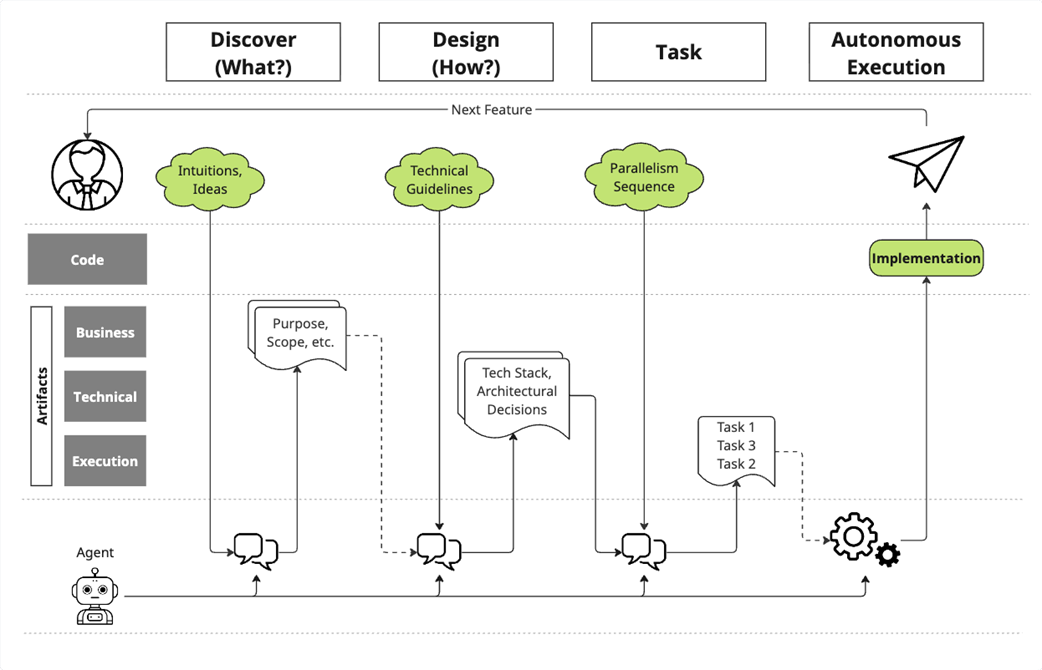
Shows how discovery establishes business intent before design and task planning guide implementation. section 2.2.1