liveBook · Manning

CAPTCHA

As explained in Secure APIs

A CAPTCHA is an automated challenge-response test intended to distinguish human users from automated programs.

A CAPTCHA is an automated challenge-response test intended to distinguish human users from automated programs. For web applications, serving CAPTCHA challenges can reduce automated attacks against sensitive API-driven business flows, although no method completely prevents headless access. section 4.9

Use CAPTCHA as one layer in a broader defense:

  • Challenge users when automated activity threatens a sensitive flow. section 4.9
  • Combine it with user-agent checks, interaction-pattern detection, throttling, and blocking for suspected abuse. section 4.9
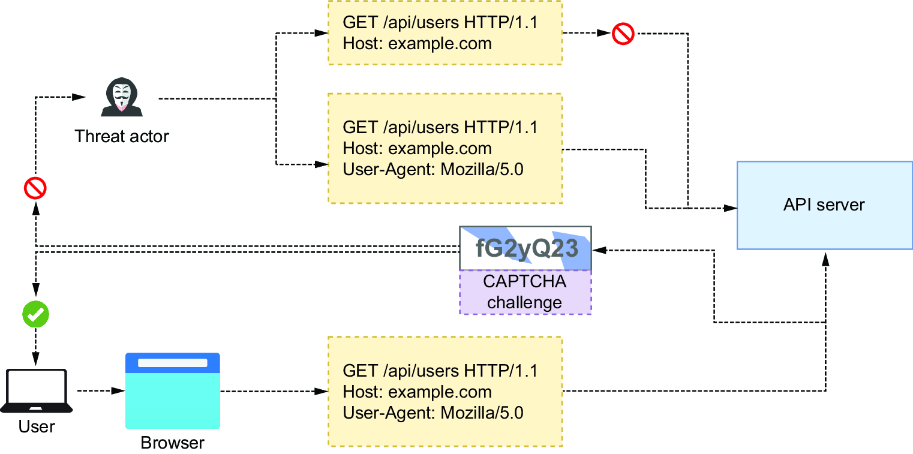
Figure 4.18 If our API is designed for consumption by a web application, a good strategy to mitigate automated attacks is serving CAPTCHA challenges.
figure

The figure shows CAPTCHA challenges as a mitigation for automated attacks against an API consumed by a web application. section 4.9


How Secure APIs covers it

How deep it goes
Explains CAPTCHA’s defensive role and limits but does not detail challenge implementation.
Examples
Illustrates CAPTCHA protecting an API designed for consumption by a web application.
What you can do after
Apply CAPTCHA challenges as one layer of protection against suspected automated activity.
How it connects
Connects CAPTCHA with headless browsers, user-agent checks, threat detection, throttling, and blocking.

Also explained in

Compare how 2 books explain CAPTCHA →

Related concepts

This explainer was generated by Manning's knowledge graph from the text of Secure APIs. The section links point to the parts of the book it draws on.