Carbon intensity measures greenhouse-gas emissions associated with a unit of energy or activity. For computing, it helps explain why similar hardware and power use can produce very different emissions: the electricity grid may rely on cleaner sources such as hydroelectricity and solar power, or more carbon-intensive sources such as coal and natural gas. section 11.3
Why the grid matters
Training estimates for BLOOM and GPT-3 differed substantially even though their parameter counts and data-center power-effectiveness measures were comparable. The lower carbon intensity of BLOOM’s supporting grid contributed to its lower estimated emissions. Comparisons remain uncertain because carbon-accounting methods are not standardized, and the figures discussed exclude carbon offsets. section 11.3
Figure 11.2 The life cycle assessment of LLMs [52]
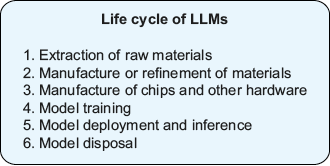
Use the life-cycle assessment to place grid carbon intensity alongside other stages and sources of emissions from large language models. section 11.3


