Career planning is the deliberate process of choosing a professional direction, defining goals and milestones, and identifying the skills, experiences, and actions needed to progress. The plan provides clarity without becoming permanent: interests, industries, and priorities can change. section 9.3.1 section 9.5.2
Build a practical career plan by:
- Visualizing the role or level you want, then documenting the specific steps required to reach it. section 2.4.1
- Working backward from the desired outcome to identify learning objectives, skills, experiences, and useful opportunities. section 9.5.2
- Studying people who already perform the target role, while adapting their journeys rather than copying them. section 2.3 section 9.5.2
- Building practice into daily work instead of waiting for a future promotion or ideal opportunity. section 2.4.1
- Reviewing the plan as interests, burnout, industry conditions, or organizational opportunities change. section 9.3.1
From aspiration to action
Someone who wants to manage a team can study successful managers, practice relevant behaviors in meetings and colleague interactions, and pursue projects that build responsibility. Someone targeting expertise in identity or security can start with that outcome and work backward to determine the required knowledge and experience. section 2.4.1 section 9.5.2
Figure 9.1 Example career plan
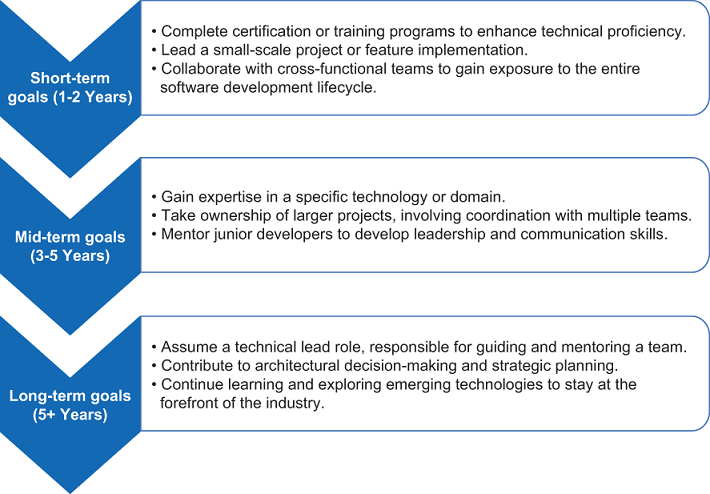
Use the example career plan as a visual aid for organizing an end goal, intermediate milestones, and development steps. section 9.3.1
