A career track is the progression of roles, responsibilities, and development choices available across a professional career. A common developer sequence is junior developer, senior developer, lead developer, and management, but careers can follow other routes. section 2.0
Career tracks can include several directions:
- Move through developer roles toward lead development, while building technical expertise and preparing résumés, interviews, and communication skills. section 2.0
- Enter through help desk work when junior positions are unavailable; troubleshooting exposes people to technologies, processes, and critical thinking. section 2.1
- Remain a senior or lead developer instead of pursuing management, especially when continuing to code daily matters more than upward mobility. section 2.1.4
- Pursue management, technical direction, or a CTO role, recognizing that these paths emphasize people, hiring, conflict resolution, budgets, and delivery. section 2.1.4
Planning backward from a goal
A mentee who wants to become an identity or security expert can identify people already doing that work, study their journeys, and work backward from the goal to map needed development. section 9.5.2
Figure 2.2 Software development career trajectory
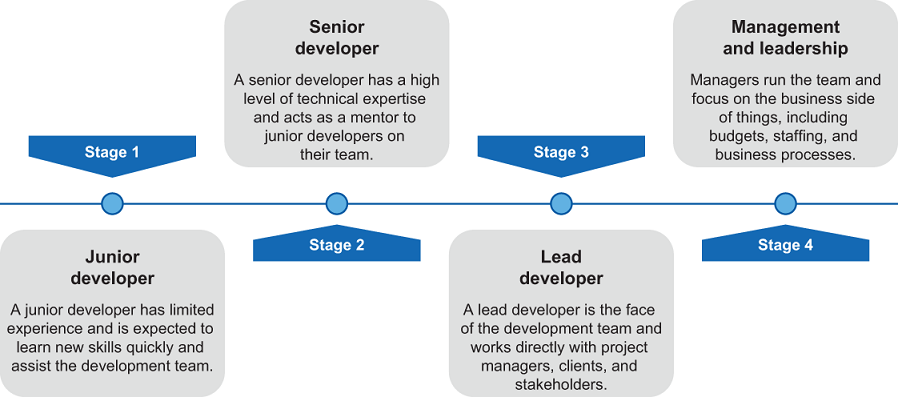
Use the career trajectory figure to compare movement among development, leadership, and management roles. section 2.1.4
