A carry fee is a performance-based charge paid to an investment fund manager from profits. In venture capital and angel syndicates, a common example is a 20% carry: the manager receives a share of profits, not the original investment. This differs from an annual management fee or a syndicate’s one-time pro rata charge. section 12.2.1 section 12.2.2
Use these checks when reading a fund or syndicate fee structure:
- Apply the carry only to profits: no profit means no carry charge. section 12.2.1 section 12.2.2
- Separate carry from annual management fees, which are charged regardless of the stated profit allocation. section 12.2.1
- Account for the investment structure: venture funds pool investors across multiple start-ups, while syndicates may use a lead investor. section 12.2.1 section 12.2.2
A simple carry calculation
If an investment generates $100,000 in profits and the carry is 20%, $20,000 goes to the venture capitalist and $80,000 remains for the investor. The investor’s overall result must also account for the returned initial investment and management fees. section 12.2.1
Figure 12.1 In the simplified money flow, 80% of the profits and your investment, minus the annual fees, will be returned to you.
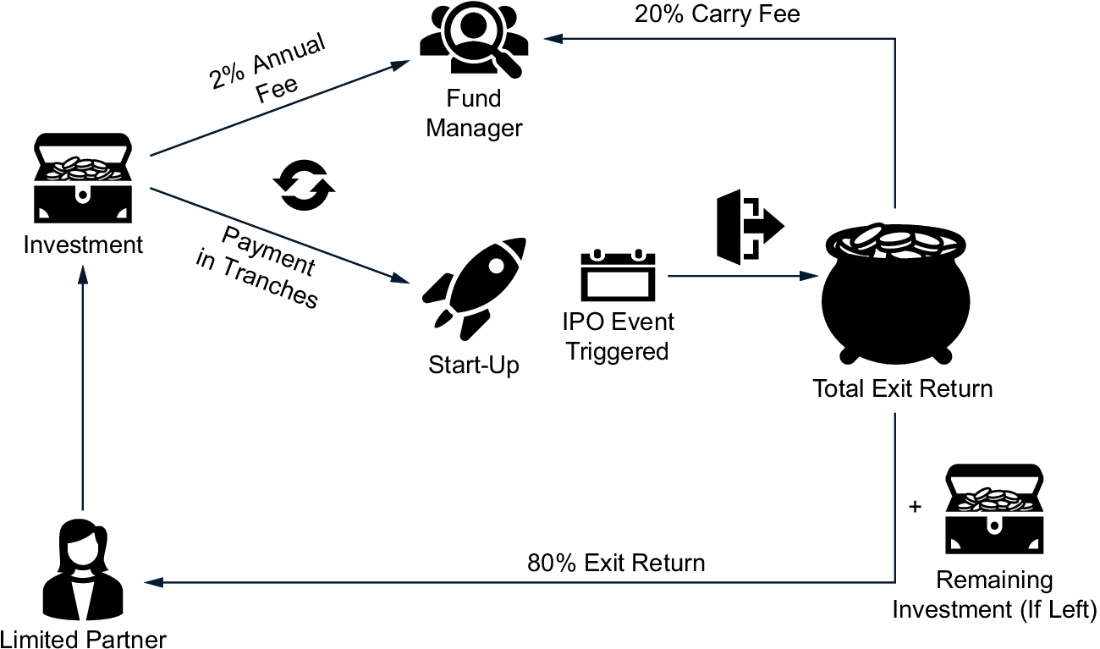
Use the simplified money-flow figure to trace how carry, returned capital, and annual fees affect the investor’s distribution. section 12.2.1
