liveBook · Manning

Centrality

As explained in Graph Algorithms for Data Science

A centrality measure quantifies the importance or influence of a node according to a specified structural criterion.

Centrality measures quantify how important or influential a node is within a network. Centrality algorithms calculate these measures for tasks such as identifying influential users. section 5.1

Common structural criteria include:

  • Degree centrality counts a node’s relationships; a higher count indicates greater influence. section 5.1
  • Information-flow influence measures how much a node controls or affects information moving through the network. section 5.1

Friendship network

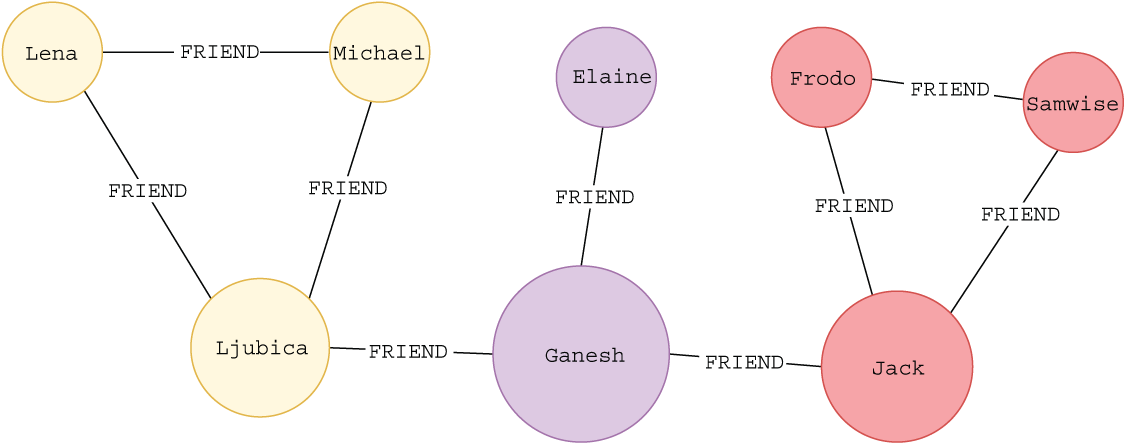
In a friendship network divided into three communities, Ganesh is influential because he bridges all three groups. Removing him breaks the network into three parts, while Ljubica and Jack connect their community to the rest. section 5.1

Figure 5.4 Friendship network with node size corresponding to their influence over the information flow
05-04

View node sizes representing influence over information flow in the friendship network. section 5.1


How Graph Algorithms for Data Science covers it

How deep it goes
Defines centrality and contrasts degree centrality with information-flow influence, but does not detail calculation procedures.
Examples
Uses a friendship network with three communities and bridge nodes whose removal fragments the network.
What you can do after
Evaluate node influence by counting relationships or examining control over information flow.
How it connects
Connects node importance with degree centrality, information flow, community structure, and network connectivity.

Also explained in

Compare how 2 books explain centrality →

Related concepts

This explainer was generated by Manning's knowledge graph from the text of Graph Algorithms for Data Science. The section links point to the parts of the book it draws on.