Chain-of-thought prompting asks an AI to work through a task in smaller, ordered steps rather than jump straight to an answer. For a complex website decision, this can slow the exchange down, preserve context, and make it easier to inspect and improve the result. section 1.5.11 section 12.6.1
The useful part is not merely getting a longer reply. Break a goal into stages, ask for headings or a conclusion, and pause for your input between stages. Your answers give the AI details—such as visitor goals or priorities—that can sharpen the next step. section 12.6.1
Use this approach when a one-shot prompt is too vague:
- State the overall goal, such as improving a website design or reviewing its analytics. section 12.6.1
- Ask the AI to proceed step by step and organize the response with headings. section 12.6.1
- Require a pause after each step so you can supply goals, corrections, or missing context. section 12.6.1
- Verify the output and continue the conversation until the final response is focused enough to use. section 12.6.1
- For extra checking or polish, paste one AI’s response into a second AI with a specific revision request. section 12.6.1
A staged website-design prompt
Try: “Taking this step by step, tell me what professional reviewers think are best practices when designing a website. Start with an introduction, then after each step ask me for my input. End with a conclusion. Provide headings for each step.” The pauses turn the response into a guided conversation instead of a generic checklist. section 12.6.1
Some models can also reason through multistep tasks internally. GPT o1 is described as breaking a problem into parts, analyzing them, and synthesizing a final answer; those internal steps may not always be shown. In agent settings, this capability can help an AI choose subgoals and actions for a larger goal with less detailed prompting. section 1.5.11 section 12.5.1
Figure 12.2 Chat with multiple AIs at the same time with the ChatHub Chrome extension.
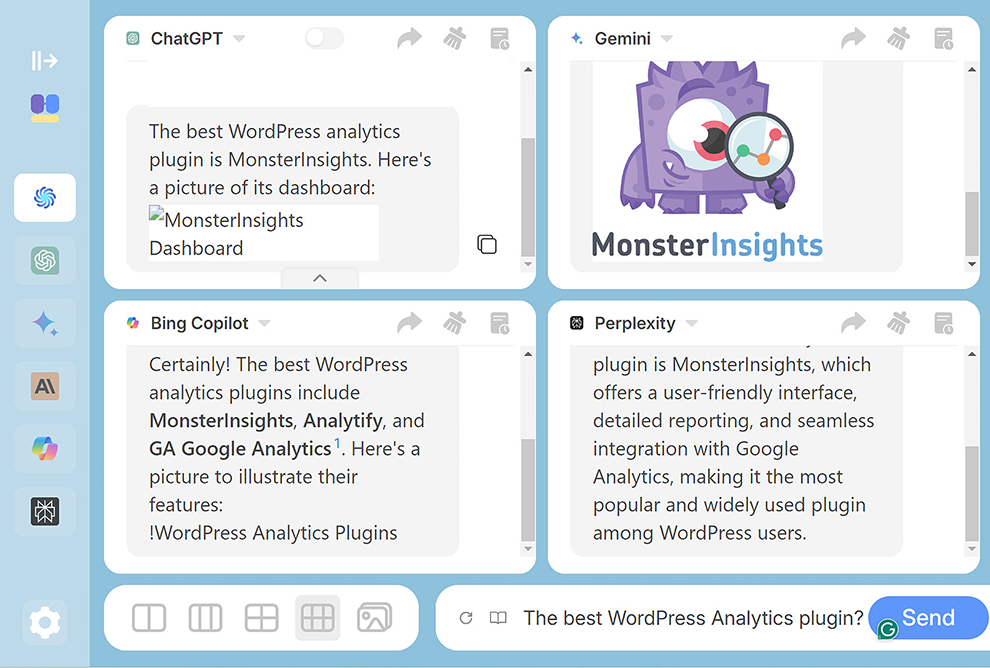
A multi-AI chat interface supports the second-opinion workflow: compare responses to the same request, then use another model for corroboration, deeper insight, or clearer wording. section 12.6.1

















