liveBook · Manning

Approval gate

As explained in Build a Multi-Agent System (from Scratch)

A human approval gate is a review mechanism that requires human approval of a task result and returns rejected results with feedback for revision.

An approval gate pauses an agent’s task loop when it produces a result, presents that result to a human, and uses approval or rejection to decide what happens next. It is useful when an incorrect result could be costly. section 8.0

With approval enabled, the result follows this cycle:

  • The agent requests approval and presents its proposed result to the operator. section 8.3.1
  • On rejection, the operator provides feedback; the handler turns it into a rejected-result step and resumes the processing loop. section 8.3.1

Revise a Hailstone sequence result

An agent computes the sequence from 5 and submits it for approval. The operator rejects the result with a request to omit its first sentence; the agent retries with that feedback. section 8.3.1

Figure 8.9 The sequence of interactions between a human operator, LLMAgent, and the TaskHandler it dispatches for carrying out the Result-Approval HITL pattern
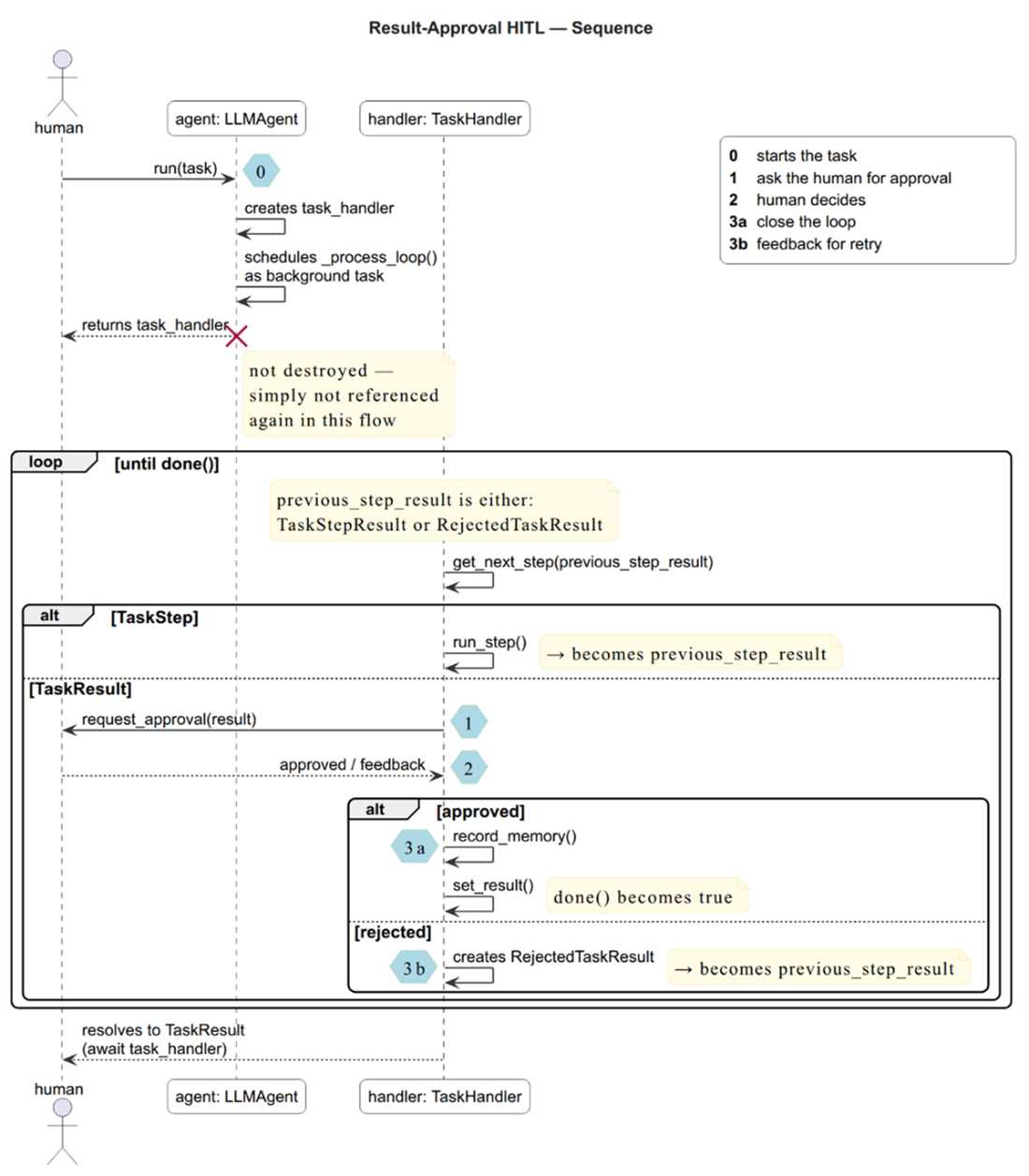
Shows the interactions among the operator, agent, and task handler during approval. section 8.3.1


How Build a Multi-Agent System (from Scratch) covers it

How deep it goes
Implements approval requests, rejection feedback, and loop resumption; the default rejection template is not shown.
Examples
Demonstrates review of a Hailstone sequence and rejection feedback requesting a shorter response.
What it assumes
Assumes an existing LLMAgent and TaskHandler processing loop; does not establish those components from zero.
What you can do after
Apply approval through LLMAgent.run(with_approval=True) and send rejected results back through the task loop with feedback.
How it connects
Connects human-in-the-loop execution with LLM agents, task handlers, and asynchronous processing loops.

Also explained in

Compare how 2 books explain approval gate →

Related concepts

This explainer was generated by Manning's knowledge graph from the text of Build a Multi-Agent System (from Scratch). The section links point to the parts of the book it draws on.