A climatic pattern is a recurring form of external change that helps explain or anticipate evolution in a business landscape. Competitor innovations, world events, laws, and regulations can reshape a business even when it remains still. section 5.4 section 5.1
Apply climatic patterns to each component on a Wardley Map by asking what uncontrolled scenarios could change it and which new components might appear. Treat the analysis as iterative: research, refine the map, and revisit strategic choices rather than becoming attached to early ideas. section 5.4 section 5.5
Common patterns and strategic implications include:
- Everything evolves; components coevolve; and higher-order systems can create new sources of value. section 5.6
- Inertia often grows with organizational success, increasing complacency and risk aversion while creating opportunities for competitors. section 5.6
- Accelerators intentionally speed component evolution through mechanisms such as open source and cooperation; de-accelerators slow it through IP rights and FUD. section 5.6
Blockbuster and online streaming
Blockbuster continued its brick-and-mortar DVD rental model without acknowledging the climatic signal that online streaming was about to change the landscape dramatically. section 5.1
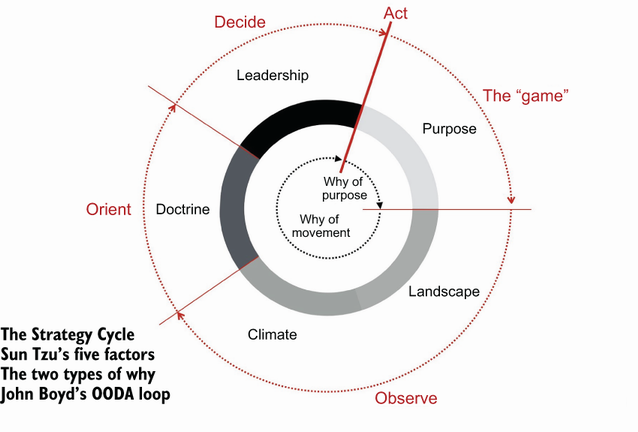
Use the Strategy Cycle to connect climatic analysis with doctrine and intentional leadership actions, keeping strategy explicitly iterative. section 5.1
